Women's Group Ride Safety: Ride Confident in Slovenia
· 13 min read
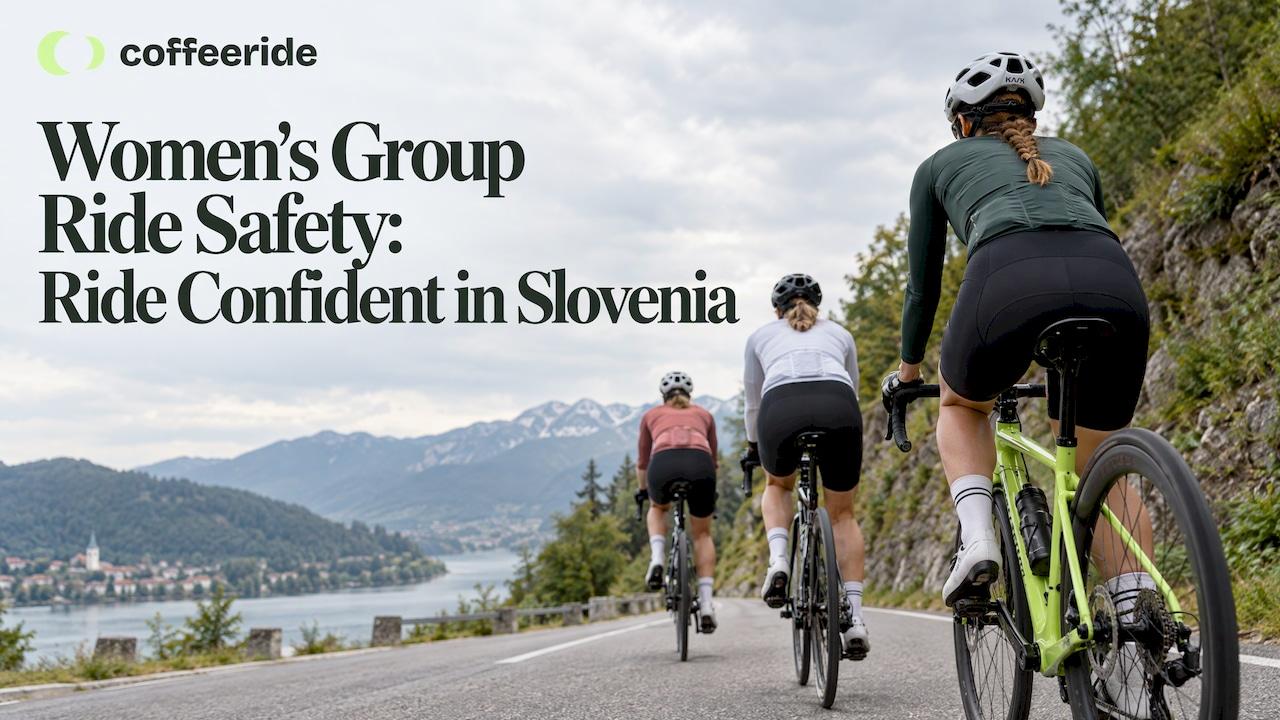
Safe group riding for women comes down to three things: choosing a group whose pace and rules you know in advance, riding predictably once you are in it, and having a crew that looks out for every rider. In Slovenia, add a fourth: know the local road rules, because they shape how groups ride on the road. This guide walks through all four, so your next ride feels like a good morning out and not a test.
TL;DR
- Pick a ride with a clear description: pace, distance, stops, and whether it is women-only, inclusive or mixed.
- Be predictable: hold your line, never overlap wheels, signal, call out hazards and avoid grabbing a fistful of brakes.
- In Slovenia, ride single file on the road; the two-abreast rule is limited to licensed cyclists in groups of at least four.
- Agree on a no-drop approach before the start, so nobody is left behind when they struggle.
- Use lights, reflectors and a bell, and keep your phone out of your hand.
Table of Contents
- Why the group you choose matters most
- Women-only, inclusive or mixed: read the label
- Know the road rules in Slovenia
- Be seen: lights, reflectors and a bell
- Ride predictably: the habits that keep a bunch safe
- When someone struggles
- If you are the only woman in the group
- For clubs and ride leaders: build safety into the plan
- Our perspective
- Find your crew on Coffeeride
- FAQ
- Sources
Why the group you choose matters most
Most of what makes a ride feel safe is decided before you clip in. A group that tells you the route, the speed and the stops removes the biggest source of stress: not knowing what is coming. Cycling UK’s standards for ride leaders say riders should be told in advance about the route, expected distance and speed, stopping points, major hazards, what to carry, and whether it is a drop ride where riders may be left behind. They also ask leaders to think about accessible starts, stops and toilets.
That is a good checklist for you as a rider. Before you say yes to a ride, look for:
- Pace in numbers. A “social” ride means different things to different people. An average speed and a distance remove the guesswork.
- A stated regroup policy. Will the group wait at the top of a climb? Is it a no-drop ride?
- Who leads. Is there a named ride leader and someone sweeping at the back?
- Who it is for. Women-only, inclusive or mixed, described plainly.
- A way to ask questions. A group chat for the ride lets you check the meeting point or ask about the route before you arrive.
If you are still looking for a crew, our guide on how to find group rides in Slovenia covers where to start, and the weekly group rides guide shows how to turn a one-off ride into a habit.
Women-only, inclusive or mixed: read the label
Ride descriptions should tell you who is welcome. Cycling UK advises organizers to describe clearly whether a ride is inclusive, women-only or mixed, and offers sample wording for friendly, supportive pace descriptions too. Its updated guidance separates inclusive rides (open to women, trans women and non-binary people) from women-only rides and from mixed rides, so the wording matches the legal position in the UK. Slovenia has its own rules, but the habit is worth copying: a clear label saves everyone an awkward moment at the start line.
On Coffeeride, women-only rides carry a pink badge, so you spot them at a glance, and women-only and para-cycling rides are privacy-protected within the app. You can also filter rides by pace and interests, which helps you find a group that rides the way you like to ride.
Our women’s cycling safety guide for Slovenia goes deeper on practical tips for solo travel to and from rides, meeting new people and choosing routes.

Know the road rules in Slovenia
Group riding is social, but it happens on public roads. Three rules are worth knowing.
Single file is the default. The Slovenian police say that when riding with a group of cyclists you must ride one after the other. Cyclists holding a licence from the Cycling Federation of Slovenia may ride in a group, which must comprise at least four riders. A Slovenian club, Kolesarski klub Jan Sport, points out that this exception is for licensed cyclists while training: Article 94 of the Road Traffic Rules Act applies to them, and many clubs ride two abreast without the marked escort vehicle the rules describe. For an unlicensed social ride, plan on single file.
Be predictable by law. Slovenia’s Road Traffic Rules Act requires road users to adapt speed and riding style to the road, visibility and their own abilities, and prohibits sudden acceleration, braking or stopping except in danger. In a bunch, that is exactly what keeps everyone upright.
Phones stay out of your hand. According to the EU’s Slovenia road safety overview, hand-held phone use while cycling is not allowed, while hands-free is. The same overview confirms a helmet is mandatory for cyclists up to 18 years on all roads. For adults it is a choice, and the Soča Valley’s safe-cycling advice says helmets are recommended for everyone.
Drivers have a duty too: a national campaign by the AVP and the Ministry of the Environment, Climate and Energy reminds them to leave at least 1.5 metres when overtaking cyclists. Riding in a tidy single line makes that overtake easier for them.

Be seen: lights, reflectors and a bell
Groups ride early, late and through tunnels of trees, so visibility is part of group safety. The Slovenian police list what is required at night and in reduced visibility: a white front light and a red rear light, a red rear reflector, yellow or orange reflectors on pedals and tyre sides, and a bell. The Ljubljana cycling network adds working front and rear brakes and properly inflated tyres to its list of legally required equipment.
A quick pre-ride routine takes two minutes:
- Squeeze both brakes and spin each wheel.
- Check tyre pressure.
- Switch your lights on and confirm they are charged, even for a daytime ride that might run long.
- Carry a spare tube, a pump or CO2, and water.
Ride predictably: the habits that keep a bunch safe
Group safety is mostly about not surprising the person next to you or behind you. USA Cycling’s coaching advice sums it up: in a group, think and act as a group. Here is what that looks like in practice.
Hold your line and your gap
Keep a consistent line of travel and avoid cutting across other riders. British Cycling’s group-riding guide also says to avoid overlapping wheels and to stay relaxed, with loose shoulders and bent elbows, so you can absorb a touch without panicking. Overlapping your front wheel with the rear wheel ahead is how most bunch crashes begin, so look past the rider in front to the road ahead.
Brake gently
Avoid grabbing a fistful of brakes. British Cycling suggests that to adjust speed you freewheel, sit up or brake lightly so the change is gradual and the riders behind have time to react.
Talk and point
A quiet group is a risky group. Use your voice and your hands:
- Point to potholes, drain covers, gravel and wet patches.
- Call out “car back” and “car front”, the calls SRAMcc’s ride-etiquette page recommends, so everyone knows traffic is approaching from either end.
- Signal before you turn, and before you change lanes check the traffic behind you. Soča Valley’s guidance for cyclists in Slovenia says to check behind and clearly signal your intentions.
- Pass messages down the line so the back hears what the front sees.
Share the work at the front
If you are strong, do not push the pace up when you take your turn. USA Cycling’s advice is to take longer pulls rather than increasing the group’s pace, and British Cycling adds that if you can only hold the pace briefly, take a shorter pull. Nobody should feel they have to prove anything.
Decide as a group at junctions
At a traffic light or turn, ask whether the whole group can clear the intersection before committing. A group that splits across a red light puts the back riders in a bad spot. The Slovenian police also advise caution at crossroads and, if the situation is unclear, dismounting to cross on foot. For wider road advice, see the group ride safety rules, signals and leader prep guide.
Choose where to stop
Do not stop on bends or narrow sections, and pick spots with good visibility. The Soča Valley’s guidance says the same, along with splitting larger groups and keeping appropriate distances. Smaller bunches are easier to manage, easier for cars to pass and easier for newer riders to follow.
When someone struggles
The best sign of a safe group is what happens when someone has a bad day. A Canadian club’s group-riding rules say the lead rider is responsible for everyone behind and should be very vocal when slowing, stopping or turning. They also say stragglers should sit at the back until they recover instead of being dropped, and that the group should stop and start together at intersections.
Put that into practice:
- If a rider slows, the rider ahead slows too and passes the message forward.
- If someone stops, check in. Do not assume they are fine.
- Agree a regroup point at the top of every climb.
- Make it normal to say “I need a minute.” That one sentence prevents a lot of risk-taking.
If you are the only woman in the group
Mixed groups are often friendly and fast, and sometimes a bit intimidating when you are new. A few moves help:
- Message the leader first. Ask about pace, stops and whether it is a drop ride. A leader who answers clearly is a good sign.
- Bring a friend for your first ride with a new group, or arrive early and introduce yourself.
- Start at the back and move up when you know the rhythm.
- Use the group chat to find another woman to ride with before the next one.
- Try a women-only ride when you want a different pace or atmosphere. It is a choice, not a step you have to take.
If a ride does not feel right, you can leave. Tell the leader, ride home by a route you know and share your location with someone you trust.
For clubs and ride leaders: build safety into the plan
Welcoming rides do not happen by accident. Cycling UK’s handbook for groups requires a written risk assessment for all group rides, updated when a route changes meaningfully or when rider needs or conditions create new risks. It also describes marshal roles, including supporting newer riders and managing group spacing. Even if you are not bound by it, the structure is a good template.
A simple leader plan:
- Describe the ride honestly: distance, average speed, climbs, stops, and whether it is no-drop.
- Name the label: women-only, inclusive or mixed.
- Brief the group at the start: signals, calls, regroup points and the single-file rule.
- Assign a sweeper to ride at the back.
- Cap the group size and split into smaller bunches when numbers grow.
- Review after the ride: what worked, what to change next time.
Our 10 club ride rules and the guide to starting a private cycling group help you set these expectations once and reuse them every week.
Our perspective
Riding with others is safer, and it is also more fun, when everyone knows what to expect. Most of the stress women describe on group rides comes from uncertainty: who is leading, how fast, where we stop, whether anyone will wait.
That is why we built Coffeeride around the plan, not just the map. Every ride has a post that says what it is, a chat for that ride, and filters for pace and interests so you can find your people. Women-only rides carry a pink badge, and women-only and para-cycling rides are privacy-protected in the app.
Clubs get recurring events, private or public groups and chat, so the briefing, the regroup point and the sweeper are not something you remember on the day. Safety is a habit a crew builds together.
Coffeeride
Find your crew on Coffeeride
Ready to ride with people who ride your way? Coffeeride is free to use: post a ride, join one, filter by pace, and message the group before you roll out. Look for the pink badge on women-only rides. Start with the rides near you.
Club organizer? Set up a public or private club, schedule recurring rides and keep the chat in one place on the clubs page. Planning an event calendar? Our guide to building a club ride calendar shows how.
FAQ
Is it safe for a woman to join a group ride alone?
It can be, if you choose well. Pick a ride with a clear description of pace and route, message the leader beforehand, and tell someone where you are going. Women-only rides are a good first step if you want a supportive setting.
Can cyclists ride two abreast in Slovenia?
For most riders, no: the Slovenian police say groups ride one after the other. Cyclists with a Cycling Federation of Slovenia licence may ride in groups of at least four. Social riders should plan on single file.
What should I do if I cannot keep up with the group?
Say so early and move to the back. A good group lets stragglers sit at the back until they recover instead of dropping them, and agrees a regroup point at the top of climbs. Then you can ride at your own effort without being alone.
Do I need a helmet on a group ride in Slovenia?
A helmet is mandatory for cyclists up to 18 years on all roads. For adults it is not required by that rule, but it is recommended by regional safe-cycling guidance, and most group rides expect one.
Sources
- Policija: Bicycle safety
- Kolesarski klub Jan Sport: Varnost kolesarjev
- Zakon o pravilih cestnega prometa (PISRS)
- EU Road Safety country overview: Slovenia, 2024
- Safe Cycling in Soča Valley
- AVP: We are on the same road
- Ljubljanska kolesarska mreža: 10 nasvetov za varno kolesarjenje
- Cycling UK: Group ride guidance
- Cycling UK: Ride Leader Standards Handbook
- Cycling UK: Handbook for Groups
- USA Cycling: 9 Best Practices for Group Rides
- British Cycling: Guide to riding in a group
- British Cycling: Riding in a group, top 10 tips
- SRAMcc: Ride Etiquette
- Group Riding Rules and Etiquette