10 Club Ride Rules Cyclists and Ride Leaders Must Know
· 14 min read

On any club ride, three things keep everyone upright: obey the ride leader and traffic law, communicate clearly, and never overlap wheels. That’s the whole rulebook, really, and it’s backed by the same principles you’ll find in the Highway Code, Cycling UK’s ride leader guidance, and the club culture that community cycling platforms are designed to support. Get these right and everything else falls into place.
TL;DR:
- Riding predictably, signaling clearly, and maintaining comfortable gaps are crucial for safety and smooth group flow, especially when drafting or in echelon formations.
- Group sizes over 12 riders should be split into smaller units or managed by an assistant to ensure effective oversight and safety.
- Pre-ride checks including tire pressure, brake function, and emergency gear are essential, while riding lights and high-visibility clothing improve safety in all conditions.
- A ride leader-to-rider ratio of about one to several on beginner rides, along with a risk assessment for complex or unfamiliar routes, supports safe and organized cycling.
- Clear pace and distance expectations, proper communication, and buddy systems help new riders integrate and retain membership in cycling clubs.
Table of Contents
- Quick checklist: 10 essential actions before and during every club ride
- Core etiquette and group behavior (do’s and don’ts)
- Safety and road rules to obey during a club ride
- Pacelines, drafting, following distance and rotation
- Group formations, when to split groups, and how to manage pace groups
- Ride leader responsibilities, ratios and risk assessment basics
- Pre-ride checks and what to bring (bike and rider kit)
- Handling hazards, mechanicals and emergency procedures on the ride
- Joining rides, guest policies and inclusive practices
- Handling conflicts or disputes within the group
- Why clear rules make cycling clubs stronger
- Coffeeride: a practical tool to find and organize safe club rides
- Sources
- FAQ
Quick checklist: 10 essential actions before and during every club ride
Before you clip in, run through the basics. A rushed start is where most avoidable mistakes happen, so give yourself five minutes to check the bike and the bag.
- Pump your tires to the right pressure and test both brakes.
- Pack a spare tube, a pump or CO2 canister, and tire levers.
- Charge your phone and bring ID in case you’re separated from the group.
- Fit lights front and rear, even for a daytime ride that might run late.
- Carry enough water and a snack for the distance planned.
- Introduce yourself to the ride leader and mention your pace or experience.
- Follow the leader’s calls and hold your position instead of surging forward.
- Use hand signals and voice calls for hazards, turns, and stops.
- Hold your line through corners and avoid sudden braking.
- Take your turn on the front, then peel off smoothly.
Pro Tip: Arrive 10 minutes early. A calm start beats a rushed one, and it gives the leader time to brief new riders on signals.
Core etiquette and group behavior (do’s and don’ts)
Good etiquette isn’t about being polite for its own sake. It’s what keeps 15 riders moving as one predictable unit instead of 15 separate risks.
Take your turn at the front, but keep pulls short. Dragging a long pull at the front tires you out and drops your pace right when the group behind you needs it steady. Hand off cleanly, then rotate back without cutting anyone off.
Avoid “half-wheeling,” the habit of riding your front wheel just ahead of the rider beside you so they feel pressured to match your pace. It turns a social ride into an accidental race and it’s one of the fastest ways to lose the trust of a group, a pattern flagged repeatedly in club etiquette guidance.
Smoothness matters more than speed. Brake gradually, signal turns early, and hold your line rather than swerving around potholes without warning. Every sudden move ripples backward through the group, and the rider three bikes back has almost no time to react.
- Signal and call out before you brake, turn, or swerve.
- Never surge past the leader without asking.
- Wait for slower riders at regroup points instead of riding on.
- Say something encouraging to a struggling rider, not just to the fast ones.
New riders carry extra weight here. Everyone in the group shares responsibility for making them feel oriented, not just the leader.
Safety and road rules to obey during a club ride
A club ride doesn’t get its own traffic laws. You stop at red lights, yield where the law says to yield, and ride as though every car behind you might not know what “singling out” means.

Cycling UK’s guidance points groups to Highway Code Rule 66, which sets the baseline: never ride more than two abreast, and single out on narrow roads, busy stretches, or when riding around bends. The leader calls when to single out, either for a tight section or to let traffic pass safely.
One rule that trips up newer riders: never wave another road user through. Waving a car past feels helpful, but you can’t see what the driver can, and if something goes wrong, the responsibility lands on you. Let drivers make their own overtaking decisions.
- Use front and rear lights, even in daylight, for visibility.
- Wear high-visibility clothing on unfamiliar or high-traffic routes.
- Position yourself predictably in the lane, not hugging the curb erratically.
- Slow down and single out well before a hazard, not at the last second.
A key safety principle: Cycling UK’s ride leader handbook frames group riding as depending more on predictability than on strict rules; a group that behaves consistently is safer than one that simply follows every regulation to the letter.
Pacelines, drafting, following distance and rotation
Drafting is where club rides get efficient, and also where they get risky if the gaps aren’t respected.
- Start wide if you’re new. A following gap of about one bike length, roughly 1.5 to 2 meters, gives you time to react, according to practical drafting guidance.
- Close the gap as trust builds. Experienced riders in a settled group commonly hold 30 to 50 centimeters, tight enough to save real energy, but only once everyone’s habits are familiar.
- Never let your front wheel overlap the rear wheel ahead of you. The same source names wheel overlap as a common cause of crashes: the moment the rider ahead twitches sideways, your front wheel gets clipped and you go down, often taking others with you.
- Keep pulls short, 15 to 30 seconds, then peel off predictably into the wind side, never cutting across the rider you’re handing off to.
- Watch for crosswinds. An echelon, where riders stagger diagonally to block the wind from an angle, works on wide, quiet roads. On narrow lanes with traffic, don’t force one. It pushes riders toward the center line or the verge, and neither is safe.
Pro Tip: A hero pull, where one rider drags the group for five minutes straight, feels generous but wrecks the rotation’s rhythm. Short, even pulls keep everyone moving at a sustainable pace.
Group formations, when to split groups, and how to manage pace groups
Formation is a judgment call, not a fixed rule. Single file suits narrow lanes and descents. Two abreast works on quiet, wide roads where conversation and safety can coexist. A paceline, single or double, suits faster club rides where drafting matters more than chatting.
Group size changes the math. Once a ride grows past roughly 12 to 15 riders, Cycling UK recommends splitting into smaller cohorts or appointing an assistant leader to help manage the back of the group. A single leader can’t watch 20 riders and the road at the same time.
- Assign a backmarker for any group over a dozen riders.
- Split by pace, not by who showed up together, to keep groups honest about ability.
- Set clear regroup points so faster riders don’t drift out of contact with the back.
- State pace ranges up front (for example, an easy pace group versus a tempo group) so nobody signs up for the wrong ride.
Mixed-ability rides work best when everyone knows which group they’re in before the wheels start turning, not halfway up the first hill.
Ride leader responsibilities, ratios and risk assessment basics
Leading a club ride means more than knowing the route. Cycling UK’s ride leader standards recommend a ratio of about one leader for every several riders on beginner rides, loosening to a leader for a larger number on advanced rides where riders are more self-sufficient. Beyond that, appointing an assistant or backmarker becomes necessary.
A written risk assessment isn’t needed for every casual club spin, but Cycling UK’s handbook guidance recommends one for open public events, unfamiliar routes, or anything involving known hazards like busy junctions or off-road sections. Regular club routes should still have a generic risk assessment reviewed roughly once a year.
On the day, a leader’s job includes:
- Taking a headcount at the start and after every regroup.
- Naming stop locations in advance so nobody wonders where the group went.
- Setting a communication plan, including what to do if someone’s phone has no signal.
- Having a basic emergency operating procedure ready before the group rolls out.
Pre-ride checks and what to bring (bike and rider kit)
Most mechanicals on a club ride are preventable. Fifteen minutes of checking before you leave the driveway saves an hour on the roadside.
- Confirm both brakes work and tires hold pressure, the two non-negotiables for roadworthiness noted in Cycling UK’s pre-ride guidance.
- Check the drivetrain shifts cleanly and the chain isn’t skipping.
- Pack a spare tube, pump or CO2, tire levers, and a small multi-tool.
- Bring ID, a charged phone, water, and a snack for anything over an hour.
- If you ride an e-bike, confirm it meets your region’s legal definition for a pedal-assist bicycle and is mechanically sound before joining a group ride.
Skipping this list doesn’t just risk your own ride. A flat tire mid-paceline slows the whole group and puts everyone on the roadside longer than necessary.
Handling hazards, mechanicals and emergency procedures on the ride
Hazards get called, not assumed. “Car up” warns of oncoming traffic, “slowing” and “stopping” give the group time to react before brakes actually engage, and pointing at a pothole or drain cover does more good than a shout that arrives too late.
If someone gets a flat, the group should move off the road entirely, not just to the shoulder. Designate one or two riders to help while the rest wait clear of traffic.
- Clear the road immediately after any crash or mechanical.
- Call emergency services first if anyone is hurt, before attempting first aid.
- Keep a mental headcount so a separated rider is noticed within minutes, not miles later.
- Agree on a rendezvous point in advance for exactly this situation.
Pro Tip: Save the ride leader’s number in your phone before you start, and agree on one rendezvous point at the route’s midpoint in case the group splits.
Joining rides, guest policies and inclusive practices
Your first club ride should start with a message to the leader, not a cold arrival at the meeting point. Most clubs welcome guests for a handful of trial rides, commonly up to three, before asking you to sign on properly or join as a member.
Be upfront about your fitness and preferred pace. Undersell it and you’ll suffer at the back; oversell it and you’ll hold up a faster group. Either way, honesty gets you matched to the right pace group faster.
- Message the leader ahead of time and ask about pace and distance.
- Expect a sign-on sheet, even for casual rides, for insurance and headcount purposes.
- Ask what the hand signals mean if you’re new to group riding.
- Request a buddy for your first ride if the club offers one.
Clubs that explain their signals and pace groups up front tend to have fewer nervous no-shows and more riders who come back for a second ride.
Handling conflicts or disputes within the group
Friction happens. Someone rides too aggressively on the front, another rider ignores a call to single out, and tempers occasionally flare after a near miss. How a group handles that moment matters more than preventing it entirely.
The ride leader has final say on the road. If a dispute breaks out mid-ride, the leader’s job is to de-escalate on the spot, not adjudicate who was right. That conversation happens after the ride, calmly, away from moving traffic.
Most disputes trace back to mismatched expectations rather than bad intent. A rider pushing the pace on a supposedly easy ride usually didn’t realize the group’s pace agreement, not deliberately ignored it. Address it directly but privately, and remind the group of the stated pace at the next regroup rather than calling someone out in front of everyone.
Effective clubs often set expectations before problems start: a clear pace description when the ride is posted, a leader who states the plan out loud at the rollout point, and a norm that feedback goes to the leader, not into a public argument on the road. When a rider consistently ignores group norms, a private conversation after the ride, not a public confrontation during it, protects both the group’s safety and its atmosphere.

Why clear rules make cycling clubs stronger
Rules aren’t the opposite of fun on a bike. They’re what lets a group of strangers trust each other enough to ride shoulder to shoulder at speed. A club with clear, consistently applied etiquette keeps riders coming back, and a club where nobody knows the signals or the pace expectations loses people after one confusing, stressful ride. Matching riders to the right pace group solves more retention problems than any amount of route scouting.
Two small changes make a club dramatically more welcoming: post the expected pace and distance clearly before every ride, and assign a buddy to any rider showing up for the first time.
— Coffeeride
Coffeeride: a practical tool to find and organize safe club rides
Finding a group that matches your pace shouldn’t take more effort than the ride itself. Coffeeride lets you post a ride, discover local clubs by discipline, and filter by pace so you’re not guessing whether a “casual” ride actually means casual.
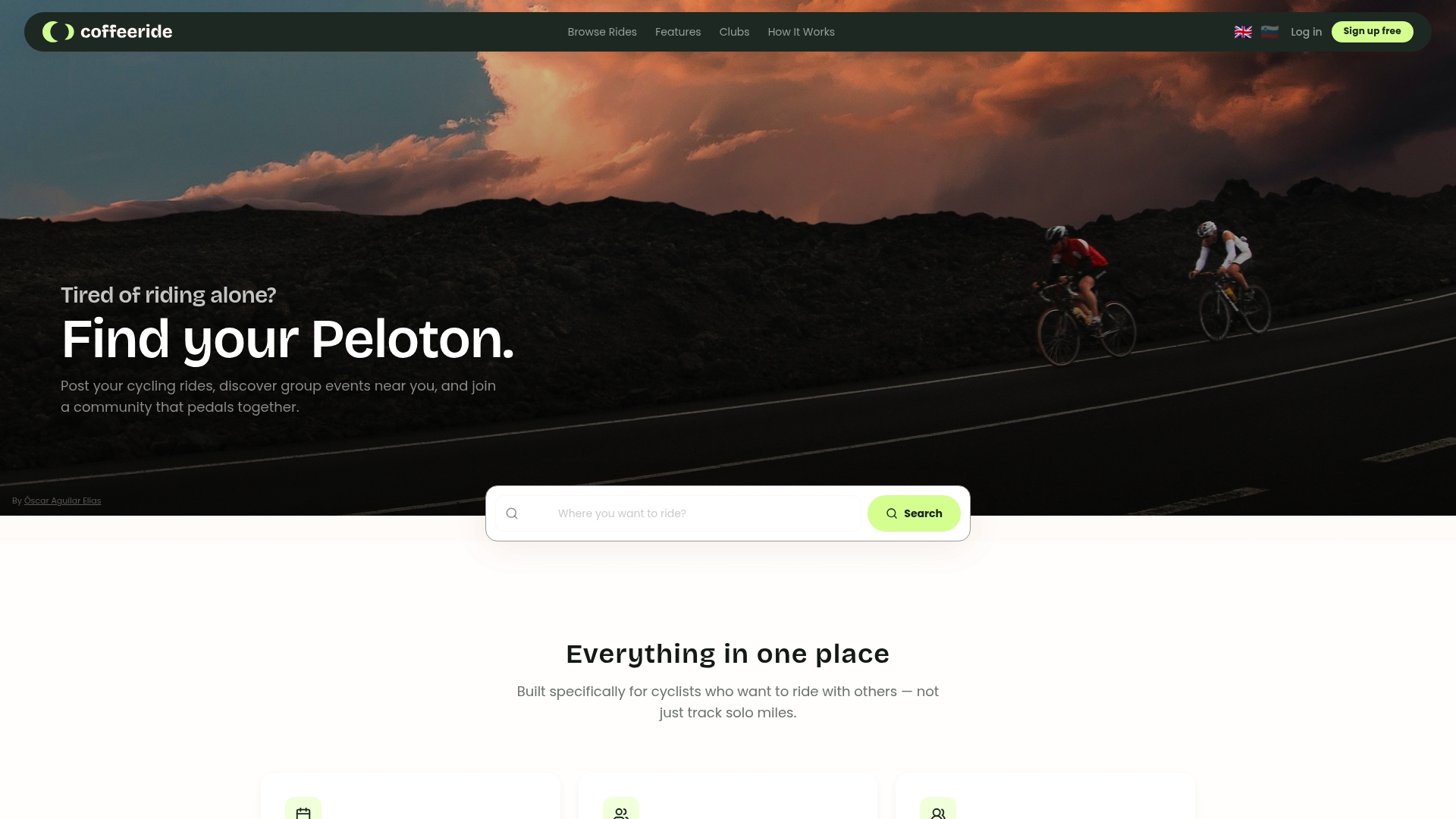
Club organizers get sign-up management and group messaging built in, so headcounts and pace groups are sorted before anyone clips in. Women-only and para-cycling rides are marked and privacy-protected within the app, and the goal throughout is simple: fewer solo rides, more crews. If you’re ready to find your next ride, join Coffeeride free and start riding with people at your pace.
Sources
For deeper detail, Cycling UK’s ride leader standards handbook and its risk assessment guidance cover leader ratios and risk planning in full. For drafting mechanics, see the through-and-off rotation guide, and for a broader look at ride-ready routes, this Los Angeles bike path guide offers general etiquette context.
- Cycling UK — How to cycle in a group
- Roadman Cycling — Drafting, Echelons & Through-and-Off Guide (2026)
FAQ
What is the 80/20 rule in biking?
Definitions vary depending on context. In training, it commonly refers to spending roughly 80% of ride time at easy effort and 20% at harder effort, but this article doesn’t cover training zones in detail.
What are the etiquette rules for group riding?
The core rules are to communicate with hand and voice signals, hold a predictable line, take short turns at the front, and never overlap your front wheel with the rider ahead’s rear wheel. Cycling UK’s group riding guide also recommends riding no more than two abreast and singling out on narrow or busy roads.
What is the 75% rule in cycling?
This isn’t a standard term used in club ride etiquette or the sources referenced here. If you’ve seen it referenced elsewhere, it likely relates to a specific training or racing context rather than group ride rules.
What is the 3 km rule in cycling?
This term applies to professional bike racing, not club or group rides, and it isn’t addressed by the ride etiquette or safety guidance covered in this article.
How many trial rides can a guest usually join before becoming a member?
Many clubs allow new riders to join as a guest for a handful of rides, commonly up to three, before asking them to sign on as a member. Always confirm the specific policy with the ride leader before showing up.


