Find Pace Matched Women Cycling Groups in Slovenia with Coffeeride
· 16 min read

Women cycling groups are organized ride communities, from casual coffee-shop pedals to structured training packs, built to make riding safer, friendlier, and less intimidating for women. They deliver three things solo riding rarely does: safety in numbers, hands-on skills you actually use, and a crew that keeps you coming back. Ride discovery platforms make finding one as easy as filtering by pace and tapping join.
TL;DR:
- Most women cycling groups categorize rides by difficulty, including beginner-friendly social rides, skills clinics, and fitness training to match various skill levels.
- Finding a suitable group is simple through ride-discovery platforms, community pages, and local clubs, with online messaging helping to clarify safety measures and pace expectations beforehand.
- First rides are typically structured with safety briefings, group checks, and support plans, making newcomers feel comfortable while emphasizing pacing, signals, and mechanical support.
- Workshops on flat repairs, safe passing, and traffic reading significantly boost women’s confidence and riding safety, encouraging more regular participation over time.
- Equipment essentials include a fitted bike, a spare tube, water, and a phone mount; many programs provide loaner gear to lower entry barriers for beginners or budget-conscious riders.
Table of Contents
- What Do Women Cycling Groups Typically Offer?
- Which Type of Women-Only Ride Fits You?
- How Do You Find and Join a Women Cycling Group?
- What Happens on Your First Ride?
- Which Skills and Workshops Build Real Confidence?
- What Actually Gets More Women Riding? The Evidence
- How Diverse Are Women Cycling Groups, Really?
- Where Do Leadership Opportunities Come From?
- What Gear Actually Helps at a Group Ride?
- How Do You Start Your Own Women Cycling Group?
- Online Communities or In-Person Rides: Which Should You Choose?
- Why the First Ride Changes Everything
- Find Your Next Ride With Coffeeride
- Sources
- FAQ
What Do Women Cycling Groups Typically Offer?
Most women cycling groups run a mix of formats designed to meet riders wherever they are. You’ll see led social rides, hands-on skills clinics, structured training groups, mountain bike meetups, and even multi-day touring or bikepacking trips.
Ride listings almost always spell out the same core details, so you know what you’re signing up for before you clip in:
- Distance and estimated pace (easy, moderate, brisk)
- Elevation gain and expected ride time
- Meeting point and start time
- Route type: road, gravel, or trail
Well-run groups also build in a short safety briefing, some form of mechanical support on the road, and at least one social stop, whether that’s a coffee break or a snack pause at the halfway mark. That combination of clarity and care is what turns a ride listing into something you feel comfortable showing up for alone.
Which Type of Women-Only Ride Fits You?
Not every ride is built for the same rider, and that’s the point. Matching the format to your goals matters more than picking whatever pops up first in a search.
- Easy social or coffee rides: low pace, short distance, built for beginners or anyone rebuilding confidence after time off the bike.
- Skills clinics and maintenance workshops: focused sessions on flat repairs, gear adjustments, or basic bike handling, aimed at riding independence rather than mileage.
- Road or fitness training groups: steady, structured pace work for riders training toward an event or building endurance.
- Mountain bike and trail groups, plus women-only tour series: programs like the BFF (Bejbe ful furamo) tours in Gorenjska pair guided trail rides with bike maintenance teaching for around €20 a session.
- Special-interest meetups: e-bike groups, 50-plus rides, and family-friendly outings that prioritize a specific pace or life stage over pure fitness.
Start with the category that matches your current comfort level, not your goal for six months from now.
How Do You Find and Join a Women Cycling Group?
Finding the right group usually takes less effort than people expect once you know where to look. Search a mix of channels rather than relying on just one.
- Check ride-discovery platforms. Some ride-discovery platforms list local rides with pace filters and women-only tags, so you can scan options without joining a dozen separate group chats.
- Browse community pages. Local Facebook groups, city cycling club sites, and bike shop noticeboards often post rides that never make it onto bigger platforms.
- Look at event listings and local clubs. Groups such as Slovenske Specialkarke post recurring social rides, safety courses, and campaign events like Ženska 100tka.
- Evaluate before you commit. Check listed difficulty and pace, who’s leading the ride, what safety measures are mentioned, whether loaner gear is available, and the cancellation policy.
- Message the organizer. Ask about group size, typical pace variance, and what happens if you fall behind. A responsive organizer is a good early signal.
- RSVP through the platform. Most rides ask for a headcount in advance so leaders can plan support and pacing.
Costs vary widely. Many social rides are free or donation-based, while structured tours or skills clinics often run $15 to $30 per session to cover guides and materials.
Pro Tip: Message the ride leader before your first outing and ask one specific question, like where the group regroups after climbs. Their answer tells you more about how the ride is actually run than any listing description.
What Happens on Your First Ride?
The first ride is almost always more structured than newcomers expect, which is exactly what makes it manageable. Most groups start with a check-in, a quick safety briefing, and an introduction to who’s leading.
During the ride, look for pace-matching (faster riders often loop back for stragglers), clear positioning in the group, and hand signals for turns, stops, and hazards. If your chain drops or a tire goes soft, call it out immediately. Groups expect it and plan for it.
- Bring water, a spare tube, a multitool, and your phone with the route saved offline.
- Know your route bailout points in case you need to leave early.
- Follow the group’s stated rules on passing, regrouping, and traffic signals.
- Speak up early if the pace feels wrong. Most leaders would rather adjust than lose you at the back.
Pro Tip: If you’re nervous about being the slowest rider, pick a ride explicitly labeled “beginner” or “social pace” for your first outing. Nobody there is timing you.
Which Skills and Workshops Build Real Confidence?
Skill gaps, not fitness, keep a lot of women off group rides in the first place. Research on cycling participation consistently finds that low self-perceived competence lowers how safe women feel on a bike, and that closing that skills gap increases both safety perception and willingness to ride.
The workshops that move the needle most are usually simple:
- Fixing a flat tire and basic gear or brake adjustments
- Paceline awareness, safe passing, and cornering technique
- Reading traffic and communicating intentions to a group
Formats range from a five-minute pre-ride demo to a dedicated two-hour clinic, and pricing tends to track that difference: quick demos are often free, while standalone workshops run somewhere in the $20 to $40 range. Some local programs, including BFF tours, partner with bike shops to let riders borrow bikes or gear at no cost, which removes equipment as a reason to skip a session.
What Actually Gets More Women Riding? The Evidence
Safety perception, not fitness or interest, is the biggest thing standing between women and regular group rides. Research on cycling participation finds that roughly half of women cite unsafe roads or junctions as a direct barrier, and many say they’d ride more often with safer infrastructure and better skills.
Perceived competence on a bike is one of the strongest predictors of whether a woman feels safe riding at all, and building that competence through hands-on group skills sessions raises both confidence and participation over time.
Local programs already put this into practice. Dame kolesarijo ran five separate women-focused events across Slovenian regions in a single season, each led by experienced guides with an emphasis on learning over performance. BFF tours pair every trail ride with maintenance teaching for a modest per-session fee, directly targeting the competence gap.
Industry research backs the same conclusion from a different angle: women represent a high-barrier but high-potential group where safety signals, trust, and bundled services are the deciding factors in whether they show up again. For organizers, that means labeling pace and safety measures clearly. For riders, it means recurring, low-stakes events are worth prioritizing over one-off big rides. Some cycling platforms offer recurring event and club features for exactly that pattern: show up, ride, come back next month.
How Diverse Are Women Cycling Groups, Really?
Good women cycling groups don’t look like a single type of rider, and that variety is a strength rather than a compromise. Age ranges from teenagers to riders in their sixties and seventies, often within the same club. Slovenske Specialkarke, for instance, runs indoor winter training alongside outdoor season rides specifically to keep members active year round regardless of age or weather tolerance.
Skill level spans just as wide. A single club roster might include someone who bought her first bike three months ago riding next to someone training for a century. The trick most successful groups use is splitting by pace group rather than by club membership, so a beginner and an experienced racer can both show up to the same event and ride with people at their level.
Background diversity matters too. Groups that explicitly welcome different body types, income levels, and cultural backgrounds tend to retain more members long term, since riders stay where they feel they belong rather than where they feel tolerated. Family-friendly rides, e-bike-specific meetups, and 50-plus groups all exist because a single “women’s ride” label can’t serve every rider’s actual situation.
If a group you’re considering only ever posts rides at one pace or one skill level, that’s a signal worth noticing. The strongest communities usually offer several entry points, not one narrow lane.
Where Do Leadership Opportunities Come From?
All women cycling group started with someone willing to lead the first ride, and that path stays open long after the group is established. Ride leadership isn’t reserved for the fastest rider in the club. It usually goes to whoever is organized, communicative, and willing to look out for the group’s slowest member.
Leadership roles show up in a few forms. Some riders start by leading a single monthly social ride. Others move into running skills clinics once they’ve built confidence in a specific area, like flat repairs or descending technique. A smaller group ends up organizing full event series, coordinating routes, safety plans, and registration for dozens of participants at a time.
Visible role models matter more than most new riders expect. Research on cycling participation finds that women who lack confidence are more likely to keep riding when they can see other women leading and organizing rides, not just participating in them. That’s part of why programs like Dame kolesarijo and BFF tours lean on experienced female guides rather than generic instructors. Seeing someone who started exactly where you are now, leading the ride you’re on, does more for confidence than any pep talk.

If you’ve been riding with a group for a season or two, consider offering to co-lead a ride. Most organizers are stretched thin and welcome the help.
What Gear Actually Helps at a Group Ride?
Equipment choices matter less for performance and more for comfort and confidence when you’re riding with a group for the first few times. A properly fitted bike, whatever the brand, matters more than an expensive one. If your saddle height or reach feels off, get it checked at a shop before your first group ride rather than white-knuckling through discomfort for weeks.
A few practical picks make a real difference on group rides specifically:
- A saddle bag with a spare tube, tire levers, and a multitool, since flats happen mid-group and you’ll want to fix your own without holding up the ride.
- Padded shorts or compression gear suited to longer distances. Comfort accessories designed for women’s anatomy, like compression socks built for all-day wear, reduce fatigue on longer rides.
- A visible layer or vest, especially for early morning or evening group starts.
- A phone mount and offline route saved, so you’re not relying on a leader’s memory if the group splits.
Loaner gear is more common than people assume. BFF tours, for example, arrange free bike and equipment loans through a local partner shop specifically so equipment never blocks someone from showing up. If cost or gear access is holding you back from a first ride, ask the organizer directly. Many have a solution already in place.
How Do You Start Your Own Women Cycling Group?
Starting a group is less complicated than it looks from the outside, and most successful ones began with two or three riders and a shared calendar invite. Pick one recurring time and one consistent meeting point before anything else. Predictability builds attendance faster than variety does.

Label your first few rides clearly: pace, distance, and who’s leading. That single detail, borrowed from how established clubs like Slovenske Specialkarke structure their listings, shortens the trust gap for anyone considering a first ride with strangers.
Keep the early rides low-stakes. A short social loop with a coffee stop will attract more first-timers than an ambitious century attempt. Once you have a handful of regulars, ask one of them to co-lead the next ride. Shared leadership prevents burnout and gives your group more than one point of contact if the founder can’t make it some week.
Use a platform built for ride discovery rather than managing everything through scattered group texts. Posting your ride publicly, with pace and distance listed, brings in riders you’d never reach through word of mouth alone.
Expect slow growth for the first few months. Most groups don’t hit a stable regular attendance until they’ve run six to eight sessions. Consistency, not marketing, is what gets a small ride noticed.
Online Communities or In-Person Rides: Which Should You Choose?
Online cycling communities and in-person groups solve different problems, and most active riders end up using both. Online spaces, Facebook groups, app-based platforms, and forums, are useful for research. You can scan ride difficulty, read past participant comments, and ask questions before committing to show up anywhere.
The tradeoff is that online communities don’t replace the actual experience of riding with people. You can’t gauge someone’s pace, temperament, or how a group handles a mechanical issue from a comment thread. In-person groups build the trust and skill transfer that online spaces can only describe secondhand.
The challenge with in-person-only groups is discoverability. If a club only advertises through word of mouth, riders who don’t already know a member may never find it. That’s the gap some platforms are built to close: online discovery that leads directly to an in-person ride, with pace filters and women-only tags doing the initial matching so you’re not guessing whether a group is right for you before you show up.
The strongest approach uses both layers. Research online to shortlist a few groups, then commit to attending in person before deciding whether it’s a fit.
Why the First Ride Changes Everything
Ask most women what keeps them coming back to a group, and it’s rarely the mileage. It’s the moment someone shows you how to reseat a dropped chain without making you feel behind, or the small win of finishing a climb you weren’t sure you’d manage. Confidence builds ride by ride, not overnight.

The friendships tend to surprise people more than the fitness gains do. A coffee stop turns into a regular Saturday habit. A skills clinic turns into a riding partner for the next three seasons. None of that shows up in a ride description, but it’s the reason people stay.
If you’re on the fence, try one ride labeled for your current pace and see what happens. Most riders say the hardest part was showing up the first time.
— Coffeeride
Find Your Next Ride With Coffeeride
Certain platforms replace the scattered group chats and half-updated club pages with one place built for exactly this: finding a ride that fits your pace, your schedule, and your comfort level.
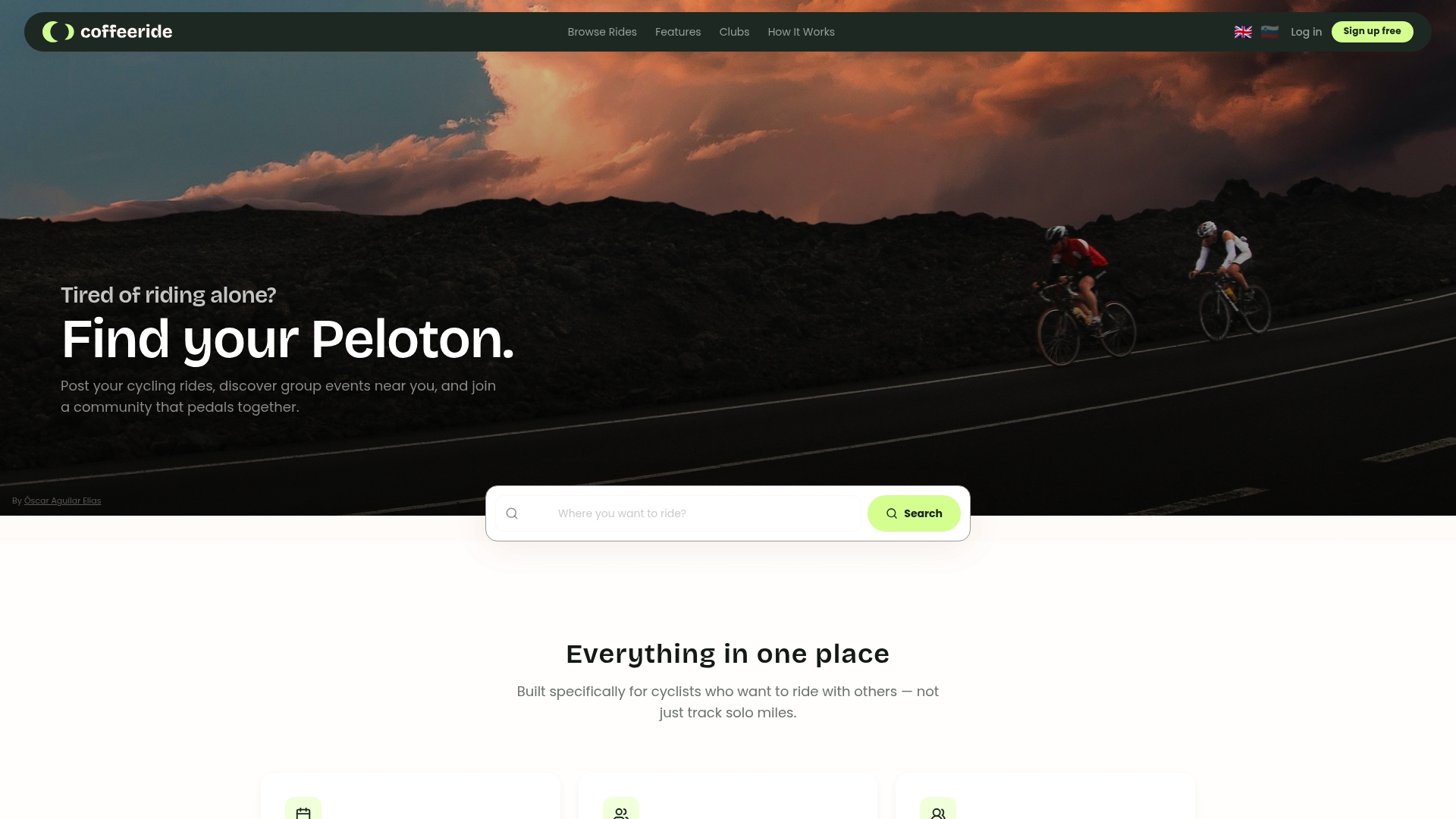
Post a ride, or browse ones already posted nearby, filtered by pace, distance, and women-only tags so you’re not scrolling through options that don’t apply to you. Many rides get group chats, so you can ask an organizer about the route or confirm the meeting point before you show up. Discover local clubs running recurring rides, from social coffee loops to structured training groups, and join with a few taps instead of chasing down an admin for an invite.
Getting started takes less time than deciding what to wear for the ride. Head to Coffeeride Club, filter for a women-only ride near you, and RSVP to the first one that fits your pace.
Sources
- Prijavim
- Main document R1 — Empowering women to cycle (White Rose ePrints)
- WICG Eurobike 2026_Women the underrated growth driver
FAQ
What Are Women Cycling Groups?
Women cycling groups are organized rides and clubs built specifically for women, ranging from casual social loops to structured training programs. They typically emphasize safety, pace-matching, and skill-building alongside the ride itself.
How Do I Find Women Cyclists Near Me?
Platforms like Coffeeride let you filter local rides by pace and women-only tags, which is usually faster than searching scattered social media groups. Local bike shops and community event pages are also reliable sources for recurring rides.
Are Women Cycling Groups Good for Complete Beginners?
Yes. Most groups run separate social-pace or beginner-labeled rides specifically for new riders, and many pair those rides with basic skills coaching. Research on cycling participation shows that safety concerns and low confidence are the biggest barriers for new riders, which is exactly what beginner-focused rides are designed to address.
How Much Does It Cost to Join a Women Cycling Group?
Costs vary by format. Many social rides are free, while structured tours like BFF sessions run around €20 per session to cover guiding and maintenance teaching.
Do I Need My Own Bike to Join a Group Ride?
Not always. Some local programs partner with bike shops to offer loaner bikes and gear, so it’s worth asking the organizer before assuming you need to buy equipment first. Checking a ride’s listed details on a platform like Coffeeride can also tell you whether loaner gear is mentioned upfront.


