6 to 12 Riders: Run Safer Road Group Rides and Women Only Sessions
· 10 min read

A road group ride is a paced, leader-led ride where cyclists move together at a set speed and distance. Pick a no-drop social ride if you want easy pacing and company, or a pace-matched performance ride if you want a workout with structure. Test your baseline speed, match it to a labeled group, and show up with a full water bottle and a plan. You can use community platforms to find both types near you.
TL;DR:
- Most safe group rides involve 6 to 12 riders to maintain effective communication and formation, with larger groups typically splitting into smaller packs.
- Beginner riders should seek no-drop rides labeled as “conversational” and complete a one-hour flat effort test to determine their baseline speed.
- Ride leaders are responsible for setting the pace, managing hazards, and ensuring group safety, with staffing ratios of about one leader per six or eight riders.
- Riders must carry essential gear like spare tubes, pumps, multi-tools, and identification, and should arrive prepared and early to establish clear communication.
- Women-specific rides benefit from inclusive leadership and a clear, comfortable meeting environment, with participation metrics used to evaluate success and retention.
Table of Contents
- What Does a Road Group Ride Actually Look Like?
- How Do You Find Road Group Rides That Fit Your Pace?
- Group-Ride Etiquette and Safety Calls You Need to Know
- How to Plan and Lead a Safe Social Road Ride
- Why Women-Specific Road Rides Matter, and How to Run One
- A Ride Leader’s Quick Checklist Before Rolling Out
- Find Your Next Road Group Ride With Coffeeride
- Sources
- FAQ
What Does a Road Group Ride Actually Look Like?
Every group ride carries a label, and reading it right saves you from a miserable first outing. Pace is usually listed as an average speed range, like “26 to 28 km/h,” or as an effort level such as “conversational” or “tempo.” Distance tells you how long you’re committing to, but pace determines how hard that distance will feel.
The biggest fork in the road is no-drop versus drop. A no-drop ride means the group waits for everyone at climbs, intersections, and mechanicals. A drop ride means the leader sets a pace and you’re expected to hold it or fall behind. Beginners belong in no-drop rides. Advanced riders chasing fitness gains often prefer drop rides because they push harder without the group slowing down for stragglers.
Group size matters more than most riders realize. Rides of 6 to 12 people tend to stay tight, communicate well, and roll through traffic without splitting apart. Larger groups usually break into smaller packs by pace, which is exactly what should happen.
A well-run ride has defined roles:
- Ride leader sets the pace, calls the route, and makes real-time decisions.
- Assistant leader helps manage the middle or back of the group.
- Sweep rides at the rear, checking that no one gets left behind.
Cycling UK’s ride leader standards handbook recommends these roles scale with group size and rider experience, not just distance.
How Do You Find Road Group Rides That Fit Your Pace?
Start with a simple test: ride one hour on flat ground at a steady, sustainable effort and check your average speed. That number is your honest baseline, and it’s far more useful than guessing based on how fit you feel.
Once you know your number, here’s how to find a ride that matches it:
- Search local clubs and event pages for posted pace ranges and distances.
- Check community platforms like Coffeeride, where you can filter road cycling groups by pace, distance, and preferences instead of scrolling through vague descriptions.
- Message the ride leader before showing up. Ask about the no-drop policy, maximum rider count, meeting point, and whether a GPX file is available for the route.
- Confirm gear expectations. Some rides expect a full repair kit; others assume the sweep carries backup.
On your first ride, arrive 10 minutes early, introduce yourself to the leader, and stick to whatever pace and formation gets briefed before rolling out.
Pro Tip: Don’t chase the front on your first ride with a new group. Sit mid-pack for the first 20 minutes and let your legs and lungs tell you if the pace is honest.
Group-Ride Etiquette and Safety Calls You Need to Know
Group riding runs on shared language. When a driver approaches from behind, someone calls “car back,” and it passes rider to rider until the whole group hears it. “Hole left” or “hole right” warns of road damage. “Single out” means the group needs to move from two abreast to single file, usually for a narrow road or a tight corner. “Stopping” and “easy” warn riders behind to slow without slamming brakes into a chain reaction.
Formation follows the road, not the group’s mood. Two abreast works fine on quiet, wide roads. Single file is mandatory on narrow shoulders, in traffic, or approaching corners with limited sightlines. The CTC group cycling guide treats this shift as automatic, not optional, and expects every rider to react to the call without hesitation.

Safety routines separate a well-run ride from a chaotic one. Headcounts at regroup points confirm nobody got dropped on a climb or missed a turn. The sweep’s whole job is watching the back of the group and flagging problems before they become emergencies. When someone flats or a chain drops, the group pulls off the road entirely, not half onto the shoulder.
Safety-focused ride groups often cap size around 12 riders specifically because communication breaks down past that point. Every rider carries their own kit, no exceptions:
- Spare tube and tire levers
- Pump or CO2 inflator
- Multi-tool
- ID and phone
- Water and ride nutrition
How to Plan and Lead a Safe Social Road Ride
Route choice is the first decision that determines whether your ride succeeds. Match the terrain and traffic level to your slowest expected rider, not your fastest. Reuse routes that have already been ridden safely when possible, and note known hazards, like a gravel patch or a blind driveway, in advance rather than discovering them mid-ride.
Staffing scales with group size and skill level:
- Beginner rides need roughly one leader for every 6 riders. Novices ask more questions, need more regroup stops, and benefit from closer supervision.
- Advanced rides can run closer to one leader for every 8 riders, per Cycling UK’s ratio guidance.
- Cap groups and split larger gatherings into smaller packs with separate leaders and pacing to ensure safety and manageability.
Brief the group before rolling out. Cover expected pace, formation rules, known hazard points, where regroup stops will happen, and who to contact in an emergency. KD Rog’s internal rider code treats this kind of briefing as standard practice for group training, not an extra step.
On the ride itself, keep assessing conditions rather than trusting your pre-ride plan alone. Weather shifts, a rider mix skewing more novice than expected, or unexpected traffic all call for real-time judgment calls. After the ride, jot a quick note on what worked and what didn’t. That single habit improves your next ride more than any amount of pre-planning.
Why Women-Specific Road Rides Matter, and How to Run One
Women-only and beginner-focused rides consistently improve retention because riders show up without worrying about being the slowest person in the group. Slovenia already has proof of this working locally: KD Rog’s Pika Team built a structured women’s cycling program with free access to training and equipment, and it’s growing because the entry pathway feels welcoming rather than intimidating.

Finding these rides gets easier with the right tool. Some apps let you filter for women-only rides, join private clubs, and keep ride details protected within the app rather than posted publicly.
If you’re organizing one, a few habits go a long way:
- Put a woman in the ride leader or sweep role whenever possible.
- Pick a meeting spot that feels comfortable and visible, not isolated.
- State pace and skill expectations clearly in the ride post, borrowing the no-drop, capped-ride, GPX-file model that groups like the Ottawa Women’s Cycling Club already publish.
Pro Tip: Track repeat attendance across three consecutive rides instead of guessing at satisfaction. If the same riders keep coming back, the ride is working.
A Ride Leader’s Quick Checklist Before Rolling Out
Leading a group ride is less about heroics and more about staying calm and predictable. Riders trust a leader who communicates clearly, treats beginners with patience, and handles problems without drama.
Before you roll out, run through this short list: know your route and its hazard points, confirm who’s sweeping, check that everyone has water and basic repair kit, and make sure someone has an emergency contact saved. Riders, your job is just as simple. Show up ready, follow the calls passed through the group, and check on the rider next to you if they’re struggling. That’s the whole culture.
— Coffeeride
Find Your Next Road Group Ride With Coffeeride
Solo rides get old fast, and scrolling through vague event pages to find a group that matches your pace wastes time you could spend riding. Coffeeride puts the whole search in one place: post your own ride, discover ones near you, filter by pace and distance, and join clubs built around the discipline you ride.
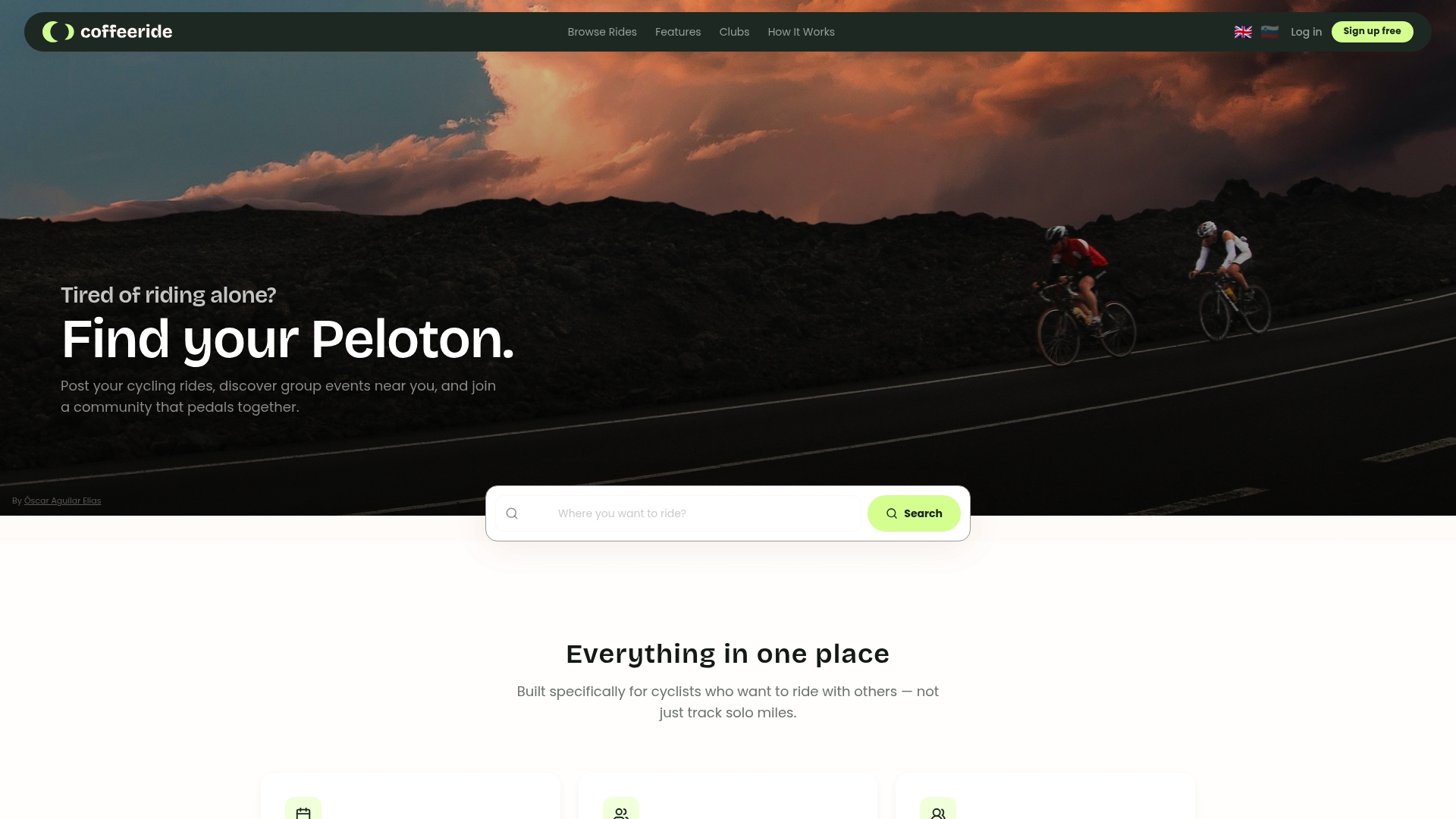
Certain cycling platforms are designed specifically for finding and running group rides, not just tracking solo miles. They offer filtering by pace to help gauge ride speed. Users can join private or public clubs with built-in group messaging to streamline logistics. Women-only and para-cycling rides can remain privacy-protected within these apps, allowing organizers to build inclusive communities without exposing ride details publicly.
Whether you’re chasing a faster peloton or looking for a no-drop crew to ride with every Saturday, Coffeeride Club is where you find it. Join free and post your first ride today.
Sources
The Cycling UK ride leader standards handbook covers planning, inclusion, and risk assessment in depth. L’Etape Slovenia’s safety guidance shows how closed-event protocols differ from casual social rides. KD Rog’s internal rider code and the Ottawa Women’s Cycling Club guidelines offer real club-level rules worth borrowing.
- Cycling UK — Ride leader standards handbook
- KD Rog — Internal code for competitors
- Ottawa Women’s Cycling Club — Ride guidelines 2025
- CTC / group cycling guide
FAQ
What Pace Should a Beginner Look for in a Group Ride?
Look for a no-drop ride labeled “conversational,” since these groups wait for everyone at climbs and turns. Run your own one-hour flat baseline test first so you know your honest average speed before picking a group.
What’s the Difference Between a No-Drop and a Drop Ride?
A no-drop ride regroups at hills, turns, and mechanicals so nobody gets left behind. A drop ride holds a set pace and expects riders to keep up or fall off the back, which suits stronger or more experienced riders.
How Do I Find Women-Only Road Cycling Groups Near Me?
Some platforms let you filter specifically for women-only rides and join privacy-protected clubs built around them. Local programs like KD Rog’s Pika Team also show how structured, welcoming entry points work in practice.
How Many Riders Should Be in a Safe Group Ride?
Most well-run rides stay between 6 and 12 riders, since that size keeps communication and formation manageable. Groups over 15 typically split into two packs with separate leaders, following ratios like the 1:6 beginner standard.
What Should I Bring on My First Group Ride?
Bring a spare tube, pump or CO2 inflator, a multi-tool, ID, your phone, water, and ride nutrition. Confirm with the ride leader beforehand whether the group expects individual kit or relies on the sweep for backup gear.


