Copy and Paste Ride Leader Tips: 3 to 5 Minute Briefing, Club Tested
· 13 min read

To lead a safe, enjoyable group ride you must set clear expectations, plan a safe route, and keep communication active from briefing to finish. Get those three right and everything else, from hand signals to headcounts, falls into place. Below you’ll find copy-and-paste checklists, a briefing script, and the emergency workflow every leader should know before rolling out.
TL;DR:
- Clear communication before the ride, including a detailed post with exact meeting location and honest pace and distance, is essential for group cohesion.
- Route planning should match the group’s skill level, account for hazards, and include a precise start time, with flexibility to adjust based on real-time conditions.
- A brief pre-ride briefing covering signals, roles, and behavior expectations reduces confusion and helps prevent splits or misunderstandings on the road.
- Effective on-ride leadership relies on strategic positioning, rotating leaders at the front, and frequent hazard calls with relay checks to maintain safety.
- Organizing tools like sign-in sheets, route files, and communication devices are vital for managing emergencies, rider tracking, and ensuring inclusivity.
Table of Contents
- Quick checklist: top ride leader tips to copy into your ride post
- Plan the ride: picking the route, timing, and navigation method
- Pre-ride briefing: a 3 to 5 minute team talk template
- On-ride leadership: positioning, formations, and passing messages
- Managing problems: mechanicals, missing riders, and emergency response
- Inclusivity and behavior: creating welcoming rides and handling problems
- Practical tools and checklists leaders should carry
- Publisher perspective: how Coffeeride supports leaders in practice
- What most ride leader advice gets backward
- Post your next ride with Coffeeride Club
- Sources
- FAQ
Quick checklist: top ride leader tips to copy into your ride post
Pin this list to your clipboard before your next ride. It covers the essentials Cycling UK’s ride leader guidance flags as core leader responsibilities, from posting details to emergency prep.
- Post it clearly: meeting pin, rolling start time, pace band, distance, whether it’s no-drop, and required kit.
- Bring the basics: signing-on sheet, a phone with location sharing on, basic tools, and spare tubes.
- Brief the group: hand signals, formations, hazard calls, and how long you’ll wait at stops.
- Assign roles: a backmarker, a co-leader or sweep, and someone who carries spares or first aid.
- Know your emergency steps: how to call for help, how to give your exact location, and who records incident details.
Every one of these belongs in your ride description before anyone clicks “join.” Riders decide whether a ride fits them based on what you write, so vague posts create mismatched expectations on the road. A pace band and an honest distance do more to keep your group together than any amount of shouting at a junction.
Treat the checklist as a living document. Add to it after every ride where something caught you off guard, a missing pump, a rider who didn’t know the no-drop policy, a junction where the group split. Your next post gets sharper each time.
Plan the ride: picking the route, timing, and navigation method
A good route matches the people you’re inviting, not the route you’d ride solo. Cycling UK’s guidance treats route planning as the first job of any ride leader, and it starts before you ever open a map app.
- Match distance and gradient to your pace band. A “steady, no-drop” ride advertised at 25 kilometers with a 400-meter climb will not feel steady to riders who signed up expecting flat miles.
- Account for daylight, hazards, and bail options. Check sunset times for the season, note any known hazards like gravel sections or busy roundabouts, and pick at least one point where slower riders can peel off safely.
- Decide your navigation method. Share a GPX file or Strava route link in advance, or commit to leading every turn yourself. Either way, riders need to know which one to expect.
- Give a precise meeting pin. A vague “meet at the café” wastes everyone’s time; a dropped pin or exact address does not.
- Set a rolling start time and hold it. Bicycling’s roundup of expert advice notes that sticking to advertised start times builds trust, while habitual lateness is a common reason riders stop coming back.
- Write a short risk assessment. Note the two or three hazards most likely to bite (a fast descent, a narrow bridge, a stretch with no phone signal) and how you’ll handle each one.
Dynamic risk assessment doesn’t stop once you’ve posted the ride. Check conditions again the morning of, storm debris, closed roads, and roadworks can turn a familiar route into a different ride overnight, and be ready to adjust on the fly.
Cycling UK’s Ride Leader Standards Handbook also suggests describing pace in expected ride time rather than distance alone, since that framing helps less experienced riders judge fit far more reliably than kilometers on their own.
Pre-ride briefing: a 3 to 5 minute team talk template

Every good ride starts with a short talk, not a long lecture. Islington Cycling Club’s tips for ride leaders point to a brief, explicit team talk as one of the simplest ways to cut on-ride confusion and keep riders coming back.
Run through these points before anyone clips in:
- Route and timing: pace, route highlights, planned stops, and roughly when you expect to be back.
- Signals and calls: agree on hand signals and verbal warnings, and explain how a call from the front gets relayed to the back.
- Signing on: collect names and emergency contacts, ask about any medical alerts, and pair new riders with a buddy who knows the route.
- Roles: name your backmarker and co-leader out loud so everyone knows who to look for.
- Behavior and stopping rules: state your no-drop policy plainly, note where you’ll regroup, and remind everyone that harassment or dangerous riding isn’t tolerated.
Keep it under five minutes. Riders remember three or four points, not ten, so hit the essentials and save the finer detail for the ride itself.
On-ride leadership: positioning, formations, and passing messages
Where you ride matters as much as what you say. Lead from the front when you need to control speed into a junction or set the pace for a climb; drop to the back when a slower rider needs company and reassurance instead.
Position choice affects both visibility and safety. Riding two abreast in a primary position keeps the group visible to traffic, while singling up into a secondary position near the curb gives cars room to pass on narrower roads. Knowing when to switch between the two, and calling it out before you do, keeps riders from bunching or drifting into traffic.
- Rotate the front. Scheduled changes at the front spread the workload and keep the group’s actual pace matching what you advertised.
- Call hazards loud and early. A pothole or parked car spotted late helps no one; a call relayed rider to rider down the line does.
- Confirm the relay. A hazard call means nothing if the back half of the group never hears it, so build in the habit of passing it on rather than assuming it carried.
- Count heads often. Check numbers after every stop, at busy junctions, and before any route change.
Pro Tip: Do a headcount out loud, “we’re twelve,” so riders hear it too and notice if the number changes later.
Rotations do double duty: they share the work of holding the pace and they give every rider a turn near the front where hazard calls start. A group that never rotates tends to strain its strongest riders and leave its slower riders permanently at the back, which is exactly where splits start.
Managing problems: mechanicals, missing riders, and emergency response
Most ride problems are small and mechanical. A puncture or dropped chain calls for a calm, ordered response:
- Stop safely. Pull the whole group off the road, not just the rider with the problem.
- Assess quickly. Decide whether it’s a five-minute fix or something that ends someone’s ride.
- Keep the group warm and occupied. A ten-minute standstill in cold weather can do more damage to morale than the mechanical itself.
- Decide: continue or escort. If a rider can’t safely finish, arrange for someone to ride back with them or call for a pickup.
A missing rider is more serious. Call an immediate headcount the moment you suspect someone’s gone, send two riders back to check the last-known point together, and hold the rest of the group at a clear regroup location rather than scattering further searches.
For a crash or medical emergency, follow this order:
- Secure the scene so oncoming traffic and other riders don’t add to the danger.
- Call 112 and give your precise location using a grid reference or a tool like what3words.
- Appoint someone to guide emergency services to the scene and take note of the ambulance job number if one is given.
- Document what happened: collect witness names, take photos if appropriate, and complete an incident report per your club’s procedure.
- Decide whether the ride continues, and tell everyone clearly what happens next.
Cycling UK’s Ride Leader Standards Handbook recommends a written risk assessment and an emergency operating procedure as standard planning tools for organized rides, not just for large events. Having one ready before you need it is what separates a leader who manages a bad moment from one who’s improvising through it.
Inclusivity and behavior: creating welcoming rides and handling problems
A welcoming ride starts with the post itself. Say the pace plainly, add a short welcome note for newcomers, and state your behavior policy up front so nobody’s left guessing what’s tolerated. Islington Cycling Club’s guidance lists inclusivity and pairing riders among its core leader habits, right alongside posting details and doing headcounts.
- Buddy new riders with someone experienced, and check their kit quietly rather than singling them out.
- Handle harassment immediately: secure everyone’s safety first, take the report privately, and escalate to your club’s contacts.
- Debrief after the ride so issues surface while memories are fresh, not weeks later.
- Adjust pace and roles for mixed groups rather than defaulting to your fastest rider’s comfort zone.
- Point riders toward the right format, a skills session or a women-only ride, when that’s a better fit than the one you’re leading.
Small, consistent gestures build the kind of group people want to return to.
Practical tools and checklists leaders should carry
A signing-on sheet earns its place in every ride kit: name, phone number, emergency contact, any medical notes, and bike type. Add a basic tool kit, spare tubes distributed across two or three riders rather than one, and a charged phone with location sharing on.
- Navigation: a GPX file or Strava route link shared before the ride.
- Location sharing: what3words or a similar tool, known before you need it.
- Communication: a group chat for pre- and post-ride updates, high-vis for anyone marshaling a junction, and a whistle for getting attention in a loud group.
Publisher perspective: how Coffeeride supports leaders in practice
A clear Coffeeride ride post filters for the right crowd before you ever meet at the pin, pace band, distance, and no-drop status all live right in the listing. Recurring club events help you build a bench of regular co-leaders and backmarkers instead of scrambling for volunteers every week.
Inclusive flags can make it simpler to run targeted, inclusive rides without extra explanation in every post. Pair your Coffeeride sign-ups with a printed signing-on sheet on the day: the app gets riders there, the sheet gets you emergency contacts if something goes wrong.
What most ride leader advice gets backward
Most advice on this topic front-loads gear and route planning as if a good GPX file makes a good ride. It doesn’t. The leaders who keep groups together are the ones who over-communicate before anyone starts pedaling, not the ones with the fanciest kit list.

The conventional wisdom also treats the briefing as a formality, something to rush through so the “real ride” can start. That’s backward. A clear three-minute team talk prevents more splits, confusion, and hurt feelings than any amount of on-road correction ever will.
If you’re leading your first ride, prioritize this: write an honest pace and distance in your post, then say it again out loud at the meeting point. Everything else, positioning, rotations, hand signals, is easier to teach once the group actually believes what you told them.
— Coffeeride
Post your next ride with Coffeeride Club
You’ve got the checklist and the briefing script. Coffeeride gives you the place to put them to work: post your route, set your pace band, and let riders who match your speed and style find you before you ever meet at the pin.
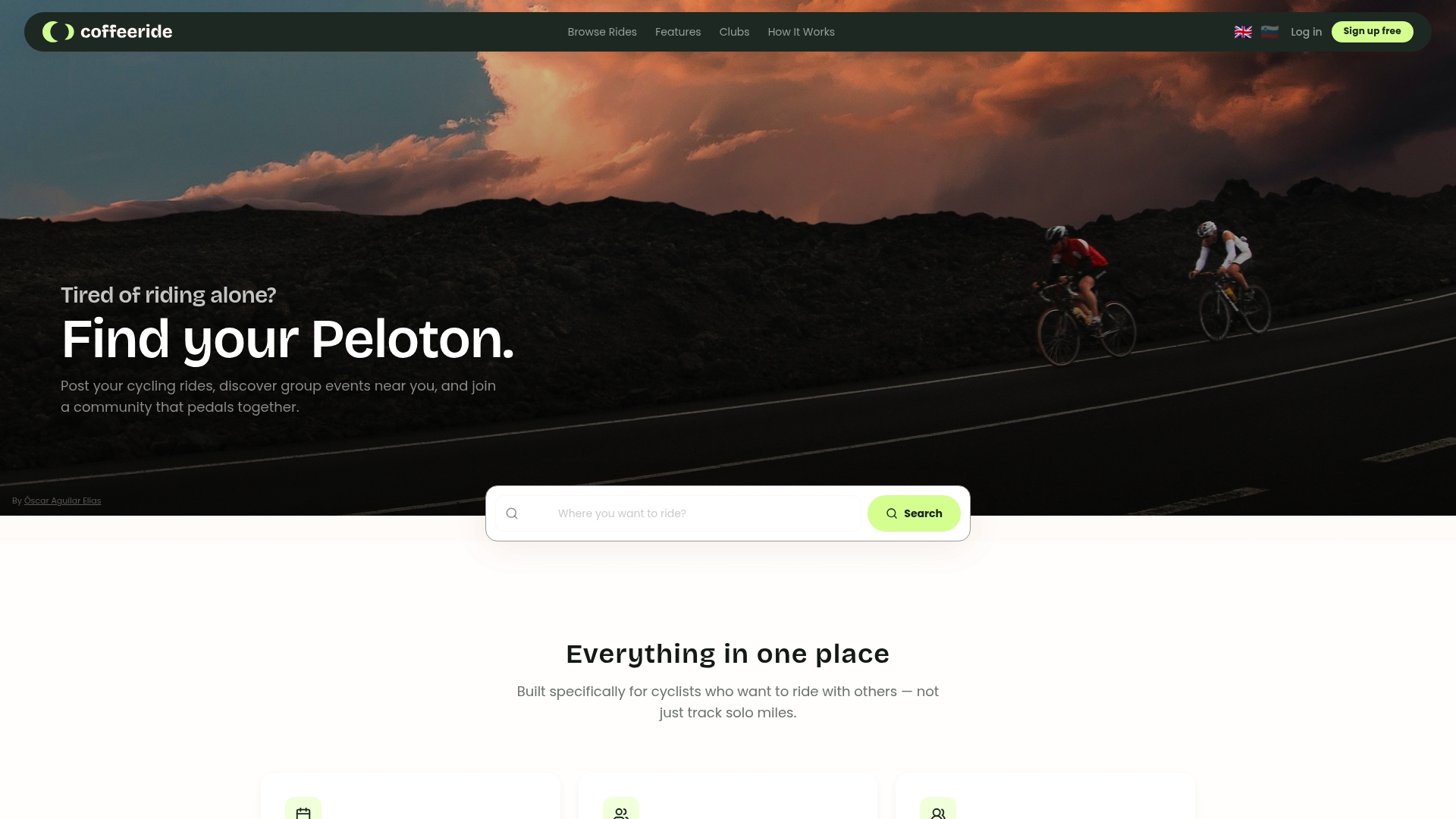
Recurring clubs make it easier to keep the same co-leaders and backmarkers ride after ride, and the women-only and para-cycling flags mean you can run the exact kind of ride you want to lead without extra explaining. Ready to fill your next ride? Post it on Coffeeride Club and start matching with riders at your pace.
Sources
- How to lead a group cycle ride | Cycling UK
- Top tips for Ride Leaders | Islington Cycling Club
- How to Lead a Group Ride, According to Experts | Bicycling
FAQ
What is the 75% rule in cycling?
Definitions of a “75% rule” vary by club and aren’t a fixed industry standard, so check your own club’s guidance before relying on one. Some groups use it informally to describe riding at roughly three-quarters effort on a steady group ride, but no source in this guide defines an official version.
What is the 80% rule in cycling?
Like the 75% rule, this isn’t a standardized term with one agreed definition. It’s sometimes used informally to describe pacing a ride at a comfortable, sustainable effort rather than an all-out pace, but riders should confirm what their specific group or leader means by it.
Is it easy to cycle 20 kilometers?
For a fit, regular rider, a moderate distance fits comfortably within a short group ride. For a newer rider, it depends heavily on terrain and pace, which is exactly why a clear pace band and honest route description in the ride post matter so much.
What body type makes a good cyclist?
Cycling doesn’t require one specific body type; riders of different builds succeed at different disciplines, from climbing to sprinting to endurance riding. What matters more for a group ride leader is matching riders to a pace band that suits their fitness and experience, not their size or shape.
How do I write a good ride post as a leader?
A strong ride post states the meeting pin, rolling start time, pace band, distance, and whether it’s no-drop, along with any required kit. Cycling UK’s guidance notes that describing pace in expected ride time, not just distance, helps riders judge fit more accurately before they join.


