Top 10 MTB Trails in Slovenia, Park Rules, GPX and Ride Partners
· 18 min read
Slovenia’s best mountain biking lives in five places: the Soča Valley, the Julian Alps around Gorenjska, Pohorje near Maribor, the Bohinj and Bled lake basin, and the Kočevje forest trail center. Below you’ll find a ranked top 10 of trails and routes, region breakdowns, local access rules, and the planning details you need to actually get out there. Bring your crew, or find one, and go chase the horizon.
TL;DR:
- The Juliana Bike Circular Route covers 290 kilometers over seven stages and is best suited for strong, experienced riders who can handle multi-day self-support.
- The Soča Valley offers 395 kilometers of trails with scenic riverside singletrack, ideal for intermediate riders seeking landscape without extensive climbs.
- The Bohinj lakeside loop provides a flat, family-friendly ride around Lake Bohinj, making it accessible from spring through fall due to its lower elevation.
- Lift-assisted bike parks like Pohorje cater to nearly all skill levels, with graded trails and dedicated skills areas, but riders must check current season dates and rules before visiting.
- Riding outside designated routes in protected areas such as Triglav National Park is illegal without explicit permissions, making route choice and compliance crucial for access.
Table of Contents
- Which Slovenian regions should you ride first?
- The top 10 MTB trails and routes in Slovenia
- What to expect at Slovenia’s bike parks and trail centers
- Riding responsibly: park rules, permits, and protected land
- Planning your trip: maps, GPX, transport, and timing
- Riding with others makes every Slovenian trail better
- Renting a bike and booking a guided tour in Slovenia
- Where to stay when you’re traveling with a bike
- MTB events and festivals worth building a trip around
- Getting your bike serviced on the road
- What actually matters when you plan a Slovenian MTB trip
- Find your next Slovenian ride with Coffeeride Club
- Sources
- FAQ
Which Slovenian regions should you ride first?
Slovenia packs an enormous variety of terrain into a small footprint, and each region rewards a different kind of rider. Here’s how the main areas stack up.
- Soča Valley (Bovec, Kobarid, Tolmin): riverside singletrack next to turquoise water, plus long alpine climbs that reward strong legs. Regional pages describe dozens of routes with GPX and stage descriptions, and the same source flags hot summer conditions on the long climbs.
- Julian Alps and Gorenjska: high alpine rides around Velika Planina and Uskovnica, with sweeping views and exposed ridgelines that suit fitter, more experienced riders.
- Pohorje near Maribor: lift-assisted gravity riding and a dedicated skills park, built for riders who want downhill laps without the climbing.
- Lake Bohinj and Bled: a mix of gentle lakeside paths for families and steeper alpine singletrack for riders chasing a bigger day. The Bohinj region alone carries more than 370 kilometers of biking trails.
- Kočevje: a purpose-built trail center in deep forest, with graded technical features and formal trail-use rules.
- Idrija, Cerkno, and the Karst south: limestone terrain and old mining tracks, quieter than the alpine hubs and good for riders who want technical variety without crowds.
Fitness-focused riders tend to gravitate toward the Soča Valley and the Julian Alps, gravity riders head to Pohorje, families and mixed-ability groups do well around Bohinj and Bled, and technical trail-center fans land in Kočevje. Several of these regions sit inside or near protected areas, so route choice also means respecting local management plans, something covered in detail further down.
The top 10 MTB trails and routes in Slovenia
This list mixes classic singletrack, long alpine loops, gravity-park runs, and one major multi-day route. Distances and grades come from regional tourism sources and the Cicerone guidebook, so treat them as a starting point and always check current trail-center or park notices before you ride.
- Juliana Bike Circular Route (Julian Alps). The signature multi-day loop of the Julian Alps runs 290 kilometers with about 8,500 meters of total ascent across seven stages, with marked approach stages from Radovljica-Bled-Gorje, Žirovnica-Jesenice-Mojstrana, and Goriška Brda-Tolmin. It’s best ridden counter-clockwise to match the prevailing weather pattern, and it suits strong, experienced riders comfortable with multi-day self-support. Best season: June through September. Maps: official GPX from regional tourism sites.
- Soča Valley riverside singletrack (Bovec-Kobarid). Fast, flowing trail beside the Soča River with a handful of technical rock sections. Regional route pages list many self-guided tours in the area, and the Bovec region reports around 395 kilometers of biking trails overall. Suits intermediate riders looking for scenery without a huge climb. Best season: late spring through early fall, with caution for summer heat.
- Velika Planina high alpine loop (Gorenjska). A climb onto a highland plateau dotted with traditional herders’ huts, followed by open ridge riding. Recommended for fit, experienced riders comfortable with exposure and loose alpine surfaces. Best season: July through September, once snow clears the highest sections.
- Uskovnica to Velika Planina connector. A shorter link route often paired with the Velika Planina loop for a bigger day, with a mix of forest road and singletrack descent. Good for intermediate to advanced riders building toward the full alpine loop. Best season: summer.
- Pohorje bike park downhill runs (Maribor). Lift-assisted gravity trails with graded runs from beginner-friendly flow to advanced rock gardens, plus a dedicated skills area for practicing before committing to a full run. Suits riders of nearly any level thanks to the graded system, though the steeper lines need real downhill experience. Best season: the park typically runs a defined lift season, so check current dates before you go.
- Bohinj lakeside family loop. A flat, wide gravel and singletrack path around Lake Bohinj, ideal for families, beginners, or anyone wanting a relaxed ride with alpine backdrops. Best season: spring through fall, since the lower elevation keeps it rideable longer than the high alpine routes.
- Bled to Bohinj alpine singletrack. A step up from the lakeside loop, this route climbs into forested singletrack between the two lake basins with a genuinely technical descent back down. Suits intermediate riders ready to leave the flat paths behind. Best season: June through September.
- Kočevje MTB Trail Center graded runs. A purpose-built network of graded technical trails through dense forest, run under a formal terms-of-use system. Riders must sign the trail center’s rules of use, wear a helmet, and ride only on marked trails, with parental consent required for riders under 14. Suits riders who want technical progression in a controlled setting. Best season: late spring through fall.
- Idrija-Cerkno karst singletrack. Limestone terrain laced with old mining tracks gives this route a different character from the alpine regions: rockier, drier, and quieter. Suits intermediate riders who want technical variety without alpine crowds. Best season: spring through fall, since lower elevation keeps trails dry earlier.
- Cicerone-graded day routes across Slovenia. The Cicerone guidebook ‘Mountain Biking in Slovenia’ catalogs 35 graded routes ranging from 12 to 59 kilometers, noting that most demand good fitness rather than advanced technical skill. These make a solid backbone for riders building a multi-region trip, since they span difficulty levels and geography. Best season: varies by route and elevation, so check the specific listing.
Together these ten give you everything from a family lakeside cruise to a seven-stage alpine expedition, and most can be ridden solo, with a guide, or with a group you find through a local riding community.
What to expect at Slovenia’s bike parks and trail centers
Krvavec, Pohorje near Maribor, and Kočevje each run on a similar model: you pay for access, follow marked and graded runs, and use lifts or shuttles to skip the climb. At Pohorje, riders buy a lift ticket that covers a set number of rides or a full day, with multi-day and seasonal options also available.
- Lift or shuttle access moves you to the top so you can focus laps on the descent instead of the climb.
- Graded runs let you match the trail to your skill level, from flow-friendly beginner lines to rock-garden expert runs.
- Skills areas give newer riders a place to practice jumps and drops before committing to a full trail.
Statistic: Visit Pohorje’s bike park price list sets out day, multi-day, and seasonal ticket tiers with VAT included, which is the pricing shape you’ll find echoed across most Slovenian parks: check the current list before you plan a trip, since rates and season windows change year to year.
Helmets are mandatory at every trail center in this guide, and Kočevje in particular requires riders to sign a declaration accepting personal responsibility before their first run, with under-14 riders needing parental consent. Expect your first lap at any new park to be a slow one: trail centers generally treat it as an inspection run so you learn the line before pushing pace.

Riding responsibly: park rules, permits, and protected land
Slovenia’s mountains are beautiful partly because access is taken seriously, and that means real rules you need to know before you ride off a marked line. Triglav National Park is the clearest example.
Triglav National Park states that mountain biking is permitted only on roads and paths named in the park’s management plan, with any exception requiring direct agreement with the land’s owners or managers. Riding through open habitat outside those designated routes is generally not allowed, and that restriction exists to protect fragile alpine ground that doesn’t recover quickly from tire damage.
Building or marking a new trail anywhere in Slovenia isn’t a solo decision either. It requires landowner consent, input from the forestry authority Zavod za gozdove, and in some cases a Natura2000 notification or water permit if the route runs near a stream. Skipping that process is why unauthorized trail-building keeps quietly costing riders access across the country.
- Stay on marked and signed routes, especially inside national park boundaries.
- Follow trail-center terms exactly, including Kočevje’s signed rules of use and helmet requirement.
- Yield to hikers and slower traffic on shared multi-use paths.
- Support local maintenance where you can, since most Slovenian trail access depends on ongoing cooperation between landowners and tourism bodies.
Pro Tip: Before a ride in or near a protected area, check the relevant park or trail-center page for the current list of approved routes: rules do change season to season, and riding an old GPX track can put you on a path that’s no longer sanctioned.
Planning your trip: maps, GPX, transport, and timing
Getting the logistics right saves you from a wasted day, and Slovenia makes most of it straightforward if you plan ahead.
- Pull GPX from official sources first. Regional tourism pages and the Julian Alps site publish current GPX for routes like Juliana Bike, and checking there beats relying on an old download.
- Check for diversions before you leave. Trail conditions and access rules shift with the season, so a quick look at the relevant trail-center or park notice board avoids surprises.
- Plan your transport with a bike in mind. If you’re flying in, Ljubljana is the main international gateway, and from there you’ll typically need a car, shuttle, or bike-friendly transfer to reach the Soča Valley, Bohinj, or Pohorje.
- Match your season to your region. High alpine routes like Velika Planina need summer conditions, while lower-elevation rides around Bohinj and the Karst stay rideable earlier in spring and later into fall.
- Build in water and sun protection for the Soča Valley. Local route pages specifically flag hot summer conditions on the long valley climbs, so plan for shade breaks and carry more water than you think you need.
Riding with others makes every Slovenian trail better
Solo laps have their place, but Slovenia’s remote alpine singletrack is safer and more fun with company. The app lets you post a ride, join one already scheduled nearby, and filter by pace for a better group experience. Women-only and intro-friendly rides are marked clearly, and sharing your pace and skill level before a ride helps maintain group cohesion and safety.

Renting a bike and booking a guided tour in Slovenia
Not every rider travels with their own bike, and Slovenia’s main hubs have you covered. Bike shops in Bovec, Kobarid, and Bled routinely rent full-suspension MTBs alongside hardtails, and many pair rentals with helmet and protection gear so you don’t need to pack your own. Pohorje’s park operation similarly supports gear rental for visitors who just want to show up and ride laps.
Guided tours are worth booking if you’re new to a region or want local knowledge on trail conditions, especially in the Soča Valley and around the Julian Alps where routes can be exposed and weather changes fast. A local guide also knows which sections of a route like Juliana Bike are currently open, which matters given how often mountain trail status shifts with weather and maintenance work.
If you’re traveling with a group already, a shuttle service for downhill-focused days can turn a single descent into several repeat laps without the climbing tax. Ask at your accommodation or a local shop about current shuttle operators, since these tend to run seasonally rather than year round.
For riders who want company rather than a paid guide, posting your planned route on a platform like Coffeeride ahead of your trip is a practical way to find someone local who already knows the trail, or at least another visitor heading the same direction. Either path works, and combining a rental with a short guided orientation ride on day one is a solid way to learn a new region fast.
Where to stay when you’re traveling with a bike
Look for accommodation that treats a bike as normal luggage, not an inconvenience. Bike-friendly guesthouses across the Soča Valley, Bohinj, and the Pohorje area commonly offer secure overnight storage, which matters if you’re carrying a bike worth more than your car. Many also provide a bike wash station or at least an outdoor hose and stand, since hosing off Karst limestone dust or Soča Valley mud before it dries on your frame saves real maintenance time later.

Multi-day riders following a route like Juliana Bike benefit from booking stops near the route’s approach stages, particularly around Radovljica-Bled-Gorje or Goriška Brda-Tolmin, so each night’s stay lines up with the next day’s climb instead of adding an extra transfer. If you’re riding with a group, ask ahead whether a property has room for several bikes together, since secure group storage isn’t universal even at otherwise bike-friendly places.
A quick call or message to confirm wash and storage facilities before booking beats arriving late and discovering your bike is spending the night in a hallway.
MTB events and festivals worth building a trip around
Slovenia’s riding calendar includes gravity events, endurance rides, and trail-center gatherings that give you a reason to time a trip beyond just chasing good weather. Pohorje’s bike park, given its lift infrastructure and skills area, is a natural host for downhill and gravity-focused weekends timed to the park’s operating season. Regional cycling tourism pages are the best place to check current event calendars, since dates and formats shift year to year and aren’t fixed far in advance.
If you’re planning around an event, book accommodation early. Riding hubs like Bovec and Bled have limited bike-friendly rooms, and event weekends fill them faster than a normal weekend would. Checking with a local club or riding community ahead of time, including through group ride posts on Coffeeride, is often the fastest way to find out what’s actually happening on a given weekend rather than relying on a static calendar page.
Getting your bike serviced on the road
Even a well-maintained bike needs attention on a multi-day trip, and Slovenia’s main riding hubs have shops that can help. Bovec, Kobarid, and Bled all support bike shops used to servicing mountain bikes rather than just road bikes, which matters for suspension bleeds, tubeless repairs, and drivetrain wear that a generic shop might not stock parts for. Maribor, given its proximity to Pohorje’s bike park, also supports shops geared toward gravity and park riding specifically.
Carry basic trailside repair kit regardless: a tube or plug kit, a multi-tool, and a shock pump cover most on-trail failures without needing a shop at all. For anything bigger, a quick check with your accommodation or a local rider community before you leave home base saves a wasted trip to a shop that turns out to be closed or booked solid.
If you’re riding a remote stage of Juliana Bike or a similar multi-day route, plan your stops around towns known to have a shop rather than assuming every village along the way will have one. The approach stages through Radovljica, Jesenice, and Tolmin are good anchor points precisely because they combine services with route access.
What actually matters when you plan a Slovenian MTB trip
The generic advice about Slovenia biking treats every region as interchangeable, and that’s the biggest thing readers get wrong. A Pohorje weekend and a Juliana Bike stage demand completely different fitness, gear, and mindset, and picking a region that matches your actual skill level matters more than chasing the most photogenic route online.
The second thing overrated advice glosses over is access rules. Riders assume a marked-looking track is fair game, but Triglav National Park and local trail centers operate on explicit agreements between owners, managers, and tourism bodies, and riding outside those lines is how access quietly disappears for everyone. Read the actual rules for the region you’re visiting, not just the route description.
What should come first is honest self-assessment: pick the region that matches your fitness and technical skill, confirm the current access rules for that specific area, and only then start pulling GPX files. Ride with people who know the terrain when you can. A shared ride beats a solo guess on an alpine descent every time.
— Coffeeride
Find your next Slovenian ride with Coffeeride Club
Planning a trip to the Soča Valley or a Pohorje park day is easier when you’re not doing it alone. Coffeeride Club lets you post your planned ride, join one already scheduled nearby, and filter by pace so you end up riding with people who match your speed, not against them.
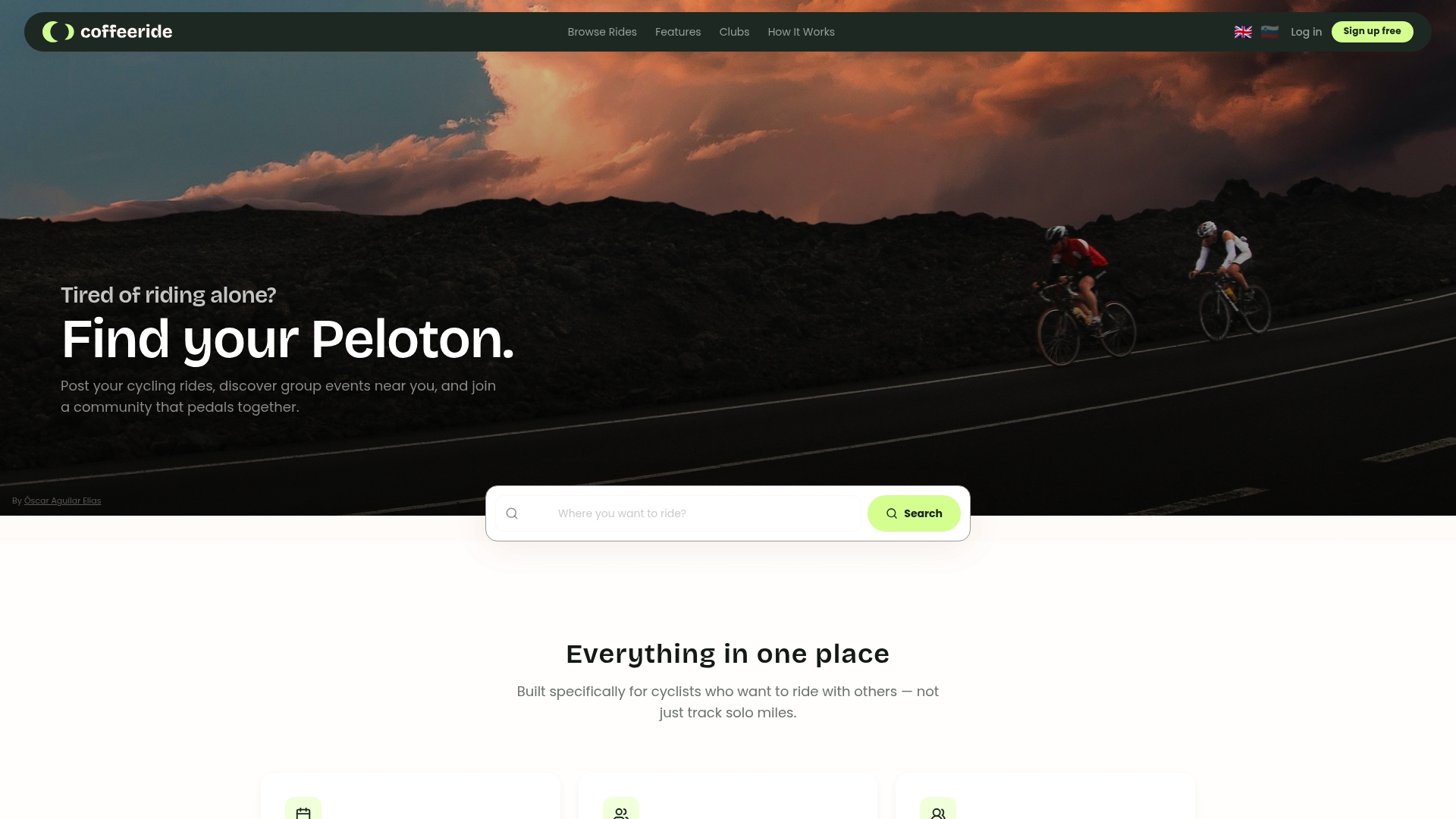
- Discover local group rides and events across Slovenia’s main MTB regions.
- Create or join a club built around mountain biking, with recurring rides and group chat.
- Find women-only or intro-friendly rides marked clearly inside the app.
It’s a free complement to the official maps, trail-center rules, and park pages covered above, not a replacement for them. Join Coffeeride Club and post your next Slovenian ride.
Sources
- Krožna turnokolesarska pot Juliana Bike — Julian Alps site
- Mountain biking — Triglav National Park
- MTB Trail Center Kočevje — Rules of use (PRAVILA UPORABE)
- Slovenia
- Mountain Biking in Slovenia – Cicerone Press
FAQ
What is the best region for beginner mountain bikers in Slovenia?
The Bohinj and Bled lake basin is the most beginner-friendly, with flat lakeside paths and gentler singletrack alongside more advanced alpine options nearby. Regional tourism data lists more than 370 kilometers of biking trails around Bohinj alone, so there’s room to grow into harder terrain without changing regions.
How long is the Juliana Bike route and how many stages does it have?
Juliana Bike covers 290 kilometers with roughly 8,500 meters of total climbing across seven main stages around the Julian Alps. It’s typically approached from one of three directions, including Radovljica-Bled-Gorje or Goriška Brda-Tolmin, and is best ridden counter-clockwise.
Can you ride anywhere inside Triglav National Park?
No. Triglav National Park permits mountain biking only on roads and paths named in its management plan, and any ride outside those designated routes requires separate agreement with the land’s owners or managers.
What rules apply at the Kočevje MTB Trail Center?
Riders at the Kočevje MTB Trail Center must sign a terms-of-use declaration, wear a helmet, and stick to marked trails, with parental consent required for riders under 14. The center runs on a personal-responsibility model, so riders accept the risk of their own run.
Is Coffeeride a good way to find MTB riding partners in Slovenia?
Coffeeride lets you post or join group rides across Slovenia’s MTB regions and filter by pace, discipline, and preferences like women-only rides. It’s a free, community-driven option to find local riding partners alongside official maps and trail-center rules.


