Find MTB Group Rides Fast: 4 Places to Join a No Drop Local Crew
· 10 min read

The fastest way into mtb group rides is through club calendars, Facebook groups, and platforms like Coffeeride, all of which post weekly rides split by pace so nobody gets left in the dust. Expect a seasonal rhythm: weeknight rides in the evening, longer weekend outings, and groups broken into beginner, intermediate, and advanced sub-packs with a no-drop policy holding everyone together. Show up, pick your pace, and ride.
TL;DR:
- Most rides happen from spring to autumn, with weeknight evening rides for after-work fitness and longer weekend outings starting mid-morning.
- Ride listings should include exact meeting points, route details, estimated duration, and skill level; missing info suggests poor organization.
- Groups split into sub-packs by pace and skill level, with no-drop rides emphasizing stamina over speed, and riders should communicate if struggling.
- Check club websites, social media, and platforms like Coffeeride for current ride schedules, registration requirements, and safety policies before attending.
- Carry essential gear like a helmet, spare tube, and water, and respect trail conditions and etiquette to ensure safety and trail preservation.
Table of Contents
- When Do MTB Group Rides Happen?
- How Do Ride Levels and Pace Groups Work?
- Where to Find and Join MTB Group Rides
- Safety, Etiquette, and What to Bring
- Starting Your Own MTB Group Ride
- How Coffeeride Makes Organizing and Joining Rides Easier
- Why Group Rides Change How You Ride
- Try Coffeeride Club for Your Next Ride
- Authoritative Club Pages and Trail Resources to Check
- Sources
- FAQ
When Do MTB Group Rides Happen?
Most organized mountain biking events run from spring through autumn, when daylight and dry trails line up. Once the clocks push back and dirt turns to mud, a lot of clubs pause weeknight rides and lean into weekend outings or indoor social meetups instead.
Weeknight rides tend to cluster around early evening, timed to catch riders straight from work while there’s still light on the trail. Weekend rides run longer and usually start mid-morning so nobody’s racing sunrise or sunset.
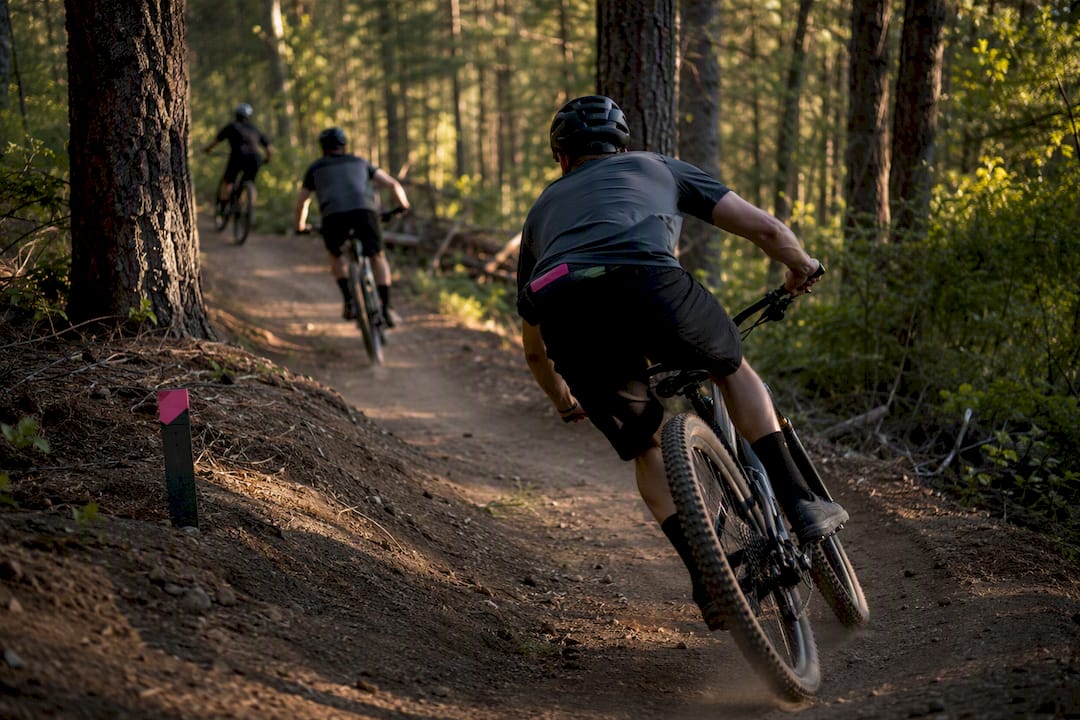
Ride calendars change fast. Rain, trail damage, or low turnout can cancel a ride with a day’s notice, so check the listing again before you drive out. Clubs like the Boulder Mountainbike Alliance post weekly schedules with cancellation notes right on the event page, and that’s the pattern you’ll see across most club sites and group pages.
Before you commit to any ride, scan the listing for these basics:
- Meeting point: the exact trailhead or parking lot, not just a neighborhood
- Route: name or general loop, plus total distance
- Duration: estimated ride time, including regroup stops
- Skill level: beginner, intermediate, or advanced, and whether it’s no-drop
Skip any listing missing these details. A vague post is usually a sign the ride isn’t well organized, and that’s the last thing you want on unfamiliar singletrack.
How Do Ride Levels and Pace Groups Work?
Beginner or easy rides usually mean shorter distances, gentler climbs, and minimal technical features like rock gardens or drops. Intermediate rides pick up the pace and mileage, often including moderate climbs and some technical terrain riders need basic skills to clear. Advanced rides push distance, elevation gain, and technical difficulty, and they typically move faster with less waiting around.
When turnout is big, many clubs split into smaller sub-groups right at the trailhead so pace and technical comfort actually match instead of forcing everyone into one pack. That’s standard practice at clubs across Slovenia and beyond, and it’s one of the simplest fixes for the classic problem of strong riders waiting on hills while newer riders gasp for air.
A few rules of thumb help you pick correctly:
- Match the group to the hardest terrain feature, not the average distance
- If the listing mentions technical sections you haven’t tried, ride one level down
- No-drop rides mean the group waits at every regroup point, so speed matters less than stamina
Pro Tip: If you get dropped anyway, don’t panic and don’t chase. Slow down, stay visible, and let the sweep rider catch up to you. That’s their job.
Where to Find and Join MTB Group Rides
Start with club websites and calendars. Groups like KD Rajd list separate categories like beginner, advanced, and skills-workshop rides, which makes it easy to filter before you even show up. From there:
- Check Facebook groups and event pages for your region, since many local crews organize almost entirely through social posts.
- Ask at a local bike shop. Staff usually know which rides are active and which have quietly folded.
- Search Strava club pages and ride apps for recurring group activities near your usual trails.
- Try a dedicated platform like Coffeeride, which lets you filter by pace, discipline, and special-interest rides, including women-only groups.
Once you find a candidate ride, a little prep goes a long way:
- Confirm whether registration or a waiver is required, especially for club-sponsored or insured rides
- Arrive 10 to 15 minutes early to sort out gear and introduce yourself to the ride leader
- Mention your experience level honestly. Leaders use that to decide where you fit in the subgroup
Most community rides are free to join, though some ask you to register or hold a membership for insurance reasons.
Safety, Etiquette, and What to Bring
A helmet is non-negotiable on every group ride, no exceptions. Beyond that, carry a spare tube, a mini pump or CO2 inflator, basic tire levers, water, some form of ID, and a small first-aid kit. Nobody wants to be the rider who holds up the whole group over a flat because they packed nothing.
Group etiquette keeps things safe and social. Call out hazards like loose rock or downed branches, signal before passing, and yield to hikers and other trail users, even when you technically have the right of way. On well-run rides, the leader sets the pace and the sweep rider stays at the back so nobody gets isolated on the trail. Rides with a documented leader and sweep role, membership expectations, and clear waiver policies, like the setup the Ottawa Mountain Bike Association runs, tend to feel noticeably more organized than informal meetups.
- Skip the ride if trails are saturated or storms are forecast. Riding mud damages the trail for everyone.
- Speak up early if you’re struggling. Silence just means a harder bailout later.
Pro Tip: Text the ride leader your emergency contact before you roll out, especially on rides deep in the backcountry with spotty cell service.
Starting Your Own MTB Group Ride
Leading a ride starts with a route you already know well. Pin down the meeting point, a realistic duration, and at least one bailout option in case someone bonks or bikes break down. Write a two or three sentence route description covering distance, climbing, and technical difficulty so riders can self-select honestly.
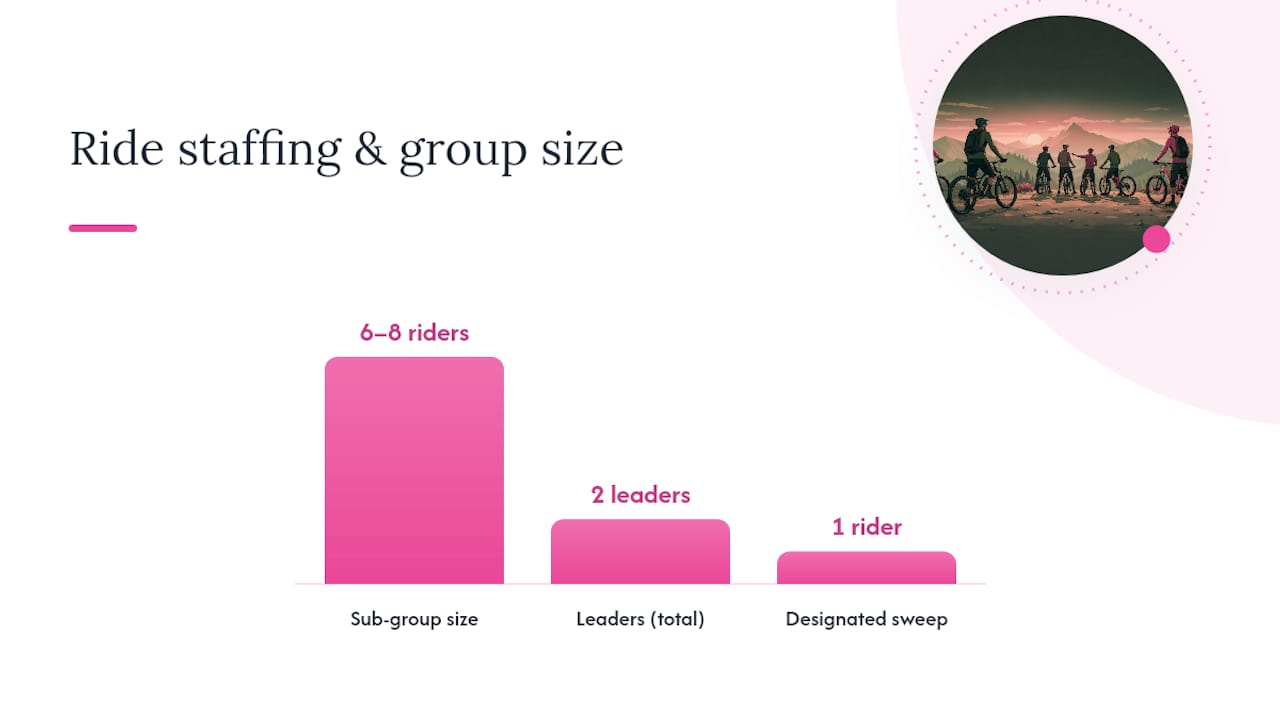
Keep sub-groups around six to eight riders. Beyond that, assign a second leader and split by pace before you even leave the parking lot. Every ride needs a designated sweep, someone who rides last and makes sure nobody gets separated.
When you list the ride, include:
- Meeting point and start time
- Route name, distance, and elevation gain
- Skill level and no-drop status
- Any waiver or registration step riders need to complete beforehand
Share your live location with a co-leader or a contact back home, and carry basic first-aid supplies. If something goes wrong, know the nearest access point for emergency services before you need it, not after.
How Coffeeride Makes Organizing and Joining Rides Easier
Some platforms are built around the idea that riding together should be as easy as posting a ride and letting people show up. You can post a group ride quickly, filter by discipline and pace, and manage recurring club events without juggling multiple group chats.
For organizers, RSVP features can help in estimating headcounts before rides, and group chats handle last-minute changes like cancellations or subgroup splits without a scramble of individual texts. That kind of centralized coordination cuts a lot of the friction that keeps casual riders from ever finding the right crew.
Some platforms also support:
- Private clubs for groups that want to manage membership on their own terms
- Women-only rides that are kept private and protected
- Rides for para-cyclists, helping riders with specific needs find compatible groups
Whether you’re brand new to group rides or you’ve been running the same Tuesday night loop for years, the app turns scattered word-of-mouth into a searchable, joinable calendar.
Why Group Rides Change How You Ride
Riding with others sharpens skills faster than riding alone ever will. Watching how someone clears a rock garden, hearing a call for a hidden root, or just riding at someone else’s pace teaches things solo laps never will. If you’ve been putting off your first no-drop beginner ride, this is the nudge: show up once, and you’ll understand why so many riders never go back to riding alone.
— Coffeeride
Try Coffeeride Club for Your Next Ride
Finding a crew shouldn’t take more effort than the ride itself. Coffeeride Club puts local rides, clubs, and events in one place, filtered by pace, discipline, and the kind of group you’re actually looking for, whether that’s a laid-back beginner loop or a women-only trail session.
First-timers get a straightforward way to browse rides near them and RSVP without cold-messaging a stranger on social media. Organizers get recurring event tools, group chat for last-minute changes, and club management that doesn’t require a spreadsheet. Post your first ride or browse what’s happening near you this week at Coffeeride, and turn your next solo loop into a group one.
Authoritative Club Pages and Trail Resources to Check
- Boulder Mountainbike Alliance — Group Rides: weekly schedules, level keys, and no-drop policies
- KD Rajd — Group Rides & Workshops: ride categories including beginner, advanced, and workshop-integrated sessions
- Ottawa Mountain Bike Association — Larose Group Ride: leader/sweep structure and waiver expectations
- MTBProject — Woodstock 101 Trail: route features and condition notes for ride planning
Sources
- 57hours — Biking in Slovenia
- Boulder Mountainbike Alliance — Group Rides
- KD Rajd — Group rides & Workshops
- Ottawa Mountain Bike Association — Larose Group Ride
FAQ
What Should a Beginner Bring to Their First MTB Group Ride?
A helmet, a spare tube, a mini pump, water, and ID cover the basics. Most no-drop beginner rides move at a manageable pace, so fitness matters less than showing up prepared.
How Do I Know Which Pace Group to Join?
Match the group to the hardest climb or technical section mentioned in the listing, not just the average distance. When in doubt, ride one level down and step up once you’re comfortable.
Are MTB Group Rides Free to Join?
Most community-led rides are free, though some clubs ask for membership or a waiver for insurance purposes. Platforms like Coffeeride let you check ride details and RSVP before you commit.
How Do I Find MTB Group Rides Near Me?
Check local club calendars, Facebook groups, bike shop bulletin boards, and platforms like Coffeeride, which let you filter by pace, discipline, and even women-only rides. Cross-checking two or three sources usually turns up more active rides than relying on just one.
What Happens if I Get Dropped on a Group Ride?
Slow down, stay on the marked route, and wait for the sweep rider, who’s responsible for keeping the back of the group together. On true no-drop rides, this shouldn’t happen since the whole group waits at regroup points.


