7 RSVP Fields That Make Group Rides Safer and Private
· 9 min read

A group ride RSVP is the headcount that turns a ride idea into a real event. It tells the organizer how much food to order, how many leaders to schedule, and who needs the safety briefing before wheels roll. If you’re organizing, set your capacity and RSVP deadline right now on Coffeeride. If you’re joining, confirm your spot or cancel it today so someone else can take it.
TL;DR:
- RSVPs should be capped with an automatic waitlist to maximize group size management and ensure accurate headcounts for logistics.
- Deadlines are most effective when set for the Thursday before the ride, giving organizers ample time to finalize meal and support preparations.
- Safety and pace information must be clearly communicated, with mandatory briefings requiring rider attendance to reduce incidents and confusion.
- Organizers should schedule multiple reminders, including attaching route links or GPX files again 48 hours before the event.
- Using dedicated ride management tools like Coffeeride simplifies capacity control, privacy, and recurring ride organization, reducing manual effort.
Table of Contents
- How Do You Create a Group Ride RSVP Event?
- Turning RSVP Numbers Into Ride-Day Logistics
- Ride Etiquette, the 75% Rule, and Mandatory Briefings
- Which RSVP Tools and Templates Actually Work?
- Your Copy-Ready Organizer Checklist
- Why Coffeeride Treats RSVPs as a Two-Way Promise
- Ready to Run Your Next Ride Without the Guesswork?
- Sources
- FAQ
How Do You Create a Group Ride RSVP Event?
A good event page does the thinking for you before ride day even starts. Build it once with the right fields, and you won’t spend Saturday morning answering the same three questions by text.
Include these required fields when you post the ride:
- Date and time, including the meeting time versus the roll-out time (they’re rarely the same).
- Exact start point, with a pin, cross streets, or parking lot name, not just a neighborhood.
- Route link or GPX file so riders know the distance, climbing, and terrain before they show up.
- Pace or skill level, stated in miles per hour or a plain description like “conversational” or “hammerfest.”
- Maximum headcount, based on what your leaders and support can safely manage.
- RSVP deadline, giving you time to plan logistics before the ride.
- Safety acknowledgement, a simple checkbox confirming the rider will attend the pre-ride briefing.
Turn on a waitlist once you’re within a few spots of capacity. It keeps interested riders in the queue instead of losing them to a “sold out” wall, and it gives you a ready replacement the moment someone cancels.
Deadlines work best when they’re specific and boring. Many club rides simply close RSVPs the Thursday before a weekend ride. This gives organizers a full workday to firm up meal counts and leader assignments.
In the event description, spell out pace groups by name (A, B, C or “steady,” “social,” “spirited”) and state plainly that briefing attendance is mandatory, not optional. Your confirmation message should repeat the start time, the exact meeting spot, what to bring, and a one-line reminder that RSVP status can change at any time.
Turning RSVP Numbers Into Ride-Day Logistics
Your RSVP list is a planning tool disguised as a guest list. The moment you have a real number, use it.
- Order meals or snacks based on confirmed headcount, not on hope. Many club rides collect RSVPs specifically to nail down lunch counts ahead of a set cutoff.
- Scale support vehicles and sag wagons to group size, not to your biggest ride ever.
- Keep a leader-to-rider ratio that matches your route difficulty. A flat 15-mile loop needs less oversight than a mountain descent with technical sections.
- Schedule reminders at 7 days, 48 hours, 12 hours, and a day-of check-in so no one shows up to the wrong parking lot.
Pro Tip: Send your 48-hour reminder with the exact GPX file attached again, even if you sent it at signup. Riders lose links; they rarely lose a second email.
Set a transparent cancellation cutoff, publish it, and stick to it. Meetup-style ride pages frequently ask members to update their RSVP the moment plans change so a spot doesn’t sit empty while someone on the waitlist misses out. Allow transfers between riders when your capacity is tight, but require the transfer to go through you, not a side text thread, so your list stays accurate.
Keep participant lists private by default, especially for women-only or para-cycling rides, and share weather cancellations or route changes only through the RSVP contact list, not a public post.
Ride Etiquette, the 75% Rule, and Mandatory Briefings
The 75% rule is simple: no rider should ever be working at more than about three-quarters of their max effort during a group ride. It keeps conversation possible, keeps the group together, and keeps the slowest rider from getting shelled off the back. Pace grouping is how organizers make the rule stick. Split riders by realistic speed, not by ego, and the whole group moves as a unit instead of stretching into a dangerous string of stragglers.
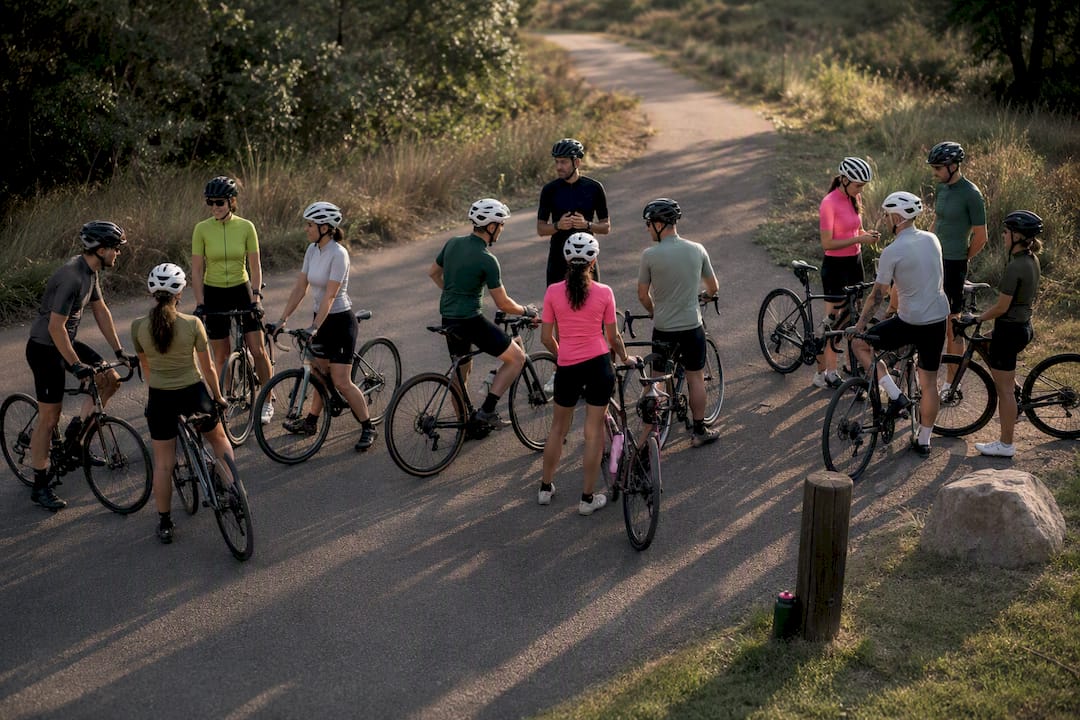
Safety briefings exist because most incidents happen from confusion, not fitness. That’s why many organized rides state plainly that riders must be present at the pre-ride briefing to participate, RSVP or not.
Standard expectations worth stating in every RSVP:
- Helmets are mandatory, no exceptions, regardless of ride pace.
- E-bikes are welcome only in groups that specify it, since speed differentials change group dynamics.
- Local traffic laws govern the ride, and organizers should note any relevant state or city ordinance.
- Riders arriving after the briefing lose their confirmed spot and shift to observer status for that ride.
Clubs that publish a clear cutoff and a hard briefing requirement report far fewer arguments on ride day, because nobody can claim they didn’t know the rule.
Which RSVP Tools and Templates Actually Work?
Not every ride needs the same setup. A weekly neighborhood spin and a 200-rider charity fondo call for different tools.
- Simple single-event pages work fine for small, recurring rides with a stable group and low stakes.
- Club-platform events, like the ones built into Coffeeride, fit organizers running recurring rides across multiple pace groups or disciplines.
- Calendar-plus-route sync tools help when riders need the event, the GPX file, and the meeting spot all in one link.
- Paid ticketing platforms make sense for fundraiser rides, since some events layer group pricing and RSVP packs onto standard registration.
Whatever category you choose, confirm it handles these essentials:
- RSVP caps with automatic waitlist promotion.
- A route or GPX attachment field, not just a text description.
- Automated reminder scheduling.
- Privacy settings that hide attendee lists for sensitive or special-interest groups.
- Mobile check-in and the ability to assign ride leaders per pace group.
Your template checklist should always include confirmation text, a waiver acknowledgement if your club requires one, and a fixed reminder cadence you reuse every single week.
Your Copy-Ready Organizer Checklist
Print this once, and reuse it for every ride you post.
Pre-event:
- Confirm capacity and open the waitlist trigger point.
- Assign leaders for each pace group.
- Check permit requirements for your route or start location.
- Lock in food, water, and support vehicle needs based on RSVP count.
- Draft your safety briefing talking points.
Day-of:
- Set up a check-in table at the meeting point.
- Pack a first-aid kit and confirm who’s carrying it.
- Give leaders radios or a shared group chat for the ride.
- Stagger starts by pace group to avoid a chaotic mass roll-out.
Confirmation template: “You’re confirmed for [ride name] on [date] at [time]. Meet at [exact location] 15 minutes early. Briefing is mandatory. Route: [GPX link]. Reply to cancel and free your spot.”
Pro Tip: Your 24-hour reminder should repeat the meeting point and arrival time word for word. Repetition, not new information, is what reduces late arrivals.
Why Coffeeride Treats RSVPs as a Two-Way Promise
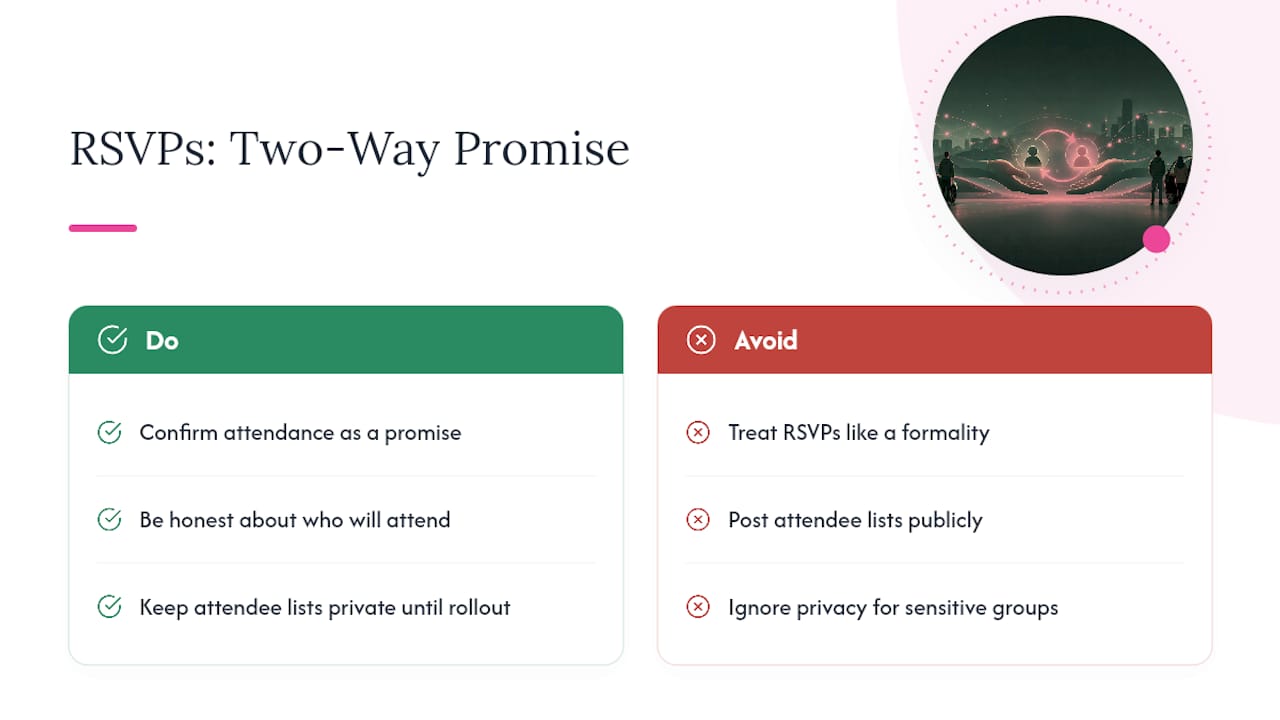
We built RSVP tools around one idea: confirming a ride is a promise, not a formality. Organizers plan around your headcount. You plan your Saturday around their route. Both sides owe each other honesty about who’s actually showing up.
Privacy controls matter here too. Women-only and para-cycling groups ride more freely when attendee lists stay protected until the group rolls out, not posted for anyone scrolling past.
— Coffeeride
Ready to Run Your Next Ride Without the Guesswork?
A good group ride platform offers real capacity limits, automated reminders, leader assignments, and reliable mobile check-in early on ride day. Privacy defaults protect women-only and para-cycling groups without extra setup, and club tools keep recurring rides organized week after week instead of starting from zero every time.
If you’re tired of chasing RSVPs through three different apps, set up your next ride on Coffeeride Club and let the platform handle capacity, reminders, and check-in for you. Post your ride, set your headcount, and watch your crew confirm.
Sources
- Saturday Morning Social Ride with Amigos (Steady) | Cascade Bicycle Club
- RSVP To Ride! – ARR Monthly Ride at Reveille Peak Ranch
FAQ
What Is the 75% Rule in Cycling?
Pace grouping enforces the rule by splitting riders into speed-matched clusters instead of one stretched-out line.
How Do Group Rides Work?
Most organized group rides post an event with a route, meeting point, and RSVP requirement, then use the confirmed headcount to plan support, food, and leader ratios. Riders check in, attend a mandatory safety briefing, and follow their assigned pace group for the duration of the ride.
What Is the Best App for Managing Group Ride RSVPs?
Coffeeride is built specifically for posting group rides, managing RSVP capacity, and running clubs with privacy-aware defaults for sensitive groups like women-only or para-cycling rides. It combines pace filtering, club chat, and recurring event tools in one place instead of scattering them across texts and spreadsheets.
What Are the Etiquette Rules for Group Riding?
Core etiquette includes riding predictably, calling out hazards, staying in your assigned pace group, and updating your RSVP the moment your plans change so someone else can take the spot. Helmets are standard, briefing attendance is typically mandatory, and arriving late without checking in usually forfeits a confirmed spot.
What Happens if I Miss the RSVP Deadline?
Missing the deadline usually means your spot isn’t guaranteed, since organizers finalize headcounts for meals, support vehicles, and leader assignments right at the cutoff. Some rides offer a waitlist, but confirmed riders who RSVP on time always get priority.


