Find a Pace Matched Group Ride in Slovenia in Five Minutes
· 10 min read
The fastest way to a group ride in Slovenia right now is a three-way check: KZS’s “Gremo na kolo” schedule for free guided rides, a local club like KD Rog for structured training, and Ljubljanska kolesarska mreža for one-off community events. Open Coffeeride, set your pace and city, and you’ll see options that match how you actually ride. Expect to find something within your skill level and comfort zone, not just the nearest wheel to chase.
TL;DR:
- Most organized rides in Slovenia happen between late spring and early fall, with larger event listings and community activities during this period.
- Start with federation programs like Gremo na kolo or local clubs such as KD Rog, which offer free guided rides and structured training suited for beginners.
- Select group rides based on pace labels like social or easy, ensuring you can comfortably hold a conversation and match your fitness level.
- Active communication during rides, through hazard warnings and predictable riding, is vital for safety and is prioritized over individual bike skills.
- Using platforms like Coffeeride enables riders to filter and join rides matching their pace and discipline, simplifying the process of finding suitable cycling groups.
Table of Contents
- Where to look first for local group rides in Slovenia
- How to pick the right group for your pace and goals
- Group riding etiquette and safety basics
- What to bring to your first group ride
- How Coffeeride helps you find matched rides in Slovenia
- Small steps into group riding pay off
- Find your matched ride with Coffeeride Club
- Quick links for Slovenian cycling resources
- Sources
- FAQ
Where to look first for local group rides in Slovenia
You don’t need to guess where riders in your area gather. Slovenia’s cycling scene runs on a handful of reliable channels, and once you know them, finding a ride becomes a five-minute task instead of a scavenger hunt.
Start with Kolesarska zveza Slovenije’s “Gremo na kolo” program. It runs free guided tours and cycling schools led by licensed instructors across the country. This is the lowest-pressure entry point available. You show up, you ride with people who expect beginners, and nobody drops you on the first hill.
Local clubs work differently. KD Rog, based in Ljubljana, publishes both open training sessions and members-only programs. Some sessions welcome anyone off the street; others require a membership fee and a season commitment. Check a club’s site before you show up, since the difference between “open ride” and “members only” changes who you’ll meet at the start line.
Community pages fill the gap between federation programs and club structure. LKM posts one-off city and regional rides, from mobility-week events to seasonal group tours, complete with meeting points and RSVP details.
When scanning any event listing, look for:
- Start time and meeting point — vague listings often mean disorganized rides
- Stated distance and route options — many events post short and long versions of the same ride
- RSVP requirement and participant cap — some community rides limit participant numbers for safety
- Discipline tag — road, gravel, or MTB, so you’re not showing up with the wrong bike
Slovenia’s mobility weeks and spring cycling campaigns tend to spike organized-ride activity, so late spring through early fall is when listings multiply fastest.
How to pick the right group for your pace and goals
Pace labels mean nothing until you decode them. “Social” or “easy” usually means conversational speed, stops for coffee, and a leader who waits for stragglers. “Steady” means a consistent tempo with fewer stops. “Training” groups ride to a plan, often with intervals, and won’t wait if you fall off the back. A quick test: if you can hold a conversation without gasping, you’re in the right group.
Here’s how to narrow it down before you commit:
- Match distance to your current fitness. Beginner and social rides typically range from short to moderate distances with modest elevation; intermediate training rides often cover longer distances with more climbing.
- Favor smaller groups when starting out. A pack of eight to fifteen riders is easier to communicate within than a fifty-rider swarm, and it stays social rather than competitive.
- Look for special-interest rides. Women-only groups, beginner clinics, and MTB or gravel meetups exist specifically so you’re not the odd one out.
- Confirm details before RSVP. Ask the leader for average speed, estimated ride time, and whether specific equipment (disc brakes, tubeless tires) is expected.
Coaches who train new riders consistently advise against joining the fastest group available, since social rides work best when everyone can still talk, not just breathe.
Pro Tip: Message the ride leader directly and state your comfortable average speed in kilometers per hour. A good organizer will tell you honestly whether you belong in that group or a slower one.
Group riding etiquette and safety basics
Group rides run on communication, not just fitness. Riders who call out hazards, stops, and turns prevent the chain-reaction crashes that happen when someone brakes without warning. The standard calls: “hole,” “car back,” “slowing,” and “stopping.” Say them loud, say them early.
Predictable riding matters just as much as vocal warnings. Sudden braking or swerving in a tight group causes far more crashes than fatigue or mechanical failure. Hold your line, signal before you move, and never brake hard unless the rider ahead of you does.
Drafting, the practice of riding close behind another rider to save energy, only helps once you’re confident holding a steady line. Trainer Blaze Debevec advises new riders to build stability first and treat drafting as a skill to grow into, not a shortcut to take on day one.
Before you join any ride, check whether the organizer:
- Uses licensed instructors or experienced leaders (a hallmark of KZS-affiliated sessions)
- Publishes a clear route and stated pace in advance
- Assigns a sweep rider or marshal to keep the group together
Communication is the difference between a close call and a crash. Riders and organizers across Slovenian cycling circles point to active callouts as the single leading practice for preventing group-ride incidents, ahead of even bike-handling skill.
What to bring to your first group ride
Check your bike the night before, not the morning of. Tires holding air, brakes gripping cleanly, and a chain that isn’t skipping under load will save you an embarrassing roadside moment.
Pack these essentials:
- ID and phone, ideally in a jersey pocket or small saddle bag
- Spare tube or patch kit, plus a mini pump or CO2 inflator
- A multitool for quick adjustments
- Water and a snack, even for shorter rides
- Basic first-aid items like a bandage and antiseptic wipe
Slovenia’s weather swings hard between seasons. Pack a light shell for spring and fall rides, and don’t skip visibility layers for early morning or dusk starts.
Arrive ten minutes before roll-out, find the leader, and state your pace and experience level directly. Position yourself mid-pack rather than at the front if you’re unsure. Previewing the route with a GPX file beforehand also helps you know what climbs are coming, and tools like Coffeeride let you RSVP and message the group ahead of time so you’re not walking in blind.
How Coffeeride helps you find matched rides in Slovenia
Riding alone gets old fast. Coffeeride exists because finding a group that matches your pace, location, and vibe shouldn’t take more effort than the ride itself.
Here’s what changes once you’re on it:
- Set your pace and preferences once, and the platform surfaces rides that actually fit you
- Search by city or specific route to find what’s happening near you this week
- Join clubs built around your discipline, whether that’s road, gravel, or women-only rides
- Use group messaging tied to each ride to coordinate meeting points and ask questions before you show up
The process is simple: build your profile with pace and location, search nearby rides, RSVP, and show up ready. It turns solo laps into shared ones, and gives newer riders a lower-pressure way to test a group before committing to a club membership.
Small steps into group riding pay off
Nervous about your first group ride? Every rider was once the slowest one in the pack, and that’s fine. Start with a federation program or a social-pace community ride where nobody’s watching a stopwatch. Riding within your limits, using club and federation resources to build skill, and picking groups that match your actual fitness will get you further than forcing your way into a fast group too soon.
The riders who stick with this sport long term almost always started small, asked questions, and let their comfort grow one ride at a time.
— Coffeeride
Find your matched ride with Coffeeride Club
Coffeeride puts you in the group ride that actually fits, instead of leaving you to guess from a list of unfamiliar names and paces. Where club calendars and event pages give you a fixed schedule, Coffeeride lets you filter by pace, discipline, and location, then message the group directly before you show up.
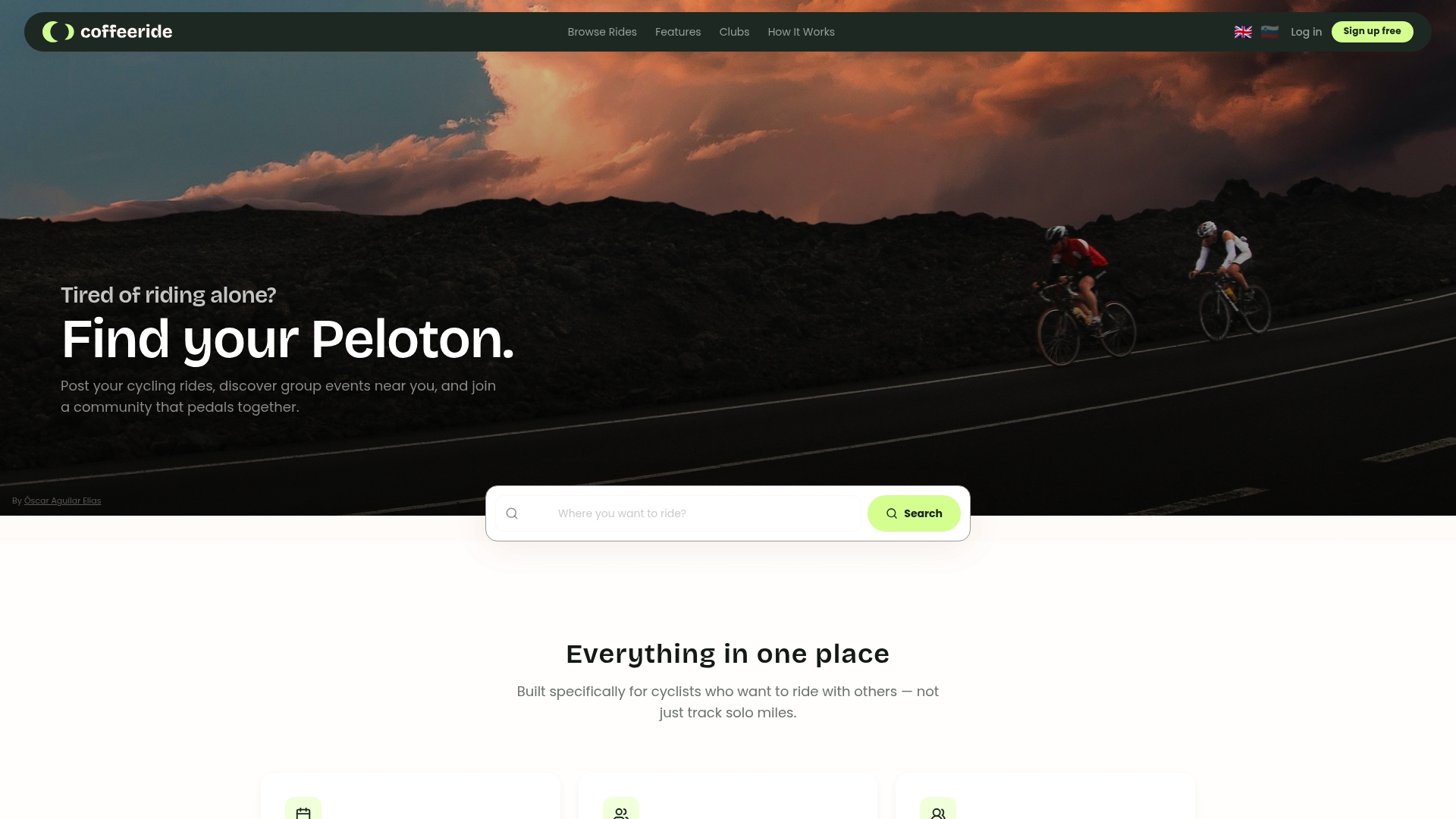
Here’s what you get: a searchable feed of local rides, pace filters that keep you out of groups too fast or too slow for you, club pages for ongoing communities, and group chat for every ride you join. Create your profile, add your pace and location, and explore rides happening nearby this week. Ready to stop riding solo? Create your free profile on Coffeeride Club and RSVP to your first matched ride today.
Quick links for Slovenian cycling resources
- KZS “Gremo na kolo”: free guided rides and cycling schools nationwide
- LKM event calendar: Ljubljana-area community rides and mobility events
- KD Rog club pages: structured training and club membership details
Sources
- Amatersko in rekreacijsko kolesarstvo | KZS - Kolesarska zveza Slovenije
- Skupinsko kolesarjenje je lahko zabavno, a trener svetuje previdnost
FAQ
How do I find a group ride near me in Slovenia?
Check KZS’s “Gremo na kolo” schedule for free guided rides, browse LKM’s event calendar for one-off community rides, or open Coffeeride and filter by your city and pace.
Are group rides in Slovenia free to join?
Federation programs like “Gremo na kolo” are free, while some club sessions require membership fees; community events organized through pages like LKM are typically free but may cap participant numbers.
What pace should a beginner choose for their first group ride?
Choose a “social” or “easy” pace group where you can hold a conversation without gasping, since coaches consistently advise new riders against joining the fastest available group.
Do I need special gear for a group ride?
Basic requirements are a mechanically sound bike, a spare tube and pump, water, and weather-appropriate layers; some training groups may expect specific equipment like disc brakes, so confirm with the organizer beforehand.
How does Coffeeride help me find a compatible cycling group?
Coffeeride lets you set your pace and location preferences, search nearby rides and clubs by discipline, and message the group directly before you show up, reducing the guesswork of joining an unfamiliar ride.


