Parents: Family Cycling Events with Stops Every 20–30 Minutes
· 10 min read
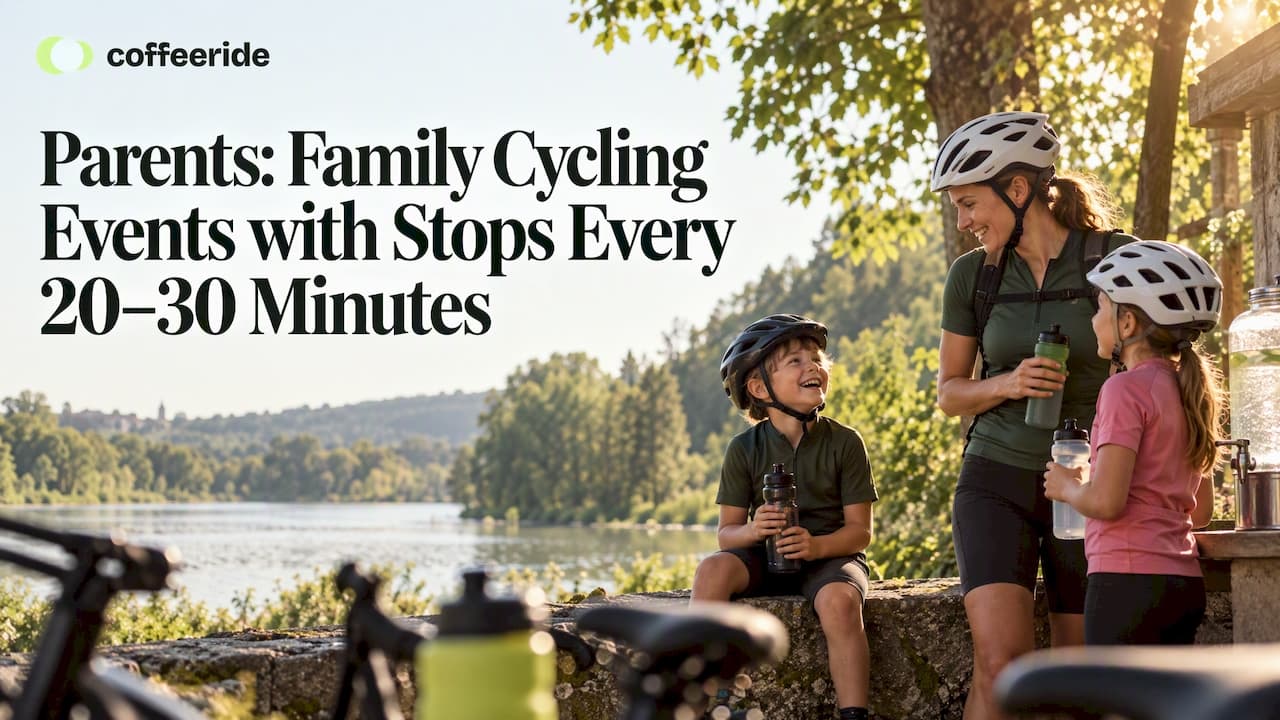
Yes: family cycling events are organized rides and festivals built for riders of all ages, mixing short group routes with kids’ activities, safety marshals, and skill stations. Most give you a manageable distance, supervised starts, and dedicated stops for younger riders. Your best next move is simple: check official event pages, your local cycling club, or Coffeeride for family-ride listings near you.
TL;DR:
- Most family rides are non-competitive, short-distance events designed for all ages, with supervision and safety measures emphasized by organizers.
- Finding the right event involves checking official websites, local calendars, clubs, and filtering online platforms by tags like “family” or “kids.”
- Safety markers include traffic-free routes, clear age categories, visible marshals, and strict helmet policies, while open-road starts or no safety info are red flags.
- Popular formats include festival rides, multi-stage kids’ tours, marathon weekend programs, and community cycling days suitable for varying ages and skill levels.
- Preparing for event day requires route confirmation, bike checks, packing essentials, and planning shorter loops with stops to keep children engaged and relaxed.
Table of Contents
- 1. Types of Family Cycling Events You’ll Come Across
- 2. Where to Find and Register for Family Cycling Events
- 3. How to Choose a Safe, Age-Appropriate Event
- 4. Real Family Ride Formats Worth Knowing
- 5. Building a Simple Planning Checklist for Event Day
- 6. How Coffeeride Helps Families Find the Right Ride
- 7. Making Family Cycling Events Work for Kids With Disabilities
- 8. Why Organized Family Rides Are Worth Your Time
- Coffeeride Club: Search, Ride, Repeat
- Sources
- FAQ
1. Types of Family Cycling Events You’ll Come Across
Family cycling events come in a few recognizable shapes, and knowing which one you’re looking at helps you match it to your kid’s age and comfort level.
- Family rides: non-competitive, short-distance group rides with a relaxed pace, usually suited to all ages when paired with adult supervision.
- Kids’ races: age-categorized competitive events, often split by year group, designed for children who already have basic bike handling skills.
- Bike rodeos and skill festivals: stationary or looped courses that teach braking, turning, and signaling, ideal for beginners and younger kids still building confidence.
- Festival-format rides: larger events that bundle a family ride into a bigger cycling weekend, often with music, food stalls, and finish-line activities.
Format changes what you need to bring. A rodeo asks for patience and a helmet check. A kids’ race asks for a properly fitted bike and some prior practice. A family ride asks for snacks, sunscreen, and a plan for the slowest rider in your group.
2. Where to Find and Register for Family Cycling Events
Finding the right event is mostly a matter of knowing where to look first.
- Start with official event websites, since they carry the most current dates, categories, and entry requirements.
- Check your local tourism board’s calendar, which often lists community rides that never make national news.
- Visit municipal event calendars for smaller, town-run cycling days that are usually free or low-cost.
- Search club pages, since many cycling clubs run recurring family sessions outside of headline events.
- Use community platforms and ride-discovery apps, filtering by “family,” “kids,” or “non-competitive” tags to avoid signing up for a race by mistake.
Once you find a listing, confirm three things before you commit: the registration deadline, whether the kids’ category has a start-number limit (many do, and they fill up fast), and whether a signed waiver or parental presence is required at check-in. Festival-format rides in particular tend to cap family entries early, so registering a week or two ahead is safer than showing up on the day.
3. How to Choose a Safe, Age-Appropriate Event
A good family event should make its safety setup obvious before you even register. Look for these markers:
- Clear distance and route information, including whether the course is closed to traffic or shared with cars.
- Defined age categories or skill requirements, so you know your child fits the intended group.
- Visible supervision: marshals, lead vehicles, or volunteer checkpoints along the route.
- A stated helmet policy, since reputable organizers require one for every child rider.
In Slovenia, school cycling instruction guidance ties independent road riding to the school cycling exam milestone, which is the recommended benchmark before a child rides on open roads without direct supervision. Until your child has reached that point, favor traffic-free or fully marshaled events over open-road formats.
Red flags are just as telling as good signs. Skip any event with no published safety information, an open-road start with no visible marshals, or no cap on kids’ entries. These usually mean the organizers haven’t planned for the specific needs of younger riders.
Pro Tip: Email or call the organizer the week before the event and ask directly whether the kids’ route is closed to traffic and who is providing on-course supervision.
4. Real Family Ride Formats Worth Knowing
A handful of recurring event types give you a good sense of what “family cycling event” actually looks like in practice.
- Festival family rides pair a short, non-competitive loop with a bigger weekend of racing and community activities. The L’Etape Slovenia family ride is a good example: a 12.5 kilometer non-competitive route that usually requires pre-registration and keeps start numbers limited to protect group safety.
- Multi-stage kids’ tours give young riders their own competitive structure. The Kids Tour of Slovenia runs age categories up to U17, alongside non-competitive entries for the youngest children who want to take part without racing.
- Marathon weekend schools programs attach a kids’ trail to a larger endurance event. The Franja Marathon weekend includes a family and schools marathon alongside its longer distances, timed so families can join without competing against the main field.
- Local community cycling days are usually the gentlest entry point. Town-run events built around playgrounds, ponds, and short loops keep younger kids engaged without asking for real endurance.
5. Building a Simple Planning Checklist for Event Day
A little preparation turns a family cycling event from stressful into genuinely fun.
- Confirm the route difficulty and registration status a few days ahead, not the morning of.
- Check helmet fit and run a quick bike technical check: brakes, tire pressure, and a properly adjusted seat.
- Pack food, water, and a basic first-aid kit, along with an ID or contact card for younger kids.
- Plan for short loops and built-in stop points rather than one long stretch, especially for children under eight.
- Save a little energy for the finish line: a snack and a rest stop matter more than the ride itself for younger riders.
Regional tourist boards recommend planning family routes around activity stops every 20 to 30 minutes rather than continuous distance, which keeps families cycling and enjoying outdoor stops through a full two-hour outing.
6. How Coffeeride Helps Families Find the Right Ride
Coffeeride connects you to local group rides, events, and clubs, and you can filter by pace or family-friendly tags to skip the guesswork. That kind of matching means fewer mismatched rides, since you’re not showing up to a fast club loop with a six-year-old in tow.
- Search “family” or “kids” tags to surface rides built for your child’s level.
- Follow a local family ride so you never miss the next date.
- Create a private family-friendly club to organize recurring rides with other parents you trust.
The platform supports women-only and para-cycling rides, with privacy-protected tags inside the app, so every rider in your family can find a group that fits.
7. Making Family Cycling Events Work for Kids With Disabilities
Accessibility in family cycling has improved as more organizers design events with mixed ability groups in mind rather than a single fixed course. The clearest sign of an inclusive event is flexibility: shorter route options, adapted bikes or trikes permitted at the start line, and staff who can answer questions about terrain and surface conditions before you register.
Some community events, including bike rodeos and skill festivals, are especially well suited to kids with disabilities because they run on closed courses at low speeds rather than open roads. Organizers who build in skill stations and helmet checks, similar to the format described at Bike Family Fest, tend to be more comfortable adapting activities on the spot for different mobility needs.

When you’re evaluating an event, ask directly whether adapted equipment is welcome, whether the route surface is suitable for adaptive cycles, and whether volunteers are briefed on assisting riders who need extra support. A well-run family event should treat these as normal questions, not unusual requests. If an organizer can’t answer clearly, it’s worth choosing a smaller, community-run day where staff know the course well enough to make real-time adjustments.

Local clubs and cycling associations are often the best source for specific accessibility details, since national event pages don’t always list adaptive options in advance.
8. Why Organized Family Rides Are Worth Your Time
Group events lower the barrier to trying cycling as a family. A short, well-marshaled ride gives kids a positive first experience that a long solo outing rarely matches, and it gives parents a built-in support system instead of managing every risk alone.
Activity-rich formats, the ones with stops, stations, and a clear finish, tend to stick in a child’s memory in a good way. That’s what turns a one-off event into a yearly tradition. Try a local family ride this season and see if it earns a spot on next year’s calendar too.
— Coffeeride
Coffeeride Club: Search, Ride, Repeat
This platform gives you one place to search for family and kids’ rides near you, follow the ones that fit your schedule, and build a recurring group with other parents instead of hunting through scattered event pages every season.
- Search by pace or family-friendly tags to find rides that match your kid’s skill level.
- Follow a local family ride so new dates show up automatically.
- Start a private club to keep a regular family cycling group organized in one place.
Visit Coffeeride Club to find your next family ride.
Sources
- Informacije za učitelje: Zgodaj na kolo
- I Feel Slovenia - Kids Tour of Slovenia (Tour of Slovenia 2026)
- 45th Franja Marathon Cycling Weekend Begins - Radio Si
- Družinsko kolesarjenje 2026 L’Etape Slovenia
FAQ
What is the 75% rule in cycling?
It’s more relevant to adult endurance training than to family events, where pacing is usually set by the slowest or youngest rider instead of a percentage formula.
What is the 80/20 rule in biking?
For family rides, the practical takeaway is simpler: keep most of the ride easy and save any harder stretches for short, optional bursts.
What are the different types of cycling events?
Cycling events range from competitive road races and multi-stage tours to non-competitive family rides, kids’ races, and bike rodeos. Festival-format events, such as the family ride at L’Etape Slovenia, often combine several of these formats into one weekend.
Where can my kids ride their bikes safely?
Closed-course events like bike rodeos, marshaled family rides, and traffic-free park loops are the safest starting points for younger children. Independent road riding is best saved until a child has reached the recommended cycling exam milestone used in school-based cycling instruction.