Organizers: Post Ebike Group Rides in Minutes and Build Local Advocacy
· 10 min read

To join or run ebike group rides, start by checking local ride listings on community platforms or a ride-discovery app like Coffeeride, then confirm pace expectations and battery plans before you show up. Groups organized around clear etiquette (see Cycling UK) and advocacy networks like DeKS tend to run the smoothest. Get those two pieces right, and everything else about group riding falls into place.
TL;DR:
- Most ebike-friendly rides specify a clear pace range, route elevation, and whether the ride is ebike-only or mixed, to match rider experience and bike capabilities.
- Ebike riders should limit assist on flat terrain, communicate their assist levels, and follow shared signs and signals to ensure smooth integration with standard bikes.
- Battery planning must consider route length, elevation, and surface type, with longer or hillier rides requiring charging stops or spare batteries for reliability.
- Arriving early for check-in, following assigned roles, and helping pack up are key behaviors that foster a positive and inclusive group ride experience.
- Coordinating rides through apps or platforms that unify route, pace, and attendee management significantly improves organization and promotes community building.
Table of Contents
- Where to Find Ebike Group Rides and Communities
- Etiquette and Pacing When Ebikes Ride With Standard Bikes
- Safety, Gear, and Battery Planning for Group Rides
- How to Join a Ride: What to Expect
- How to Organize an Inclusive Ebike Group Ride
- Why a Platform Built for This Actually Helps
- Group Rides Are Advocacy, Not Just Recreation
- Get Rolling With Coffeeride Club
- Primary Sources and Advocacy Groups
- Sources
- FAQ
Where to Find Ebike Group Rides and Communities
Casual and recurring rides live mostly on Facebook groups and Meetup. Search terms like “e-bike group ride,” “electric bike club,” or your city name plus “cycling meetup” surface active groups fast. Reddit is worth a scroll too, particularly city-specific subreddits, where riders post honest reviews of which groups actually welcome ebikes and which ones quietly discourage them.
Local bike shops are an underused resource. Many host weekly shop rides or know exactly which clubs in the area are ebike-friendly. Guided-tour operators such as Bike Slovenia publish graded routes by distance and elevation, which gives you a template for what a well-organized ride listing should look like. Advocacy groups like DeKS run their own event calendars and are a solid first stop if you want a community built around ebike riders specifically, not just tolerant of them.
When you’re scanning listings, look for:
- A stated average pace or pace range, not just “moderate”
- Route distance and elevation gain listed upfront
- Whether the ride is ebike-only, mixed, or ebike-friendly
- A contact person or group chat for questions before ride day
- Regroup points or a stated “no drop” policy
A ride-discovery app that lets you filter by pace and discipline saves you from scrolling five different Facebook groups just to find one ride that fits your speed and terrain.
Etiquette and Pacing When Ebikes Ride With Standard Bikes
Mixed groups fall apart when ebike riders forget that assist power changes the math for everyone else. The fix isn’t complicated, but it does take intention.
- Dial back assist on flats. Save higher assist levels for climbs where the pace gap between ebikes and standard bikes is widest.
- Respect the 75% rule. In a paceline, no rider should be working at more than about three-quarters of their max sustainable effort. Ebike riders should throttle assist so their contribution matches that same relative effort, not their absolute speed capability.
- Agree on pace before rolling out. State the expected average speed, name regroup points, and clarify overtaking rules during the pre-ride briefing.
- Signal and scan constantly. Bike League’s hand signals and shoulder checks apply to every rider in the group, ebike or not, and they’re what actually prevent close calls.
CyclingSavvy points out a common misconception: that ebikes are inherently disruptive to group rides. The real issue isn’t the motor. It’s riders who don’t communicate their pace or intentions.
Pro Tip: Before the ride starts, have every ebike rider announce their assist level out loud. It sounds small, but it tells the group exactly what kind of climbing pace to expect.
Safety, Gear, and Battery Planning for Group Rides
Nobody wants to be the rider who strands the group because a battery died four miles from the nearest outlet. A little planning prevents most of the drama.
Gear that belongs in every rider’s bag:
- Helmet, always, no exceptions
- Front and rear lights, even for daytime rides
- High-visibility clothing or a reflective vest
- A basic repair kit: tube, tire lever, multi-tool, mini pump
- Phone with a nav mount, charged before you leave
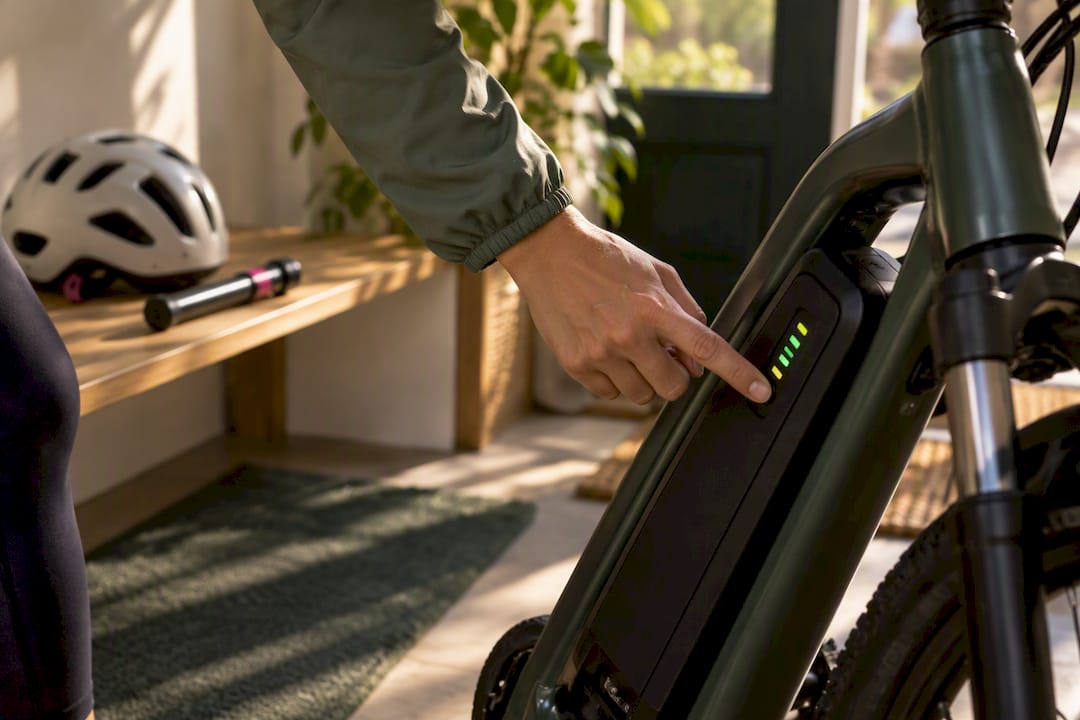
Battery planning depends on route distance and elevation, both of which shift power draw more than most riders expect. A route with steady climbs will drain a battery far faster than a flat ride of the same distance. Organizers of longer or hilly routes should identify charging stops in advance or explicitly ask riders to bring a spare battery. Surface type matters too: loose gravel or singletrack demands more from the motor than smooth pavement, which is worth factoring into your range estimate before you commit to a route.
Some ride listings include an organizer rule requiring a minimum battery percentage at the start line. That single rule prevents more mid-ride headaches than almost any other precaution.
How to Join a Ride: What to Expect
Showing up prepared makes you the rider organizers want back next week. Here’s the general flow.
- Arrive early for check-in. Organizers typically want time for a quick bike-fit glance and a safety briefing before rolling out.
- Listen for the roles. Groups often name a sweep (stays at the back), a pacer (sets front speed), or a road captain (calls turns and hazards). Volunteer for one if you’re comfortable.
- Ride your assigned position. If you’re asked to hold the middle of the pack, don’t drift to the front to prove a point.
- Help pack up afterward. Coil cables, gather signage, and offer a quick word of feedback to the organizer. That’s how you get invited to the next one.
Most organizers appreciate riders who show up ready rather than riders who need everything explained twice.
How to Organize an Inclusive Ebike Group Ride
Running your own ride is less intimidating than it sounds once you break it into a checklist. Share a GPX or TCX file in advance so every rider’s nav app points to the same route, whether they’re using Strava, Ride with GPS, or Komoot. That single step eliminates most wrong turns and split groups.
Define your ride’s structure before you post it:
- Pace groups (e.g., “leisurely 12 mph” vs. “brisk 18 mph”)
- A cap on total attendees so the group stays manageable
- A meeting point and, for longer rides, a charging point
- A short safety script covering signaling, regroup points, and what to do if someone gets a flat
| Ride element | What to define | Why it matters |
|---|---|---|
| Pace groups | Average speed range | Keeps riders with similar fitness together |
| Attendance cap | Max riders per ride | Prevents unmanageable, spread-out packs |
| Charging point | Location and estimated arrival time | Covers longer routes with real elevation |
| Contingency plan | Sweep rider assigned to escort mechanicals or low-battery riders | Keeps one issue from stalling the whole group |
Routes can run anywhere from a short 9-mile urban loop to a 30-plus-mile excursion with real elevation gain, so match your contingency planning to the ride’s actual demands. A short flat ride barely needs a charging point. A long hilly one absolutely does.
Why a Platform Built for This Actually Helps
Coordinating pace groups, GPX files, and attendance caps across three different chat threads is how good rides fall apart. Some ride-discovery apps keep information in one place: post a ride, set pace filters, share your route file, and message the whole group without juggling apps. Organizers can also spin up a private club for a recurring crew, which turns a one-off ride into a standing community.
Group Rides Are Advocacy, Not Just Recreation
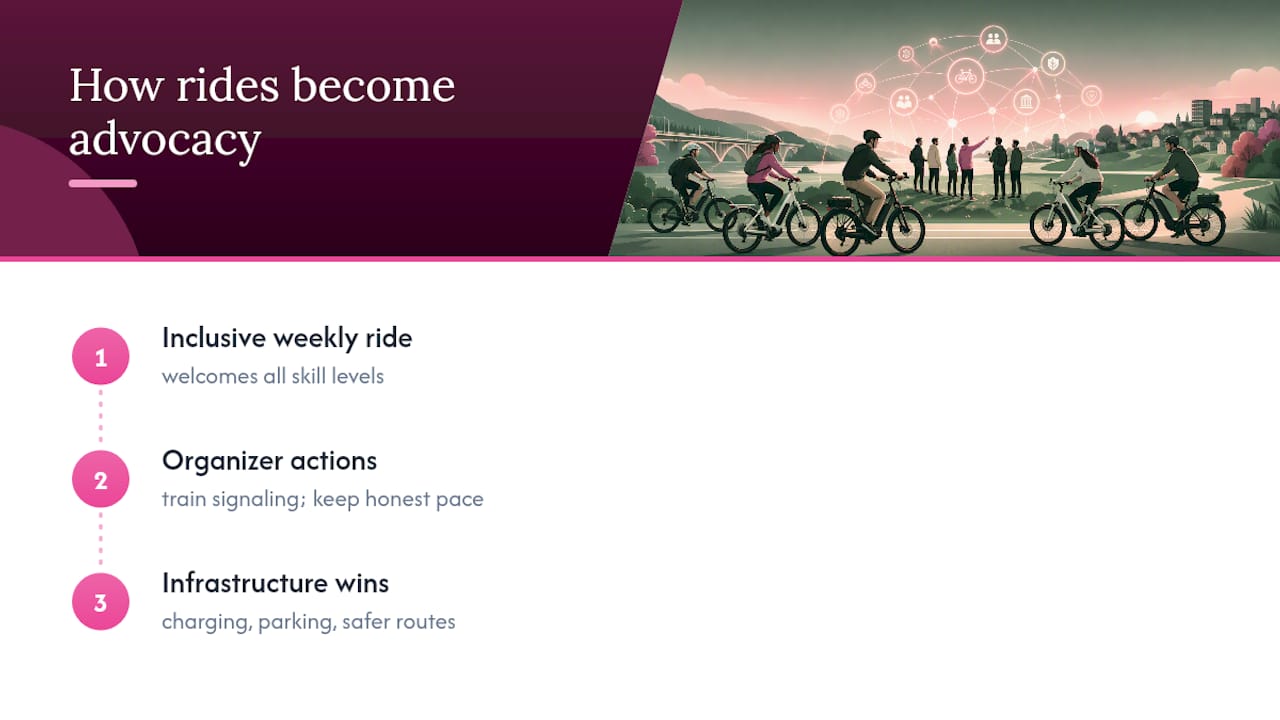
A weekly ebike group ride is community building disguised as a bike ride. Groups like DeKS show how organized riders turn shared miles into real infrastructure wins, better charging access, secure parking, safer routes. That only works when rides stay genuinely welcoming to riders at every skill level, not just the fastest ones in the group.
Every organizer who runs an inclusive ride, trains new riders on signaling, and keeps the pace honest is doing advocacy work whether they call it that or not.
— Coffeeride
Get Rolling With Coffeeride Club
You’ve got the etiquette, the battery math, and the organizer checklist. What you need next is a place to actually post the ride. A platform may let you find rides filtered by pace and discipline, create a private club for your regular crew, and message everyone on a ride without switching apps.
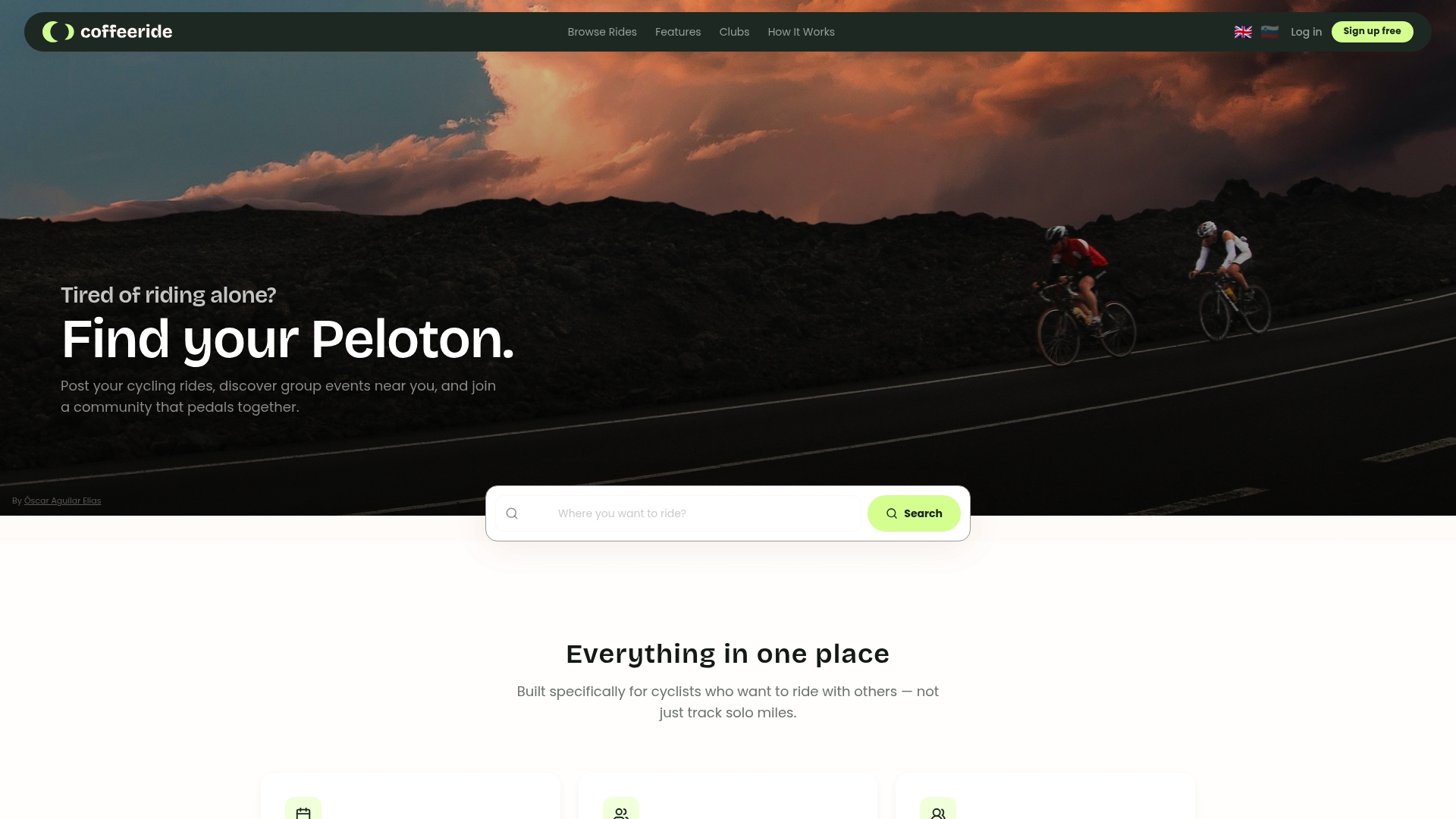
Setting up a ride takes minutes: post the route, set your pace group, and let riders self-select into the right group before anyone clips in. Whether you’re hunting for your first group ride or you’re ready to start running your own, head to Coffeeride Club and post your first ride today.
Primary Sources and Advocacy Groups
- DeKS – Društvo električnih kolesarjev Slovenije
- Cycling UK’s top 10 tips for including e-cycles on a group ride
- League of American Bicyclists — signaling and scanning resources
- CyclingSavvy — E-bike etiquette and mixed-group riding
- Bike Slovenia — guided tours and route grading
- EMTB Slovenia — e-mountain-bike community
Sources
- DeKS – Društvo električnih kolesarjev Slovenije
- Cycling UK’s top 10 tips for including e-cycles on a group ride
- League of American Bicyclists — signaling and scanning resources
- CyclingSavvy — E-bike etiquette and mixed-group riding
FAQ
What is the best cycling app for group rides?
The best app depends on whether you need discovery, coordination, or both. Coffeeride combines ride posting, pace filters, and group messaging in one place, which makes it a strong option for both joining rides and organizing your own.
What is the 75% rule in cycling?
In mixed ebike groups, that translates to adjusting assist level so your relative effort matches the group’s, not just matching everyone’s top speed.
Can you ride two people on an ebike?
Most ebikes are designed for a single rider unless the manufacturer specifically rates the model for a passenger, usually with a rear seat and footrests built for that purpose. Check your specific bike’s manual, since exceeding its rated capacity affects handling, braking, and battery range.
How do group rides work?
A group ride typically starts with a posted listing stating pace, distance, and meeting point, followed by a brief check-in and safety briefing before rollout. Riders follow agreed signaling and regroup practices throughout, then wrap up with a debrief or informal chat at the end.


