Riders & Organizers: 5 Fields That Stop Drop Ride Surprises
· 11 min read

A drop ride is a fast group ride where slower riders may be left behind if they can’t hold the pace, while a no-drop ride waits or sends a sweep to regroup everyone. Neither format is better. They’re built for different goals. This guide gives you a rider checklist, organizer templates, and pace benchmarks so you join or post the right ride the first time.
TL;DR:
- Riders should verify they have recent, consistent training and carry essential safety gear before joining a drop ride to avoid being left behind.
- Organizers should clearly specify pace ranges, route details, regroup points, and sweep plans to prevent rider confusion and reduce drop incidents.
- Filtering rides by explicit pace, regroup, and sweep information helps riders find matches that suit their skill and fitness levels more accurately than group labels alone.
- Effective communication about hazards, smooth rotation, and respecting roles such as sweep members are crucial for maintaining safety in fast group rides.
- Getting dropped indicates a gap in fitness or preparation, but riders can minimize risk by following route guidance or calling for assistance if needed.
Table of Contents
- Should You Join a Drop Ride? A Quick Checklist
- How Should Organizers Label a Drop Ride Post?
- How Do You Find Drop Rides That Match Your Pace?
- What Etiquette Keeps a Fast Group Ride Safe?
- What Speed Range Fits Your Group Letter?
- What Should You Do If You Get Dropped?
- Coffeeride’s Take: Clear Labels Make Better Rides
- Post and Find Rides That Actually Match Your Pace
- Sources
- FAQ
Should You Join a Drop Ride? A Quick Checklist
Before you click “join” on a fast group ride, run through a short self-check. Drop rides reward riders who show up prepared and punish riders who don’t.
- Fitness history: have you logged consistent rides in the past 4 to 6 weeks, including at least one interval or tempo session at or near the listed pace?
- Self-sufficiency: do you carry a spare tube, a pump or CO2, basic tools, and a charged phone with navigation?
- Listing literacy: does the post state average pace, a group label (A/B/C), and whether there’s a sweep or regroup policy?
- Route awareness: do you know the distance and elevation, and does that match terrain you’ve trained on?
- Visibility and safety kit: helmet, front and rear lights if there’s any chance of low light, water for the full distance, and clothing that stands out in traffic.
Beginners should lean toward no-drop or recreational groups to build paceline skills before chasing an A-group drop ride. That progression matters more than raw fitness. A strong solo rider who has never held a wheel in a rotating paceline is a liability in a fast pack, not an asset.
How Should Organizers Label a Drop Ride Post?
Vague ride posts cause more dropped riders and more frustration than any hill or headwind. A post that says “fast ride, no drop” without a sweep plan is setting up a contradiction that someone will pay for on the road, and it’s a common source of confusion when the “no drop” label isn’t backed by an actual policy.
Every ride post should include these fields:
- Average pace in km/h or mph, stated as a range, not a single optimistic number.
- Distance and elevation gain, so riders can judge effort before they show up.
- Regroup points, named or marked on the route, not left to chance.
- Sweep plan, stating whether a designated rider will ride back for stragglers.
- Contact method, a phone number or in-app message thread for the day of the ride.
If your pack tends to split, consider creating a secondary “A-” or bridge group so riders who fall off the front pace still have company instead of riding solo. A designated sweep with a phone contact cuts down on lost-rider incidents far more than an informal “someone will wait” approach.
Pro Tip: State exactly when the group stops waiting. “We regroup at the 20-mile gas station for 5 minutes, then roll” removes all ambiguity. Vague promises to “wait for everyone” are where drop rides quietly turn into no-drop rides that fail.
Coffeeride lets organizers fill in pace, regroup points, and sweep status as structured fields on every ride post, so riders see the real plan before they show up, not a guess.

How Do You Find Drop Rides That Match Your Pace?
Searching for the right group ride is mostly about reading past the label and into the actual details of the post.
- Filter by numeric pace (km/h or mph) rather than trusting a group letter alone, since one club’s “B group” can be another club’s “A group.”
- Scan for explicit sweep or regroup language. If a post says “no drop” but gives zero detail on how that works, message the organizer before you commit.
- Search keywords like “A group,” “fast,” “no stop,” or a stated average speed if your platform’s filters are limited.
- Treat distance and elevation as filters too. A 40 mile flat ride at 30 km/h is a different animal than a 40 mile ride with 800 meters of climbing at the same stated average.
- Be skeptical of “no-drop” used as a marketing label. Look for a named sweep or scheduled regroup points, not just the phrase itself.
Platforms that let organizers enter numeric pace and regroup fields make this filtering job far easier than boards where every ride is described in one adjective. Search features that filter by pace, group, and discipline help riders avoid guessing from vague post titles.
What Etiquette Keeps a Fast Group Ride Safe?
Fast pacelines fail for predictable reasons: someone surges out of turn, someone doesn’t call a pothole, or someone drops back without telling anyone. Fix the communication and most of the risk disappears.
- Call hazards early and clearly. A shout of “hole, left” beats a hand gesture nobody behind you can see.
- Rotate smoothly. Pull off at a steady pace rather than surging to “prove” you can hold the front longer.
- Signal before you drop back. A quick word to the rider beside you means the group knows you’re off, instead of discovering it three miles later.
- Respect the sweep role. If someone is riding sweep, let them manage stragglers. Don’t freelance a rescue that duplicates their job.
- Know when to sit at the back. If you’re fading, tuck in and conserve rather than burning matches trying to prove you belong at the front.
Clear communication about hazards and mechanicals is what separates a well-run fast group from a chaotic one, regardless of how strong the riders are individually.
Pro Tip: If you feel your legs going before the halfway point, it’s almost always cheaper to sit up and ride steady solo than to chase back onto a group that just dropped you. Chasing burns twice the energy for half the reward.
What Speed Range Fits Your Group Letter?
Group letters mean nothing without numbers attached to them, and the numbers shift with terrain. A route with rolling hills typically runs 2 to 4 km/h slower than the same group’s flat-road average, so a “28 km/h ride” on a hilly course and a flat course are not the same effort.
| Group Label | Typical Rolling Pace | Typical Rolling Pace |
|---|---|---|
| C (social/no-drop) | 18–22 km/h | 11–14 mph |
| B (moderate) | 23–28 km/h | 14–17 mph |
| A (fast/drop) | 29–35+ km/h | 18–22+ mph |
Some organizers list the finishing average, which reflects only the fast final stretch, while others list the full-route average including regroup stops. Ask which one you’re seeing before you commit. If you’re unsure which group fits, pick the slower option. Building fitness gradually beats blowing up ten miles from the finish and riding home alone.
What Should You Do If You Get Dropped?
Getting dropped isn’t a failure. It’s information about your current fitness relative to that specific group on that specific day. What matters is what you do in the next five minutes.
- Pull over somewhere safe first if you’re hurt, dizzy, or your bike has an issue. Don’t try to limp along in traffic.
- Check the route file on your phone or bike computer and keep following it. Most dropped riders aren’t lost, they’re just behind.
- Message the organizer if the platform supports it. A quick “I’m off the back at mile 12” lets the sweep know where to look.
- Head to a known checkpoint, a cafe, or a shop if you’re unsure. Waiting somewhere visible beats wandering.
- Call for a pickup if you’re low on daylight, water, or energy. There’s no prize for suffering home in the dark.
A route file shared before the ride turns “I got dropped” from a crisis into a minor inconvenience.
Coffeeride’s Take: Clear Labels Make Better Rides
We built Coffeeride around matching riders by pace and preference because vague ride posts hurt everyone, fast riders included. Organizers who state pace, regroup points, and sweep plans up front consistently get better turnout and fewer mid-ride surprises. That clarity is the whole point of running rides through a platform instead of a group text.
— Coffeeride
Post and Find Rides That Actually Match Your Pace
Some platforms are built specifically for posting and finding group rides by pace, not for tracking solo miles after the fact. Organizers can fill in average speed, regroup points, and sweep status as structured fields, so riders filter by group letter, distance, and elevation instead of guessing from a vague title.
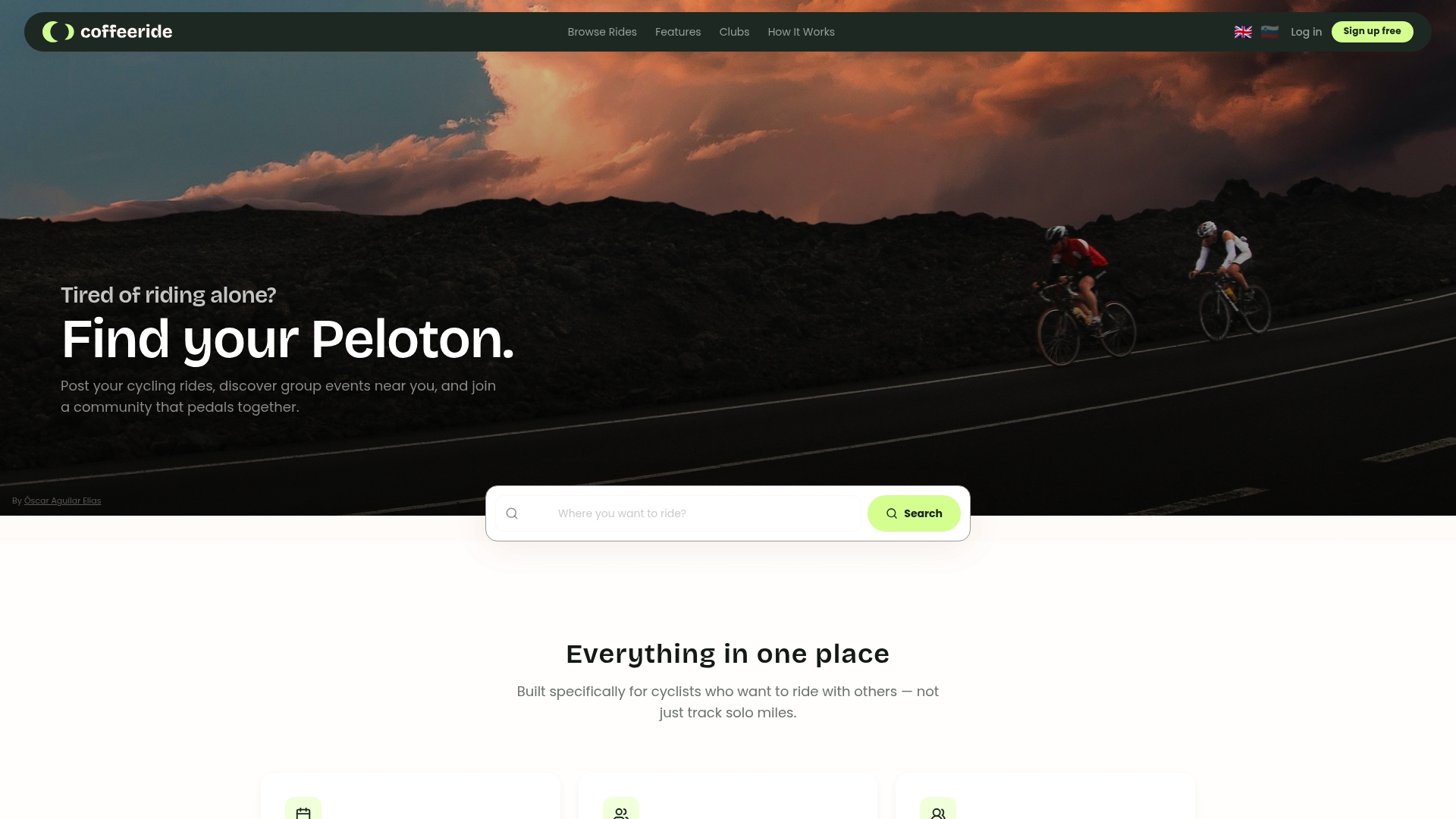
Clubs on Coffeeride can run recurring A-group drop rides alongside no-drop social rides, with dedicated chat for each ride so sweep updates and regroup calls don’t get lost in a group text. Women-only and para-cycling rides stay privacy-protected within the app, so riders who want that space can find it without extra friction. If you’re planning your next fast ride or looking for one that matches your current fitness, post or search rides on Coffeeride Club and set your pace, group, and regroup plan before anyone clips in.
Sources
For more on paceline mechanics, sweep roles, and pace labeling, see TrainerRoad’s guide to group-ride etiquette, TrainingPeaks on group-ride basics, and RoadBikeRider on no-drop labeling. If you’re mapping a new route to match a target pace, this Los Angeles route guide breaks down how terrain affects difficulty.
- Cycling Group Rides: A Guide to Etiquette, Pacelines, Drafting, and Safety | TrainerRoad Blog
- The Basics of Group Ride Etiquette | TrainingPeaks
- No-drop false advertising and ride leadership responsibilities | RoadBikeRider
- Road group ride explanations and group speed examples | Lucky Brake Bikes
FAQ
What’s the Difference Between a Drop Ride and a No-Drop Ride?
A drop ride runs at a set pace and may leave slower riders behind, while a no-drop ride stops or sends a sweep so nobody rides alone. The label alone isn’t proof either way. Check for a stated sweep or regroup policy before you trust it.
How Fast Is an A-Group Drop Ride?
A-group rides typically run 29 km/h and up on rolling terrain, often faster on flat routes, according to typical group speed examples. Hills can cut that average by 2 to 4 km/h, so always check whether the listed pace is rolling or flat.
Should Beginners Join Drop Rides?
New riders should start with no-drop or recreational groups to learn paceline skills like rotating and calling hazards before attempting a fast drop ride. Jumping straight into an A group without paceline experience raises both fitness and safety risk.
What Should a Ride Post Include to Avoid Confusion?
A clear post lists average pace, distance, elevation, regroup points, sweep status, and a contact method for the day of the ride. Coffeeride organizers can fill in these exact fields on every ride listing so riders know what they’re joining.
What Do I Do If I Get Dropped Mid-Ride?
Pull over safely first if you’re hurt or the bike has an issue, then follow the route file or message the organizer for the nearest regroup point. If you’re low on water or daylight, call for a pickup rather than pushing through alone.


