Never Get Left Behind on Group Rides: Spot Real No Drop Rides
· 11 min read

A no drop ride is a group ride where nobody gets intentionally left behind, no matter their pace. The promise only holds up when the group has a real operational plan behind it, like a sweep rider or clearly announced regroup points along the route. We put this guide together at Coffeeride because inclusive riding only works when everyone understands how it’s supposed to run.
TL;DR:
- True no-drop rides rely on a dedicated sweep rider and clearly announced regroup points to ensure nobody is left behind regardless of pace.
- Effective communication, such as hazard calls and hand signals, is essential to maintain safety and prevent pack crashes during the ride.
- Ride leaders should publish a detailed plan with route specifics and enforce a minimum group size at the rear to keep the no-drop promise intact.
- Asking organizers about the presence of a sweep rider, regroup policies, and pace class helps verify if a ride truly adheres to no-drop principles before attending.
- Riders should bring basic tools, ID, water, and weather gear to handle minor mechanical issues and maintain independence within the group.
Table of Contents
- What makes a ride “no-drop” and how clubs label it
- Why groups run no-drop rides in the first place
- No-drop etiquette: the shouts, signals, and formations that keep everyone safe
- How ride leaders make the no-drop promise actually work
- Where to find a no-drop ride and what to ask before you show up
- What to bring so you can hold up your end of the ride
- When “no-drop” doesn’t hold up and what to do about it
- Our take on building no-drop rides that actually hold up
- Find your no-drop ride on Coffeeride
- FAQ
What makes a ride “no-drop” and how clubs label it
A true no-drop ride guarantees that the group stays together, even if that means faster riders slow down or loop back for stragglers. This is different from a performance ride, where pace is fixed and riders who fall behind are on their own, or a mixed-pace ride, where the group splits by ability from the start.
Clubs often sort rides into pace classes, and what “no-drop” means can shift depending on which class you join. A no-drop beginner ride might cap speeds well below a no-drop intermediate ride, even though both promise the same thing: nobody rides alone.
- True no-drop: a designated sweep rider stays at the back and the group waits at set points.
- Cultural no-drop: there’s no formal sweep, but riders voluntarily drop back to help without being asked.
- Pace-class no-drop: the no-drop promise applies within a specific speed bracket, not across the whole event.
Why groups run no-drop rides in the first place
No-drop rides exist because cycling is better when people stick around for it. New riders, returning riders, and anyone nervous about being dropped on a hill benefit from knowing the group won’t disappear ahead of them.
- Inclusivity: beginners, older riders, and underrepresented groups often feel unwelcome in fast-paced packs, and a no-drop structure removes that barrier.
- Shared safety: when someone flats or crashes, having riders nearby means help arrives in minutes instead of the rider being stranded.
- Skill building: riding in a low-pressure group is where most cyclists learn pack habits like holding a line, signaling, and pacing through a climb.
Inclusive no-drop structures function as a genuine retention tool for clubs, lowering the intimidation factor that keeps new or slower riders from coming back for a second ride.
No-drop etiquette: the shouts, signals, and formations that keep everyone safe
A no-drop promise means nothing if the group doesn’t communicate well. Riders at the front see hazards first, and that information has to travel back fast.
- Call out hazards by name: “hole,” “glass,” “car back,” rather than a vague shout.
- Announce pace changes: say “slowing” before you ease off and “stopping” before you brake hard, giving riders behind you time to react.
- Use hand signals: point down at road hazards, raise a hand to indicate slowing, and hold the signal long enough for riders several bikes back to see it.
- Ride two abreast when safe, then single up on narrow roads or when a car needs to pass.
- Split large groups into smaller clusters of eight to twelve riders so overtaking traffic has a shorter group to pass at once.
Practical group-ride behaviors from Cycling UK recommend holding signals for visibility and braking smoothly, since sudden braking in a tight group is one of the most common causes of pack crashes.
Half-wheeling, where a rider constantly rides a half-wheel ahead of their partner and forces the pace up without meaning to, is one of the quieter etiquette breaches that erodes a no-drop ride. Cycling UK’s club run rules note it’s usually fixed with a simple “let them through” rather than confrontation.
Pro Tip: If you catch yourself half-wheeling, drop back half a bike length and let your partner set the pace for a few minutes.
How ride leaders make the no-drop promise actually work
The sweep rider is what turns “no-drop” from a slogan into a working system. This person rides at the back of the group and stays with whoever is slowest, which means the ride’s pace is effectively set by its weakest link, not its strongest.

Cycling UK’s group ride safety guidance recommends never leaving fewer than three riders together at the rear: if someone has a mechanical or needs to stop, one rider stays with them while a third goes ahead to alert the leader. That three-rider rule is what keeps a no-drop ride from quietly turning into a solo ride for whoever falls behind.
A dependable ride also has:
- Announced regroup points: specific spots on the route where the group waits for everyone to catch up before moving on.
- A published ride plan: distance, pace, major hazards, and what “no-drop” means for that particular ride.
- A clear leader: someone riders can identify and go to if something goes wrong mid-ride.
Ride-leader standards call for leaders to publish this kind of short plan before the ride starts, and that single habit is what separates a reliable no-drop ride from a well-meaning one that falls apart on the first hill.
Where to find a no-drop ride and what to ask before you show up
Local clubs are still the most direct route into a no-drop ride, and most have a weekly beginner or social ride built around the concept. Community platforms and ride-finder apps have made this easier to search for by pace and discipline. For example, riders can filter by pace and look for rides tagged for beginners or social riding before committing to one.
Before you show up, ask the organizer a few direct questions:
- Is there a sweep rider, or is this a cultural no-drop ride where help is voluntary?
- What’s the regroup policy, and roughly how often does the group stop?
- What pace class does this ride fall under, and does that match your fitness?
Once you’ve confirmed the basics, arrive 10 to 15 minutes early, introduce yourself to the leader, and sign any guest or waiver sheet if one is offered. Showing up prepared and known to the group makes it far easier for a sweep to look out for you if things get hard.
What to bring so you can hold up your end of the ride
A no-drop ride still expects basic self-sufficiency. Nobody wants to leave you stranded, but you should be able to handle a minor mechanical yourself while the group waits.
- Spare tube, pump or CO2 cartridge, and a multi-tool for flats and small adjustments.
- ID, phone, and a bit of cash, kept somewhere accessible.
- Water and a snack, especially for rides over an hour.
- Weather-appropriate clothing and a visibility layer or lights if there’s any chance of low light.
On climbs, don’t chase the group. Settle into your own rhythm and trust that the regroup point will let you rejoin without burning yourself out trying to keep pace.
When “no-drop” doesn’t hold up and what to do about it
Not every ride that advertises itself as no-drop actually runs that way. Watch for vague listings that never mention a sweep, pace creep where the front of the group quietly speeds up over the course of the ride, or a leader nobody can clearly identify.
- No named sweep rider on the listing or at the start is a red flag worth asking about directly.
- Vague pace language like “easy pace for everyone” without a number attached often means the ride will run faster than advertised.
- If you do get dropped, stop, call the leader’s number if one was shared, and use your phone’s map to rejoin at the next known regroup point rather than chasing blindly.
If a ride consistently fails to deliver on its no-drop promise, say so to the organizer afterward. A quick, specific note about what went wrong helps clubs fix the gap, and it helps you decide whether to give that ride a second try.
Our take on building no-drop rides that actually hold up
We think the biggest gap in no-drop riding isn’t bad intentions, it’s missing structure. A ride needs a visible sweep, a stated pace, and real regroup points, and platform features can make those expectations explicit before anyone clips in. Pace filters and ride tags help riders self-select into the right group, and private club tools let organizers set rules once instead of re-explaining them every week. We’d rather see every club publish a clear brief than rely on good vibes alone.
— Coffeeride
Find your no-drop ride on Coffeeride
We built this platform around the idea that nobody should have to ride alone or get dropped on their first group outing. Search rides by pace, post your own, create a private club for your regular crew, and filter for the rides built for beginners, women-only groups, or para-cycling riders.
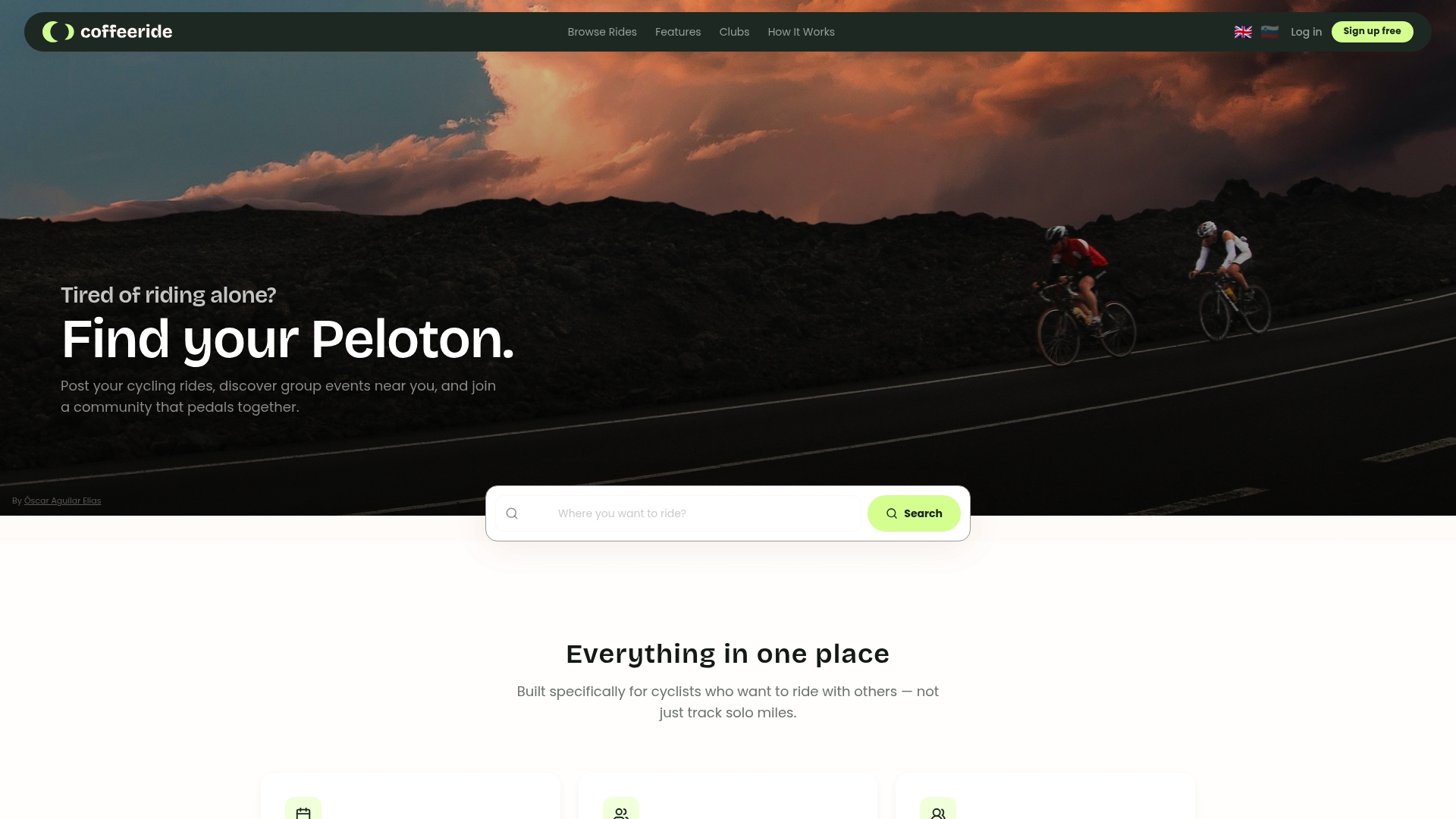
Clear pace filters and ride tags make it easier to spot a true no-drop ride before you show up, instead of guessing from a flyer. Clubs managing recurring rides can also look at tools like Sidekick Clubs for member coordination alongside what we offer for ride discovery.
- Search rides by pace and discipline to find the right group for your level.
- Post your own ride and set the no-drop expectations yourself.
- Create a private club for a regular riding crew.
- Join women-only or para-cycling rides with privacy protections built in.
Visit Coffeeride Club to search for a ride near you or post one of your own.
FAQ
What is a drop ride in cycling?
A drop ride is a group ride where the pace is fixed and riders who fall behind are left to finish on their own. It’s the opposite of a no-drop ride, and it’s typically reserved for faster, performance-focused groups rather than social or beginner rides.
What are the benefits of cycling regularly?
Regular cycling builds cardiovascular fitness, strengthens leg muscles, and supports healthy joints since it’s low impact compared to running. It also improves mental well-being through routine outdoor activity and, in group settings like no-drop rides, builds a sense of community and accountability that keeps people riding consistently.
What are some notable long-distance bike rides worth trying?
Many cyclists work toward well-known multi-day routes across mountain regions or coastlines, often organized through local clubs or cycling tour operators. These routes vary widely in distance and difficulty, so riders usually build up through shorter no-drop or social rides before attempting one.
What does “half-wheeling” mean in road cycling?
Half-wheeling happens when a rider constantly stays a half-wheel ahead of the person next to them, unintentionally pushing the group’s pace higher. Cycling UK’s club run etiquette guidance notes it’s usually resolved with a simple social cue rather than confrontation.
How can I tell if a ride is a real no-drop ride before I join?
Ask the organizer whether there’s a named sweep rider, how regroup points work, and what pace class the ride falls under. A real no-drop ride will have clear answers to all three, often published in the ride listing itself through platforms like Coffeeride.