Find Pace Matched Bike Shop Group Rides Without Getting Dropped
· 8 min read
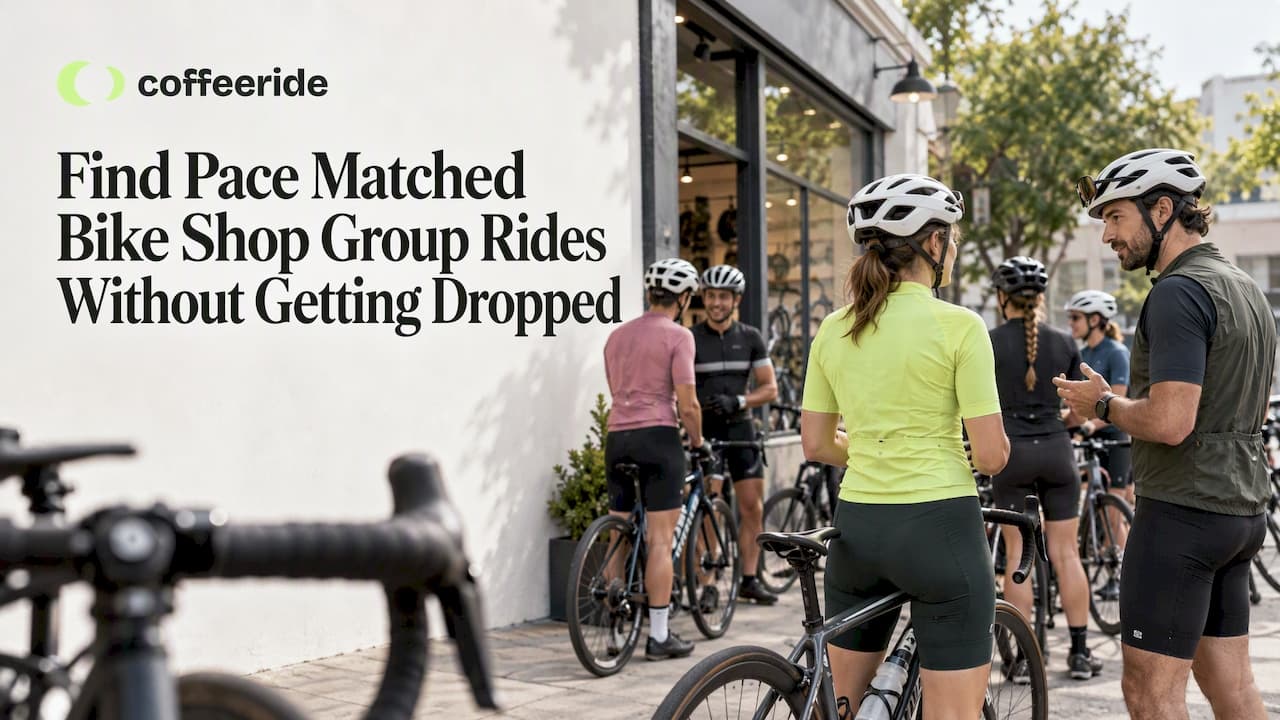
Shop-sponsored group rides are worth your time if you match your pace to the group and pick a no-drop ride when you’re starting out. The single most important move before you show up: confirm the posted pace and ask whether the ride is drop or no-drop. You can filter rides by pace and discipline before you ever clip in.
TL;DR:
- Confirm the ride’s posted pace and whether it is a no-drop or drop ride to ensure it matches your fitness level and riding style.
- No-drop rides often have a moderate speed and prioritize group cohesion, making them suitable for beginners seeking a supportive environment.
- Expect drop rides to maintain a faster pace with no regrouping, so slower riders should be prepared to find their own way back or end early.
- Wearing a helmet and bringing lights are essential safety measures, as helmet use significantly reduces head injury risk during group rides.
- Utilizing platforms like Coffeeride helps you filter rides by pace, discipline, and drop policy, increasing the chances of finding a compatible group.
Table of Contents
- Pace groups and what A, B, and C actually mean
- How to signal, space out, and ride predictably
- Picking the right shop ride for your fitness level
- Why shop rides lead to clubs, mentors, and lasting friendships
- How Coffeeride helps you find a pace that fits
- Why showing up matters more than being fast
- Find your next ride on Coffeeride
- FAQ
- Sources
Pace groups and what A, B, and C actually mean
Most shop rides sort riders into pace groups, and knowing the difference saves you from a miserable first outing. The labels vary by shop, but the pattern holds everywhere.
- A groups ride at a fast, often race-like tempo and expect riders to hold a steady pace without much waiting.
- B groups mix social riding with real tempo work, a middle ground for riders who’ve built some fitness.
- C groups or recreational rides prioritize conversation and regrouping over speed, making them the friendliest entry point.
- No-drop rides describe behavior, not speed: the group waits at turns and hills so nobody gets left alone on the road.
Drop rides, by contrast, keep moving once the pace is set, and slower riders are expected to find their own way back or cut the route short. When you read a ride listing, treat the pace label and the drop policy as two separate pieces of information. A ride can be labeled “B-paced” and still be no-drop, which makes it a solid choice for someone building fitness without the fear of getting dropped on a climb.
How to signal, space out, and ride predictably
Group riding has its own language, and learning it before your first ride makes you look like you belong, even if it’s your first time out.
- Call out hazards early: shout “hole,” “car back,” or “slowing” the moment you see a problem, not after you’ve already swerved.
- Point at debris or potholes with your hand as you pass them so riders behind you have time to react.
- Hold your line: sudden swerves in a paceline cause the kind of chain-reaction crashes that ruin a group’s whole day.
- Leave a bike length or more between you and the wheel in front until you’re confident drafting closely.
- Pass on the left and call it out: a simple “on your left” before you move around someone keeps everyone relaxed.
Predictability is the one behavior that matters more than any single signal. The BIKE PAL cycling manual from the European Transport Safety Council stresses that smooth, well-signaled moves, rather than sudden corrections, are what keep cyclists safe around traffic and around each other.
Helmets remain the simplest safety upgrade you can make. Helmets point to a consistent link between helmet use and reduced head injury risk, which is reason enough to treat a helmet as non-negotiable gear, along with front and rear lights even for daytime rides.

Picking the right shop ride for your fitness level
Not every ride labeled “beginner-friendly” actually is, so a short checklist before you register saves you from a bad first impression.
- Check the average speed listed, not just the distance, since flatter rides at a higher pace are generally harder than longer, hillier rides at a lower pace.
- Confirm whether the group is no-drop or drop, since this matters more than the pace number itself.
- Ask about terrain: rolling hills, flat loops, and gravel sections all change the difficulty.
- Ask where the group regroups, since regular stops tell you how forgiving the pace actually is.
A few questions to a shop employee or ride leader clear up the rest: “What’s the slowest rider’s pace on this ride?” and “Do you wait at every turn?” are both fair to ask. A red flag worth noting: a shop that can’t tell you the typical pace range probably hasn’t run the ride enough times to know its own culture.
Pro Tip: Show up as a guest for your first two rides, ride conservatively, then ask to be slotted with a mentor or the no-drop group on your third outing.
Why shop rides lead to clubs, mentors, and lasting friendships
A single Tuesday night shop ride often turns into something bigger: a standing club, a training group, or a crew you text before every weekend ride.
- No-drop rides frequently double as mentoring spaces, where experienced riders slow down to coach newer ones through cornering, shifting, and pack riding.
- Shops that run consistent weekly rides tend to seed local clubs with their own jerseys, routes, and seasonal events.
- Inclusive formats, including women-only and para-cycling rides, lower the barrier for riders who’ve felt out of place in mixed drop groups.
- Social rides and training pelotons serve different goals: one builds community, the other builds fitness, and knowing which one you joined keeps expectations realistic.
How Coffeeride helps you find a pace that fits
The platform was designed around one problem: too many cyclists ride alone because finding the right group is harder than it should be.
- Post or browse rides filtered by pace, distance, and discipline, from road to gravel to mountain biking.
- Join clubs that match your riding style, with recurring events and group chat built in.
- Message ride leaders directly before you show up, so pace and drop policy are confirmed ahead of time, not discovered the hard way at mile ten.
- Find women-only and para-cycling rides, with privacy protections built into how those groups are listed.
Clear ride metadata, pace, distance, and drop policy listed up front, cuts down the mismatch that keeps new riders from coming back for a second ride.
Why showing up matters more than being fast
Every strong rider you’ll meet on a group ride started as the person at the back, hands tight on the bars, hoping nobody noticed. What we’ve seen, over and over, is that the riders who keep showing up, ask questions, and pick no-drop rides early are the ones who stick with the sport. Lean on your ride leaders and use the tools in front of you to find a group that matches where you are today, not where you want to be in a year.
— Coffeeride
Find your next ride on Coffeeride
We make it simple to find a shop ride that actually fits your pace instead of guessing from a vague listing. Post your own ride, browse clubs by discipline, and message a leader before you commit, so you know the pace and the drop policy before you clip in.
If you’re riding through Phoenix and want to scout routes before a shop ride, local biking and running paths are worth a look while you plan your week. Ready to find your crew? Visit Coffeeride Club and start browsing rides near you.
FAQ
What is the 75% rule in cycling?
It has little bearing on shop group rides, where pace is set by the group and the drop policy, not a training percentage.
What is the best cycling app for group rides?
Coffeeride is built specifically for finding and joining group rides, letting you filter by pace, discipline, and club before you commit to a ride. Other fitness apps track solo performance but aren’t designed around matching you with a compatible group.
Are cyclists allowed to ride in groups?
Yes, group riding is a common and legal way to ride, and resources like the BIKE PAL manual outline how to do it safely around traffic. Predictable positioning and clear signals are what keep group rides safe for everyone on the road.
How do I know if a ride is right for my fitness level?
Check the posted average speed and whether the ride is labeled no-drop before you register. A no-drop ride at a moderate pace is the safest starting point for most new riders.
What should I bring on a group ride?
Bring a helmet, front and rear lights, a spare tube, a multitool, and identification in case of an emergency. A properly fitted helmet remains one of the simplest ways to reduce head injury risk, according to safety statistics from Helmets.org.